格物
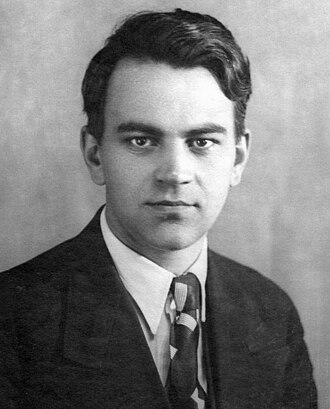
图:Центральный аэрогидродинамический институт · Public domain · Wikimedia Commons
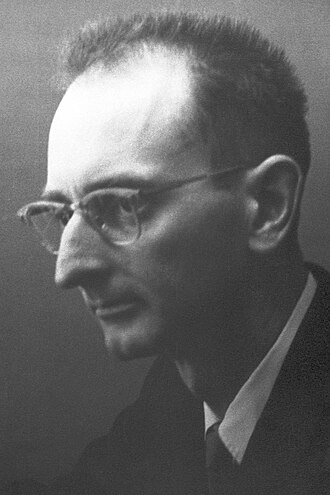
姆斯季斯拉夫·克尔德什1911—1978
Mstislav Keldysh
Soviet mathematician and physicist (1911-1978)
姆斯季斯拉夫·弗谢沃洛多维奇·克尔德什 是数学家、物理学家、航天学家,苏联科学院院长。
摘自维基百科「姆斯季斯拉夫·克尔德什」,CC BY-SA 4.0
- 出生
- 1911 年 1 月 28 日,里加
- 逝世
- 1978 年 6 月 24 日,莫斯科
- 国籍
- 俄罗斯帝国、苏联
- 学科
- 物理学、数学、工程与发明、博物与综合
- 职业
- 数学家、工程师、大学教师、政治人物
- 母语 / 工作语言
- 俄语
- 母校
- 莫斯科国立大学(1931 年)、斯捷克洛夫数学研究所(1937 年)
- 工作单位
- 中央流体力学研究所(1931—1946)、克尔德什应用数学研究所(1953—1978)、喷气科学研究所(1946—1961)、莫斯科国立大学(1937—1946)、苏联科学院(1961—1975)、莫斯科物理技术学院、俄罗斯科学院(1960—1961)
研究领域
师承
博士生9
来自 Wikidata 的「博士导师」「师从」「博士生」「学生」记录,可能不全。
所获奖项(35)
- 1942Stalin Prize, 2nd degree
- 1943红旗劳动勋章
- 19451941-1945年大卫国战争中忘我劳动奖章
- 1945莫斯科建城八百周年纪念奖章
- 1945列宁勋章
- 1945红旗劳动勋章
- 1946Stalin Prize, 2nd degree
- 1953红旗劳动勋章
- 1954列宁勋章
- 1956列宁勋章
- 1956社会主义劳动英雄
- 1956镰刀与槌子奖章
- 1957列宁奖
- 1961列宁勋章
- 1961社会主义劳动英雄
- 1961镰刀与槌子奖章
- 19651941-1945年伟大卫国战争二十周年纪念奖章
- 1967列宁勋章
- 1968爱丁堡皇家学会会员
- 1969Order of Cyril and Methodius
- 1969贝尔纳多·奥希金斯勋章
- 1971荣誉军团司令
- 1971格奥尔基·季米特洛夫勋章
- 1971社会主义劳动英雄
- 1971镰刀与槌子奖章
- 1972Jubilee Medal "50 Years of the Mongolian People's Revolution"
- 1975罗蒙诺索夫金质奖章
- 1975苏赫巴托尔勋章
- 19751941-1945年伟大卫国战争三十周年纪念奖章
- 1975列宁勋章
- —纪念列宁诞辰一百周年奖章
- —匈牙利人民共和国国旗勋章
- —Order of the Red Banner of Labour
- —保卫莫斯科奖章
- —honorary member of the National Academy of Sciences of Azerbaijan
学会与院士
百科正文
姆斯季斯拉夫·弗谢沃洛多维奇·克尔德什(俄语:Мстислав Всеволодович Келдыш,1911年1月28日(2月10日)—1978年6月24日)是数学家、物理学家、航天学家,苏联科学院院长。
生平
1911年,出生于拉脱维亚里加里加的工程师家庭。
1931年,毕业于莫斯科大学,在中央气体流体力学研究所、莫斯科大学和苏联科学院斯捷克洛夫数学研究所工作。
1937年,任莫斯科大学教授。
1943年,为苏联科学院通讯院士。
1949年,加入苏联共产党。
1953年,任苏联科学院应用数学研究所所长、苏联科学院主席团成员。
1960年,任苏联科学院副院长,
1961年,为苏联科学院院长。
1978年,去世。
以上内容摘自维基百科「姆斯季斯拉夫·克尔德什」,按 CC BY-SA 4.0 使用,去掉了参考文献、外部链接等尾部小节,公式改写成了纯文本。全文、配图和出处见原文。
英文维基百科补充中文条目比较短,下面是英文条目「Mstislav Keldysh」的原文
Mstislav Vsevolodovich Keldysh (Russian: Мстисла́в Все́володович Ке́лдыш; 10 February [O.S. 28 January] 1911 – 24 June 1978) was a Soviet mathematician who worked as an engineer in the Soviet space program.
He was the academician of the Academy of Sciences of the Soviet Union (1946), President of the Academy of Sciences of the Soviet Union (1961–1975), three-time Hero of Socialist Labour (1956, 1961, 1971), and fellow of the Royal Society of Edinburgh (1968). He was one of the key figures behind the Soviet space program. Among scientific circles of the USSR Keldysh was known by the epithet "the Chief Theoretician" in analogy with epithet "the Chief Designer" used for Sergei Korolev.
Family
Keldysh was born to a professional family of Russian nobility. His grandfather, Mikhail Fomich Keldysh (1839–1920), was a military physician, who retired with the military rank of General. Keldysh's grandmother, Natalia Keldysh (née Brusilova), was a cousin of general Aleksei Brusilov. Keldysh's maternal grandfather, Alexander Nikolayevich Skvortsov, was a General of Infantry, and fought in the Caucasian War.
Keldysh's father, Vsevolod Mikhailovich Keldysh (1878–1965), was a civil engineer, Major General of the Engineering Service, and a full professor, teaching at the Kuybyshev Military Engineering Academy from 1918. He became a Distinguished Engineering Scientist of the Soviet Union (Заслуженный деятель науки и техники СССР) in 1944. He was one of the authors of contemporary methods for calculating the strength of reinforced concrete, and a designer of the Moscow Canal and Moscow Metro projects.
Several members of the Keldysh family were victims of political repressions. In the 1930s Keldysh's uncle was sent to a labor camp on the White Sea–Baltic Canal construction site. In 1935 Keldysh's mother was arrested but was released after a few weeks.
Biography
Keldysh was born in 1911 in Riga. When he was four the family evacuated to Moscow during the First World War. In the first years of the Soviet Union he was refused entrance to an Institute of Civil Engineers because of his attachment to a noble family. Later, he managed to enter and graduate from the Physics and Mathematics department of the Moscow State University. He obtained employment at the Central Aerohydrodynamic Institute (TsAGI) under Mikhail Lavrentyev and Sergey Chaplygin.
Working at TsAGI he explained the auto-oscillation effects of flutter (in-flight auto-induced oscillations and structural deformations), and shimmy (auto-oscillation in the nose-wheel of aircraft undercarriages while on the ground). The effects were responsible for many aircraft catastrophes at the time.
In 1937 Keldysh became Doctor of Science with his dissertation entitled Complex Variable and Harmonic Functions Representation by Polynomial Series, and was appointed a Professor of Moscow State University. In 1943 he became a Corresponding Member of the Academy of Sciences of the Soviet Union. He got his first Stalin Prize in 1946 for his works on aircraft auto-oscillations. In 1943 he also became a full member of the Academy and the Director of NII-1 (Research Institute number 1) of the Department of the Aviation Industry.
Awards and honors
Keldysh was a member of many foreign academies of sciences, including the Mongolian Academy of Sciences (1961), Polish Academy of Sciences (1962), Czechoslovak Academy of Sciences (1962), and Romanian Academy of Sciences (1965). He was also an honorary member of the American Academy of Arts and Sciences (1966), Bulgarian Academy of Sciences (1966), Hungarian Academy of Sciences (1970), and Royal Society of Edinburgh (1968), foreign corresponding member of the German Academy of Sciences (1966), and Saxon Academy of Sciences in Leipzig (1966).
Keldysh was awarded the Stalin Prize (1942, 1946), Lenin Prize (1957), six Orders of Lenin, three other orders, numerous medals and four foreign orders.
The crater Keldysh on the Moon, and the research vessel Akademik Mstislav Keldysh are named after him. A minor planet, 2186 Keldysh discovered in 1973 by Soviet astronomer Lyudmila Chernykh, is named in his honor.
A street (Akadēmiķa Mstislava Keldiša iela) was named after Keldysh in the district of Pļavnieki in his native Riga, Latvia. On 15 December 2022, the street was renamed Brāļu Kaudzīšu Street.
以上节选摘自英文维基百科「Mstislav Keldysh」,按 CC BY-SA 4.0 使用,去掉了参考文献、外部链接等尾部小节,公式改写成了纯文本。篇幅所限,较长的小节只摘了开头一部分,有的小节没有收;全文、配图和出处见原文。
同年获同一奖项
同一学科、同时代的科学家


同一学科的科学家
更多 ›