格物

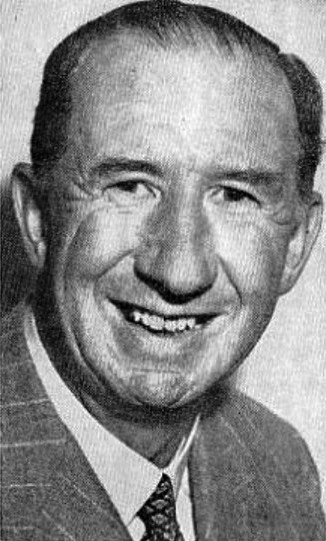
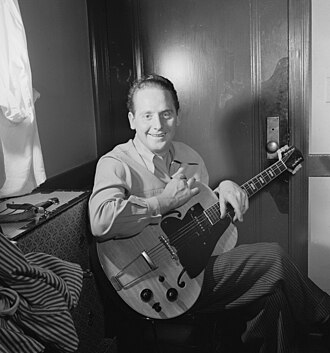
图:Mr. Littlehand · CC BY 2.0 · Wikimedia Commons
利奥·芬达1909—1991
Leo Fender
American inventor and founder of the Fender company (1909–1991)
利奥·芬德 是美国发明家。他于1946年创建了芬达电子乐器生产公司,1965年将公司卖给CBS(直至1985年买回成为现时独立的“芬达乐器公司”),翌年芬达因对CBS的管理层感到不满而从公司离职,后来又成立了另外两家乐器公司,分别是1974年创建的Music Man和1979年创建的G&L Musical Instruments。
摘自维基百科「利奥·芬德」,CC BY-SA 4.0
- 出生
- 1909 年 8 月 10 日,阿纳海姆
- 逝世
- 1991 年 3 月 21 日,富勒顿
- 国籍
- 美国
- 学科
- 工程与发明
- 职业
- 吉他制作、乐器制造工、商人、发明家
- 母语 / 工作语言
- 英语
- 母校
- Fullerton Union High School
所获奖项(2)
- 1992摇滚名人堂
- —Technical Grammy Award
百科正文
芬德出生在美国加利福尼亚州。在青年时期,他对电子学非常感兴趣。
芬德晚年饱受帕金森氏症困扰,于1991年3月21日因感染并发症逝世,享年81岁。
1992年,他入选摇滚名人堂。成为一个没有使用乐器却入选名人堂的人物。
以上内容摘自维基百科「利奥·芬德」,按 CC BY-SA 4.0 使用,去掉了参考文献、外部链接等尾部小节,公式改写成了纯文本。全文、配图和出处见原文。
英文维基百科补充中文条目比较短,下面是英文条目「Leo Fender」的原文
Clarence Leonidas Fender (August 10, 1909 – March 21, 1991) was an American inventor and founder of the Fender Musical Instruments Corporation. Fender designed the company's iconic early instruments: the Fender Telecaster, the first mass-produced solid-body electric guitar; the Fender Stratocaster, among the most iconic electric guitars; and the Fender Precision Bass, which set the standard for electric basses. He also designed the Fender Bassman amplifier, which became the archetype for later amplifiers (notably by Marshall and Mesa Boogie) that dominated rock and roll music.
Fender, who was not a guitarist himself, was inducted posthumously into the Rock and Roll Hall of Fame in 1992.
Early life and education
Clarence Leonidas Fender was born on August 10, 1909, to Clarence Monte Fender and Harriet Elvira Wood, owners of a successful orange grove located between Anaheim and Fullerton, California. At the age of eight, Fender developed a tumor in his left eye, resulting in the eye being removed and being replaced with a glass eye, making him ineligible for the draft in World War II later in life.
As a youth, Fender played piano and saxophone before his interests shifted toward electronics. When he was 14, Fender visited his uncle's automotive-electric shop in Santa Maria, and was fascinated by a radio his uncle had built from spare parts. Soon thereafter, Fender began repairing radios in a small shop in his parents' home.
In 1928, Fender graduated from Fullerton Union High School, and entered Fullerton Junior College as an accounting major, though he continued to work with electronics. After college, Fender worked as an ice delivery man and later bookkeeper. Around this time, he was approached by a local bandleader asking him to build six public address systems for use in Hollywood dance halls.
Career
Fender Radio Service
In 1938, with a borrowed $600 (equivalent to $13,723 in 2025), Fender and his wife Esther returned to Fullerton, and started his own radio repair shop, Fender Radio Service. Soon, musicians and band leaders began coming to him for public address systems, which he built, rented, and sold. They also visited his store for amplification for the amplified acoustic guitars that were beginning to show up on the southern California music scene—in big band and jazz music, and for the electric "Hawaiian" or "lap steel" guitars becoming popular in country music.
Early guitars
During World War II, Fender met Clayton Orr "Doc" Kauffman, an inventor and lap steel player who worked for Rickenbacker, which had been building and selling lap steel guitars for a decade. While with Rickenbacker, Kauffman had invented the "Vibrola" tailpiece, a precursor to the later vibrato tailpiece. Fender convinced him to go into business together, and they started the "K&F Manufacturing Corporation" to design and build amplified Hawaiian guitars and amplifiers. In 1944, Fender and Kauffman patented a lap steel guitar with an electric pickup already patented by Fender. In 1945, they began selling the guitar in a kit with an amplifier designed by K&F. In 1946, Doc pulled out of K&F and Fender revised the company and renamed it "Fender Manufacturing", and then later "Fender Electric Instrument Co." at the end of 1947 and he handed over the reins of his radio shop to Dale Hyatt.
Fender later recognized the potential for an electric guitar that was easy to hold, tune, and play, and would not feed back at dance hall volumes as the typical archtop would. In 1948, he finished the prototype of a thin solid-body electric; the first one-pickup model was released in 1950 as the Fender Esquire, while a two-pickup version, initially called the Broadcaster but renamed the Telecaster after a trademark issue, was released the year after. The Telecaster became one of the most popular electric guitars in history.
Personal life and death
In 1934, Fender married Esther Klosky, and the couple remained together until Esther's death from cancer in 1979. Fender remarried in 1980; his second wife Phyllis became an Honorary Chairman of G&L.
Despite suffering several minor strokes, Fender continued to work. On March 21, 1991, he died of complications from Parkinson's disease. He was buried at Fairhaven Memorial Park in Santa Ana, California, next to his first wife Esther. Phyllis Fender died on July 22, 2020.
Fender's accomplishments for "contributions of outstanding technical significance to the recording field" were acknowledged with a Technical Grammy Award in 2009. Fender Avenue in Fullerton, California was named after him.
以上节选摘自英文维基百科「Leo Fender」,按 CC BY-SA 4.0 使用,去掉了参考文献、外部链接等尾部小节,公式改写成了纯文本。篇幅所限,较长的小节只摘了开头一部分,有的小节没有收;全文、配图和出处见原文。
同一学科、同时代的科学家




同一学科的科学家
更多 ›