格物
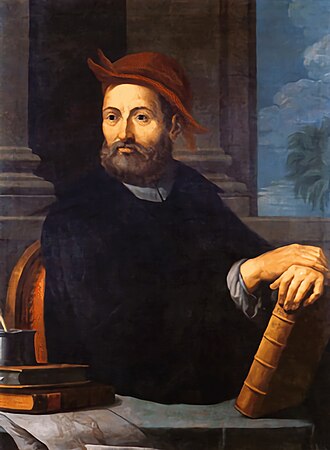
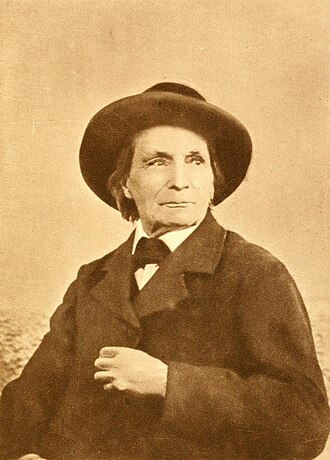
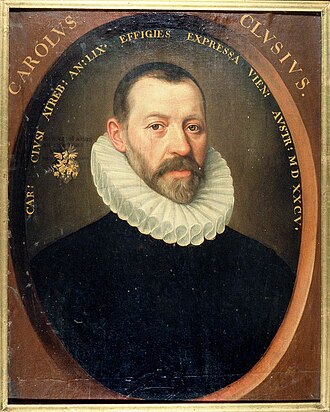
图:Battista Ricci · Public domain · Wikimedia Commons
安德烈亚·切萨尔皮诺1524—1603
Andrea Cesalpino
Italian physician, botanist and philosopher (1524–1603)
安德烈亚·切萨尔皮诺,文艺复兴时期第一位植物分类学家。他是一位意大利的植物学家,做过植物园的负责人,后来成为博洛尼亚植物学和药学教授。1592年前往罗马成为教皇克莱蒙八世的私人医生。1563年他整理了一部包含768种植物的样本集。这些样本至今仍保存在佛罗伦萨的自然历史博物馆内。他的16卷著作De Plantis libri于1583年出版,描述了1520种植物,并把它们分为草本和木本两大类,还区分了果实和种子的特征。切萨尔皮诺遵循亚里士多德的逻辑,基于推论而不是研究特征。因此他做出有关髓类似动物的脊椎以及叶有保护顶芽的独特作用的结论就不会让人吃惊了。尽管如此,与同时代人不同的是,他强调了生殖特性的重要性。这对后来的分类工作产生了重要的影响。
摘自维基百科「安德烈亚·切萨尔皮诺」,CC BY-SA 4.0
- 出生
- 1524 年,阿雷佐
- 逝世
- 1603 年 2 月 23 日,罗马
- 学科
- 生物学、医学
- 职业
- 哲学家、植物学家、大学教师、医生
- 母语 / 工作语言
- 拉丁语
- 母校
- 比萨大学
- 工作单位
- 比萨大学、罗马大学、克雷芒八世
师承
学生1
来自 Wikidata 的「博士导师」「师从」「博士生」「学生」记录,可能不全。
百科正文
英文维基百科补充中文条目比较短,下面是英文条目「Andrea Cesalpino」的原文
Andrea Cesalpino (Latinized as Andreas Cæsalpinus) (1524/1525 – 23 February 1603) was a Florentine physician, philosopher and botanist.
In his works he classified plants according to their fruits and seeds, rather than alphabetically or by medicinal properties. In 1555, he succeeded Luca Ghini as director of the botanical garden in Pisa. The botanist Pietro Castelli was one of his students. Cesalpino also did limited work in the field of plant and animal physiology. In medicine, he envisioned a "chemical circulation" consisting of repeated evaporation and condensation of blood, and for this reason historians have conceived him as a forerunner of William Harvey (1578–1657), who theorized the "physical circulation" of blood in 1628.
Biography
Cesalpino was possibly born in Arezzo, Tuscany. As it is reported by Giuseppe Lais and Ugo Viviani, and recently repeated in a scholarly volume devoted to Cesalpino, he was likely born in the autumn of 1524 or 1525 in the outskirt of Arezzo but many authors give 1519 as the year of his birth, e.g. Frans Stafleu in his Taxonomic Literature 2.
For his studies at the University of Pisa his instructor in medicine was R. Colombo (d. 1559), and in botany the celebrated Luca Ghini. After completing his course he taught philosophy, medicine, and botany for many years at the same university, besides making botanical explorations in various parts of Italy. At this time the first botanical gardens in Europe were laid out; the earliest at Padua, in 1546; the next at Pisa in 1547 by Ghini, who was its first director. Ghini was succeeded by Cesalpino, who had charge of the Pisan garden 1554–1558.
Philosophical works
All of Cesalpino's writings show the man of genius and the profound thinker. His style, it is true, is often heavy, yet in spite of the scholastic form in which his works are cast, passages of great beauty often occur. Modern botanists and physiologists who are not acquainted with the writings of Aristotle find Cesalpino's books obscure; their failure to comprehend them has frequently misled them in their judgment of his achievement.
No comprehensive summing up of the results of Cesalpino's investigations, founded on a critical study of all his works has appeared, neither has there been a complete edition of his writings. Seven of these are positively known, and most of the seven have been printed several times, although none have appeared since the 17th century. In the following list the date of publication given is that of the first edition.
Medical and physiological works
Cesalpino's physiological investigations concerning the circulation of the blood are well known, but even up to the present time they have been as often overestimated as undervalued. An examination of the various passages in his writings which bear upon the question shows that although it must be said that Cesalpino had penetrated further into the secret of circulation of the blood than any other physiologist before William Harvey, still he had not attained a thorough knowledge, founded on anatomical research, of the entire course of the blood. Besides the work Quæstionum peripateticarum already mentioned, reference should be made to Quaestionum medicarum libri duo (1593).
Botanical works
His most important publication was De plantis libri XVI (1583). The work is dedicated to the Grand Duke Francesco I de' Medici. Unlike the "herbals" of that period, it contains no illustrations. The first section, including thirty pages of the work, is the part of most importance for botany in general. From the beginning of the 17th century up to the present day botanists have agreed in the opinion that Cesalpino in this work, in which he took Aristotle for his guide, laid the foundation of the morphology and physiology of plants and produced the first scientific classification of flowering plants.
Geology
As mentioned above, De metallicis libri tres (Rome, 1596) was of value for mineralogy and geology, displaying a correct understanding of fossils. Charles Lyell's Principles of Geology states that in 1596,
Cesalpino, a celebrated botanist, conceived that fossil shells had been left on the land by the sea, and had concreted into stone during the consolidation of the soil."
以上节选摘自英文维基百科「Andrea Cesalpino」,按 CC BY-SA 4.0 使用,去掉了参考文献、外部链接等尾部小节,公式改写成了纯文本。篇幅所限,较长的小节只摘了开头一部分,有的小节没有收;全文、配图和出处见原文。
同一学科、同时代的科学家


同一学科的科学家
更多 ›