格物

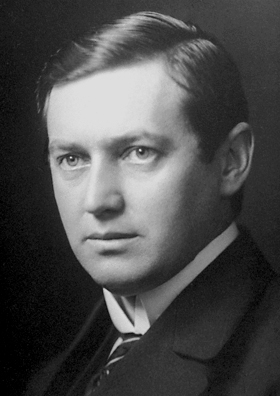
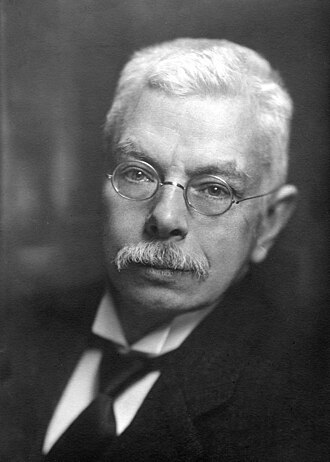
图:作者不详 · Public domain · Wikimedia Commons
刘易斯·温斯洛·奥斯汀1867—1932
Louis Winslow Austin
American physicist (1867-1932)
Louis Winslow Austin was an American physicist known for his research on long-range radio transmissions.
摘自英文维基百科「Louis Winslow Austin」(英文维基百科,暂无中文条目),CC BY-SA 4.0
- 出生
- 1867 年 10 月 30 日,Orwell
- 逝世
- 1932 年 6 月 27 日,华盛顿哥伦比亚特区
- 国籍
- 美国
- 学科
- 物理学、工程与发明、博物与综合
- 职业
- 物理学家、工程师、大学教师
- 母校
- 明德大学、斯特拉斯堡大学
- 工作单位
- 威斯康星大学麦迪逊分校
所获奖项(1)
- 1927IEEE 荣誉奖章
百科正文
本条目暂无中文维基百科条目,下面是英文维基百科原文。
Austin was born in Orwell, Vermont, and educated at Middlebury College (class of 1889) and the University of Strasbourg (then in Germany), from which he received a Ph.D. in 1893. From 1893 to 1901, he taught physics as an instructor and assistant professor at the University of Wisconsin–Madison, then returned to Germany for two years at the Physikalisch-Technische Reichsanstalt in Berlin, where he performed research on hot gases.
In 1904 Austin joined the National Bureau of Standards to study radio propagation. After the United States Navy established its Naval Radio Telegraphic Laboratory (later the Naval Research Laboratory) within the bureau, Austin served as its director from 1908 to 1923, and from 1923 to 1932 as chief of the Radio Physics Laboratory.
Austin's research focused on radio propagation and static, and more specifically the influence of temperature, humidity, magnetic storms, and sunspots on long-range radio transmissions.
Under his direction, the Navy conducted long-distance wireless measurements in 1909 and 1910 between the USS Birmingham and USS Salem, as they steamed south into the Atlantic, and Fessenden's station at Brant Rock, Massachusetts. The Birmingham was eventually 1200 miles from Brant Rock, while the Salem reached a distance of 450 mile. Austin measured received impulses from the ships on the 3,750- and 1,000-meter wavelengths to determine the relationships between transmitting and received currents, antenna heights, wavelength, and distance. These measurements led Austin and collaborator Dr. Louis Cohen to develop the empirical Austin-Cohen formula for predicting radio signal strength at long distances.
Austin joined the Institute for Radio Engineers (now IEEE) in 1913, in 1914 served as its third president, and in 1927 received its Medal of Honor "for his pioneer work in the quantitative measurement and correlation of factors involved in radio wave transmission." He also served as a U.S. representative at numerous international radio conferences. Austin died on June 27, 1932, in Washington, D.C.
Personal life
Louis Winslow Austin was born 30 October 1867 at Orwell, Addison Co., Vermont, US. He was the only child of Lewis Augustine Austin and Mary Louise Austin née Taft. As a child, he lived with his parents at Manchester, Bennington Co., Vermont, US 1868–1872 and Meriden, Sullivan Co., New Hampshire, US 1872–1880. He lived at Middleburg, Vermont from 1880 to 1889. Strassburg, Germany (now France) 1889–1893. Madison, Wisconsin, 1893–1901, where he concluded as assistant professor of physics at the University of Wisconsin. He married Laura Osborne (born 10 August 1875, McGregor, Clayton County, Iowa) on 16 August 1898 at La Crosse, La Crosse County, Wisconsin.
Laura Alma Austin née Osborne was born 10 August 1875 at McGregor, Clayton Co., Iowa. She was the second of three children to Willis Leroy Osborne and Julia Livia Osborne née Colman. She lived with her parents at McGregor, Iowa 1875–1877 and La Crosse, Wisconsin 1877–1898 until her marriage. She was a student at the University of Wisconsin, graduating in the class of 1897 with a degree of Arts Bachelor. She was a member of Kappa Alpha Theta fraternity. Laura remained actively involved with her alma mater throughout her life. She was a life member of the Alumni Association of the University of Wisconsin and served several roles within the organisation. She frequently accompanied her husband in his travels (England, 1912; Panama, 1915; Puerto Rico, 1920; Europe, 1921; Europe, 1922; Japan, 1927).
Career
Austin commenced his studies at Middlebury College (which was close to his birthplace in Orwell), circa 1887 and graduated as Bachelor of Arts in 1889. He travelled to Strassburg, Germany (now France) to study at the University of Strassburg. From 1890 to 1891, Austin served one year as fellow in physics at Clark University in Massachusetts, then returned to Strassburg to complete his doctoral studies. In 1893, he was awarded a doctorate of philosophy in physical science at the University of Strassburg.
University of Wisconsin, Madison, Dane Co., Wisconsin, US: 1893–1897
Austin commenced with the University of Wisconsin (now University of Wisconsin-Madison) as an instructor in physics in 1893, soon after the award of his Ph.D. In 1895 he was promoted to the position of assistant professor of physics. At the time, the president of the university was Charles Kendall Adams and the vice president was John Barber Parkinson. Physics then came within the College of Letters and Science under Dean Edward Asahel Birge. Other faculty members in the field of physics at the time were Benjamin Warner Snow (professor of physics), John Eugene Davies (professor of electricity and magnetism and mathematical physics), Charles Burton Thwing (instructor in physics) and Ervin Sidney Ferry (instructor in physics, taking over the position vacated by Austin in 1895).
Austin-Cohen Formula
A mathematical model for propagation of radio frequency electromagnetic waves along the surface of the earth had been a challenge for mathematicians for decades. Throughout this period, as each new model was developed and promoted, it had to withstand the immediate question "how well does it match the Austin-Cohen formula?" This was the lasting testament of a few years circa 1911 of exacting measurements undertaken by Austin and his friend and colleague Louis Cohen. As in so many scientific accomplishments, there were elements of serendipity to the experiments. As is now well known the independent variables are frequency/wavelength, distance, surface conductivity. The latter variable is particularly troublesome varying greatly with the type of the ground (rock, soil, clay or sand), its depth profile, cover and moisture content; almost impossible to measure directly. A further complication is that the type of ground will itself vary over large distances of the order of hundreds of kilometers.
Today effective ground conductivity is mostly calculated from measurement of the actual attenuation of radio waves propagating over that surface. But Austin's then employer was the US Department of Navy and they were principally interested in communications shore to ship and ship to ship. Austin's measurements were almost entirely over sea which has the quantity of both homogeneity and constancy of surface conductivity.
Biographies
- Obituary - Louis Winslow Austin, 1932, Science, Vol. 76, No. 1963, pp 137
- IEEE History Center biography
- Britannica Online entry
- Orrin E. Dunlap Jr., Radio's One Hundred Men of Science
"Louis Winslow Austin", Proceedings of the Institute of Radio Engineers, 1932, Vol. 20, Issue 8
J. E. Brittain, "Electrical Engineering Hall of Fame: Louis W. Austin", Proceedings of the IEEE, 2005, Vol. 93, Issue 12
以上节选摘自英文维基百科「Louis Winslow Austin」,按 CC BY-SA 4.0 使用,去掉了参考文献、外部链接等尾部小节,公式改写成了纯文本。篇幅所限,较长的小节只摘了开头一部分,有的小节没有收;全文、配图和出处见原文。
同一学科、同时代的科学家

同一学科的科学家
更多 ›