格物

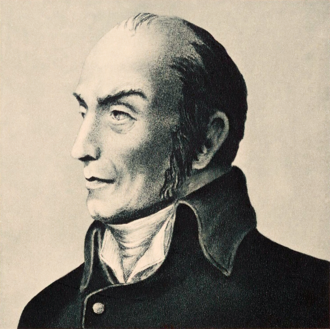
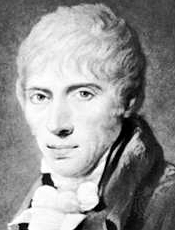
图:Adélaïde Labille-Guiard · Public domain · Wikimedia Commons
- 出生
- 1746 年 11 月 12 日,博让西
- 逝世
- 1823 年 4 月 7 日,巴黎
- 国籍
- 法国
- 学科
- 工程与发明
- 职业
- 发明家、数学家、物理学家
- 母语 / 工作语言
- 法语
研究领域
主要贡献
以他 / 她命名
学会与院士
百科正文
1783年8月27日,查理和罗贝尔兄弟在后来建成埃菲尔铁塔的广场发射了世界上第一个氢气球,飞行45分钟后在21公里外的戈内斯镇被村民击落;
1783年12月1日,由罗贝尔兄弟中的尼古拉-路易·罗贝尔作副驾驶,查理乘坐氢气球升至约1,800英尺 (550米) 的高度。与此前气球采用加热空气升空的方式不同,他们开创性地使用氢气作为升力。
在热力学领域,查理定律描述了气体在受热时如何膨胀,虽然首见于盖-吕萨克1802年的论著,但盖-吕萨克将该定律归功于雅克·查理未发表的工作。
查理于1795年当选为法国科学院院士,随后成为法国科学院物理学教授。
以上内容摘自维基百科「雅克·查理」,按 CC BY-SA 4.0 使用,去掉了参考文献、外部链接等尾部小节,公式改写成了纯文本。全文、配图和出处见原文。
英文维基百科补充中文条目比较短,下面是英文条目「Jacques Charles」的原文
Jacques Alexandre César Charles (French pronunciation: [ʒak alɛksɑ̃dʁ sezaʁ ʃaʁl]; 12 November 1746 – 7 April 1823) was a French inventor, scientist, and balloonist.
Charles wrote almost nothing about mathematics, and most of what has been credited to him was due to mistaking him with another Jacques Charles (sometimes called Charles the Geometer), also a member of the Paris Academy of Sciences, entering on 12 May 1785.
Charles and the Robert brothers launched the world's first hydrogen-filled gas balloon August 27, 1783; then December 1, 1783, Charles and his co-pilot Nicolas-Louis Robert ascended to a height of about 1,800 feet (550 m) in a piloted gas balloon. Their pioneering use of hydrogen for lift led to this type of gas balloon being named a Charlière (as opposed to the hot-air Montgolfière).
Charles's law, describing how gases tend to expand when heated, was formulated by Joseph Louis Gay-Lussac in 1802, but he credited it to unpublished work by Charles.
Charles was elected to the Académie des Sciences in 1795 and subsequently became professor of physics at the Académie de Sciences.
Biography
Charles was born in Beaugency-sur-Loire in 1746. He married Julie Françoise Bouchaud des Hérettes (1784–1817), a creole woman 37 years younger than himself. Reportedly, the poet Alphonse de Lamartine also fell in love with her, and she was the inspiration for Elvire in his 1820 autobiographical Poetic Meditation "Le Lac" ("The Lake"), which describes in retrospect the fervent love shared by a couple from the point of view of the bereaved man. Charles outlived her and died in Paris on 7 April 1823.
Hydrogen balloon flights
First hydrogen balloon
Charles conceived the idea that hydrogen would be a suitable lifting agent for balloons having studied the work of Robert Boyle's Boyle's Law which was published 100 years earlier in 1662, and of his contemporaries Henry Cavendish, Joseph Black and Tiberius Cavallo. He designed the craft and then worked in conjunction with the Robert brothers, Anne-Jean and Nicolas-Louis, to build it in their workshop at the Place des Victoires in Paris. The brothers invented the methodology for the lightweight, airtight gas bag by dissolving rubber in a solution of turpentine and varnished the sheets of silk that were stitched together to make the main envelope. They used alternate strips of red and white silk, but the discolouration of the varnishing/rubberising process left a red and yellow result.
Charles and the Robert brothers launched the world's first hydrogen filled balloon on 27 August 1783, from the Champ de Mars, (now the site of the Eiffel Tower) where Ben Franklin was among the crowd of onlookers. The balloon was comparatively small, a 35 cubic metre sphere of rubberised silk, and only capable of lifting about 9 kg (20 lb).
Inventions
Charles developed several useful inventions, including a valve to let hydrogen out of the balloon and other devices, such as the hydrometer and reflecting goniometer, and improved the Gravesand heliostat and Fahrenheit's aerometer. In addition he confirmed Benjamin Franklin's electrical experiments.
Charles's law
Charles's law (also known as the law of volumes), describing how gases tend to expand when heated, was first published by natural philosopher Joseph Louis Gay-Lussac in 1802, but he credited it to unpublished work by Charles, and named the law in his honour.
Around 1787 Charles did an experiment where he filled five balloons to the same volume with different gases. He then raised the temperature of the balloons to 80 °C (not at constant temperature) and noticed that they all increased in volume by the same amount. This experiment was referenced by Gay-Lussac in 1802 when he published a paper on the precise relationship between the volume and temperature of a gas. Charles's law states that under constant pressure, an ideal gas' volume is proportional to its absolute temperature. The volume of a gas at constant pressure increases linearly with the absolute temperature of the gas. The formula he created was V1/T1 = V2/T2.
Career
Charles was elected to the American Philosophical Society in 1786 and to the Académie des Sciences, in 1795. He subsequently became a professor of physics at the Conservatoire des Arts et Métiers.
Commemoration
A stele at Nesles-la-Vallée marks the Charles-Robert flight of the 1st of December, 1783. 49.1385°N 2.171°E / 49.1385; 2.171
The Coupe Charles et Robert was an international ballooning event that was run in 1983 in parallel with the Gordon Bennett Cup.
以上节选摘自英文维基百科「Jacques Charles」,按 CC BY-SA 4.0 使用,去掉了参考文献、外部链接等尾部小节,公式改写成了纯文本。篇幅所限,较长的小节只摘了开头一部分,有的小节没有收;全文、配图和出处见原文。