格物
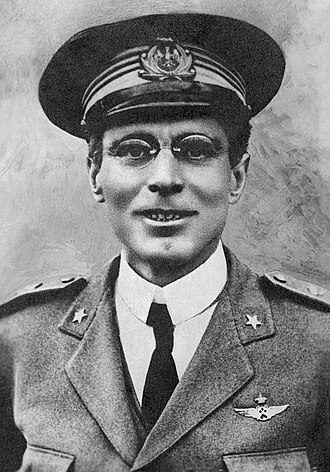
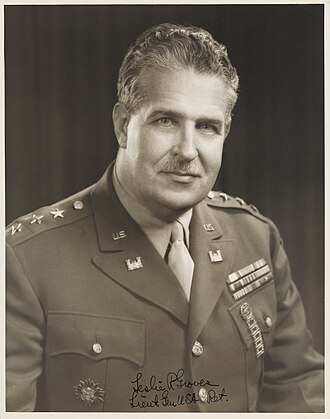
图:Unknown (Mondadori Publishers) · Public domain · Wikimedia Commons
- 出生
- 1885 年 1 月 21 日,劳罗
- 逝世
- 1978 年 7 月 30 日,罗马
- 国籍
- 意大利、意大利王国
- 学科
- 工程与发明
- 职业
- 航空工程师、极地探险家、政治人物
- 母语 / 工作语言
- 意大利语
- 母校
- 那不勒斯费德里科二世大学
所获奖项(5)
- 1926Knight of the Military Order of Savoy
- 1928国会金质奖章
- 1966意大利共和国功绩大军官勋章
- —Order of the Golden Kite, 1st Class
- —Knight of the Order of St. Olav
学会与院士
百科正文
生平
翁贝托·诺毕尔出生于阿韦利诺省的劳罗镇,毕业于那不勒斯大学,获电气工程和工业工程双学位。1906年起,为意大利国家铁路工作。1911年时对航空工程产生了兴趣。1915年时曾申请入伍,但因不够健壮被拒绝。
在战间期,诺毕尔是半硬式飞艇的开发者和推动者。他的知名工作是主导建造并驾驶挪威号飞艇与挪威探险家罗尔德·阿蒙森完成了一次极地探险。挪威号飞艇可能是第一架到达北极的飞行器,同时也是第一架从欧洲途径极地冰帽飞往美国的飞行器。诺毕尔还曾设计并驾驶意大利号飞艇。
他的第二次极地探索(意大利号飞艇)以空难告终。诺毕尔在这次空难中摔断了胳膊,依靠国际救援行动才得以生还。
以上内容摘自维基百科「翁贝托·诺毕尔」,按 CC BY-SA 4.0 使用,去掉了参考文献、外部链接等尾部小节,公式改写成了纯文本。全文、配图和出处见原文。
英文维基百科补充中文条目比较短,下面是英文条目「Umberto Nobile」的原文
Umberto Nobile (Italian pronunciation: [umˈbɛrto ˈnɔːbile]; 21 January 1885 – 30 July 1978) was an Italian aviator, aeronautical engineer and Arctic explorer.
Nobile was a developer and promoter of semi-rigid airships in the years between the two World Wars. He is primarily remembered for designing and piloting the airship Norge, which may have been the first aircraft to reach the North Pole, and which was indisputably the first to fly across the polar ice cap from Europe to America. Nobile also designed and flew the Italia, a second polar airship; this second expedition ended in a deadly crash and provoked an international rescue effort, some participants of which also lost their lives or went missing and presumed dead.
Early career
Umberto Nobile was born in Lauro, in the southern Italian province of Avellino, into a family of small landowners. His father Vincenzo, a civil servant, belonged to the cadet branch of an aristocratic family that had been stripped of its titles after the Italian unification over their continuing loyalty to the deposed Bourbons, and which had adopted the Nobile surname for that reason.
After graduating from the University of Naples in 1908 with a degree in industrial engineering, Nobile was hired by the Italian state railways. In 1911 his interests turned to the field of aeronautical engineering and he enrolled into a course offered by the Italian Army's Engineers Corps. During World War I he served as a military engineer, working at the Military Factory for Aeronautical Construction and Experience (Stabilimento Militare di Costruzioni ed Esperienze Aeronautiche) in Rome. During this time he designed airships designed for anti-submarine reconnaissance, 15 of which would be built after the war, and taught courses for aspiring officers. In 1918 he designed the first Italian-made parachute.
Polar expeditions
Norge
In late 1925, Norwegian explorer Roald Amundsen sought out Nobile to collaborate on a flight to the North Pole – still at that time an unachieved goal for aviators – using an airship. Amundsen had previously in early 1925 flown to within 150 nautical miles (280 km) of the North Pole, in a pair of Italian-built Dornier Wal flying boats along with the American millionaire-adventurer Lincoln Ellsworth and the pilot Hjalmar Riiser-Larsen, but their planes were forced to land near 88 degrees North, and the six men were trapped on the ice for 30 days.
The Italian State Airship Factory, which had built Nobile's N-1, made it available for the expedition 29 March 1926. Amundsen insisted in the contract that Nobile should be the pilot and that five of the crew should be Italian; Amundsen named the airship Norge (Norway). On 14 April the airship left Italy for Leningrad in Russia with stops at Pulham (England) and Oslo. On its way towards its Arctic jumping-off point, Ny-Ålesund (Kings Bay) at Vestspitsbergen, Svalbard (belonging to Norway) it also made a stop at the airship mast at Vadsø (Northern Norway).
Later life
In July 1931, Nobile took part in the expedition of the Soviet icebreaker Malygin to Franz Josef Land and the northern Kara Sea. He moved to the Soviet Union in 1932, and lived there for nearly five years to work on the Soviet semi-rigid airship program. Few details of the program have been documented, but Nobile supervised the manufacturing of three airships, including SSSR-V6 OSOAVIAKhIM, and designed two others that were intended for military use.
Nobile returned to Italy in December 1936, after he had been appointed as a member of the Pontificial Academy of Sciences. For a few months he also worked on aviation projects with Caproni, including methods to recover from a spin and an aircraft that could carry a MAS (motorboat) or a tank.
Due to the hostility of the Fascist government, Nobile moved to the United States in 1939 to teach at Lewis University (at the time called Lewis Holy Name School of Aeronautics due to its aviation-focused curriculum) in Romeoville and in Chicago.
Personal life
Nobile was married to Carlotta Ferraiolo, daughter of a wealthy notary from Teano and ten years his senior, from 1916 until her death in 1934. Together they had a daughter. In 1959 he remarried to Gertrude Stolp, a German woman whom he had met in Spain in 1943 and who later became chief librarian at the headquarters of the Food and Agriculture Organization in Rome.
以上节选摘自英文维基百科「Umberto Nobile」,按 CC BY-SA 4.0 使用,去掉了参考文献、外部链接等尾部小节,公式改写成了纯文本。篇幅所限,较长的小节只摘了开头一部分,有的小节没有收;全文、配图和出处见原文。