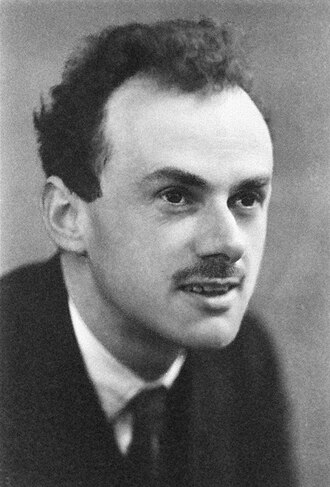
格物

图:Rijksmuseum · CC0 · Wikimedia Commons
- 出生
- 1535 年 11 月 1 日,维科埃昆塞
- 逝世
- 1615 年 2 月 4 日,那不勒斯
- 学科
- 物理学、化学、数学、天文学、医学、工程与发明、博物与综合
- 职业
- 密码学家、数学家、物理学家、化学家
- 母语 / 工作语言
- 拉丁语
研究领域
主要贡献
代表成就
师承
师从2
来自 Wikidata 的「博士导师」「师从」「博士生」「学生」记录,可能不全。
学会与院士
百科正文
英文维基百科补充中文条目比较短,下面是英文条目「Giambattista della Porta」的原文
Giambattista della Porta (Italian: [dʒambatˈtista della ˈpɔrta]; 1535 – 4 February 1615), also known as Giovanni Battista Della Porta, was an Italian scholar, polymath and playwright who lived in Naples at the time of the Renaissance, Scientific Revolution and Counter-Reformation.
Giambattista della Porta spent the majority of his life on scientific endeavours. He benefited from an informal education of tutors and visits from renowned scholars. His most famous work, first published in 1558, is entitled Magia Naturalis (Natural Magic). In this book he covered a variety of the subjects he had investigated, including occult philosophy, astrology, alchemy, mathematics, meteorology, and natural philosophy. He was also referred to as "professor of secrets".
Childhood
Giambattista della Porta was born at Vico Equense, near Naples, to the nobleman Nardo Antonio della Porta. He was the third of four sons and the second to survive childhood, having an older brother Gian Vincenzo and a younger brother Gian Ferrante. Della Porta had a privileged childhood including his education. His father had a thirst for learning, a trait he would pass on to all of his children. He surrounded himself with distinguished people and entertained the likes of philosophers, mathematicians, poets, and musicians. The atmosphere of the house resembled an academy for his sons.
Scientific disciplines
In 1563, della Porta published De Furtivis Literarum Notis, a work about cryptography. In it, he described the first known digraphic substitution cipher. Charles J. Mendelsohn commented:
He was, in my opinion, the outstanding cryptographer of the Renaissance. Some unknown who worked in a hidden room behind closed doors may possibly have surpassed him in general grasp of the subject, but among those whose work can be studied he towers like a giant.
Della Porta invented a method which allowed him to write secret messages on the inside of eggs. Some of his friends were imprisoned by the Inquisition.
Pioneering scientific society
Della Porta was the founder of a scientific society called the Academia Secretorum Naturae (Accademia dei Segreti). This group was more commonly known as the Otiosi, (Men of Leisure). Founded sometime before 1580, the Otiosi were one of the first scientific societies in Europe and their aim was to study the "secrets of nature." Any person applying for membership had to demonstrate they had made a new discovery in the natural sciences.
The Academia Secretorum Naturae was compelled to disband when its members were suspected of dealing with the occult. Della Porta was summoned to Rome by Pope Gregory XIII.
Technological contributions
His interest in a variety of disciplines resulted in the technological advances of the following: agriculture, hydraulics, Military Engineering, instruments, and pharmacology. He published a book in 1606 on raising water by the force of the air. In 1608 he published a book on military engineering, and another on distillation.
Additionally, della Porta perfected the camera obscura. In a later edition of his Natural Magic, della Porta described this device as having a convex lens. Though he was not the inventor, the popularity of this work helped spread knowledge of it.
Religious complications
A Catholic, della Porta was examined by the Inquisition in the years prior to 1578. He was forced to disband his Academia Secretorum Naturae, and in 1592 his philosophical works were prohibited from further publication by the Church; the ban was lifted in 1598. Porta's involvement with the Inquisition puzzles historians due to his active participation in charitable Jesuit works by 1585. A possible explanation for this lies in Porta's personal relations with Fra Paolo Sarpi after 1579.
Playwright
The 17 theatrical works that have survived from a total of perhaps 21 or 23 works comprise 14 comedies, one tragicomedy, one tragedy and one liturgical drama.
- Comedies
- Lo Astrologo;
- La Carbonaria;
- La Chiappinaria;
- La Cintia;
- Gli Duoi fratelli rivali;
- La Fantesca;
- La Furiosa;
- Il Moro;
- L'Olimpia;
- I Simili;
- La Sorella;
- La Tabernaria;
- La Trappolaria;
- La Turca
- Others
- La Penelope (tragicomedy);
- L'Ulisse (tragedy);
- Il Giorgio (liturgical drama)
以上节选摘自英文维基百科「Giambattista della Porta」,按 CC BY-SA 4.0 使用,去掉了参考文献、外部链接等尾部小节,公式改写成了纯文本。篇幅所限,较长的小节只摘了开头一部分,有的小节没有收;全文、配图和出处见原文。
同一学科、同时代的科学家
同一学科的科学家
更多 ›