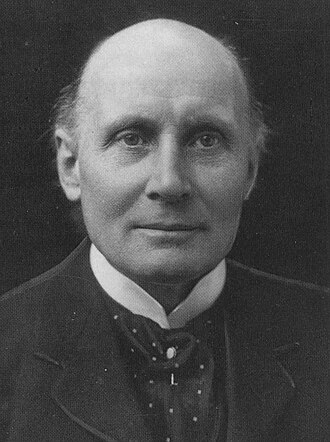
格物

图:Christoffel van Sichem II · Public domain · Wikimedia Commons
克尼利厄斯·雅布斯纵·戴博尔1572—1633
Cornelis Drebbel
Dutch inventor and submarine pioneer
Cornelis Jacobszoon Drebbel was a Dutch engineer and inventor. He was the builder of the first operational submarine in 1620 and an innovator who contributed to the development of measurement and control systems, optics and chemistry.
摘自英文维基百科「Cornelis Drebbel」(英文维基百科,暂无中文条目),CC BY-SA 4.0
- 出生
- 1572 年,阿尔克马尔
- 逝世
- 1633 年 10 月,伦敦
- 国籍
- 荷兰共和国
- 学科
- 物理学、化学、工程与发明、博物与综合
- 职业
- 发明家、潜艇员、化学家、版画家
- 母语 / 工作语言
- 德语
研究领域
百科正文
本条目暂无中文维基百科条目,下面是英文维基百科原文。
Biography
Cornelis Drebbel was born in Alkmaar, Holland in an Anabaptist family in 1572. After some years at the Latin school in Alkmaar, around 1587, he attended the Academy in Haarlem, also located in North-Holland. Teachers at the Academy were Hendrik Goltzius, engraver, painter, alchemist and humanist, Karel van Mander, painter, writer, humanist and Cornelis Corneliszoon of Haarlem. Drebbel became a skilled engraver on copperplate and also took an interest in alchemy.
In 1595 he married Sophia Jansdochter Goltzius, younger sister of Hendrick, and settled at Alkmaar. They had at least six children, of whom four survived. Drebbel worked initially as a painter, engraver and cartographer. But he was in constant need of money because of the profligate lifestyle of his wife. In 1598 he obtained a patent for a water-supply system and a sort of perpetual clockwork. In 1600, Drebbel was in Middelburg where he built a fountain at the Noorderpoort. In that spectacle-making center he may have picked up knowledge in the art of lens grinding and later would construct a magic lantern and a camera obscura.
Around 1604 the Drebbel family moved to England, probably at the invitation of the new king, James I of England (VI of Scotland). He was accommodated at Eltham Palace. Drebbel worked there at the masques, that were performed by and for the court. He was attached to the court of young Renaissance crown-prince, Henry. He astonished the court with a demonstration of a perpetual motion machine, automatic and hydraulic organs and his optical Instruments.
His fame went through the courts of Europe. In October 1610 Drebbel and his family moved to Prague on invitation of Roman-German Emperor Rudolf II, who was preoccupied with the arts, alchemy and occult sciences. Here again Drebbel demonstrated his inventions. When in 1611 Rudolf II was stripped of all effective power by his younger brother Archduke Matthias, Drebbel was imprisoned for about a year. After Rudolf's death in 1612, Drebbel was set free and went back to London in 1613. Unfortunately his patron prince Henry had also died and Drebbel was in financial trouble. With his glass-grinding machine he manufactured optical instruments and compound microscopes with two convex lenses, for which there was a constant demand.
At the request of Roman-German Emperor Ferdinand II in 1619, he went to Prague again to tutor his sons and was taken prisoner after the Battle of White Mountain and the capture of Prague in 1620, where he also lost his fortune. In 1622 Constantijn Huygens stayed as a diplomat for more than one year in England. It is quite possible that he learned the art of glass grinding at this time from Drebbel, and that he passed this knowledge to his second son Christiaan Huygens, who became a prominent Dutch mathematician and scientist. The English natural philosopher Robert Hooke may have learned the art of glass grinding from his acquaintance Johannes Sibertus Kuffler, the son-in-law of Drebbel.
Towards the end of his life, in 1633, Drebbel was involved in a plan to drain the Fens around Cambridge, while living in near-poverty running an ale house in England. He died in London.
In keeping with traditional Mennonite practice, Drebbel's estate was split between his four living children at the time of his death.
Cultural references
Cornelis Drebbel has been honoured on postage stamps issued by the postal services of both Mali and the Netherlands in 2010.
A portrayal of Cornelis Drebbel and his submarine can be briefly seen in the film The Four Musketeers (1974). A small leatherclad submersible surfaces off the coast of England, and the top opens clamshell-wise revealing Cornelis Drebbel and the Duke of Buckingham.
Drebbel was honoured in an episode of the cartoon Sealab 2021 during a submarine rescue of workers on a research station in the Arctic. A German U-boat captain fired a pistol in celebration at the mention of Drebbel, to shouts of, "Sieg Heil! Cornelis Drebbel!" Also, on the Sealab 2021 Season 3 DVD, Cornelis Drebbel has two DVD commentaries devoted to the story of his life.
In the Dutch Eighty Years' War comic Gilles de Geus, Drebbel is a supporting character to the warhero Gilles. He is drawn as a crazy inventor, similar to Q in the James Bond series. His submarine plays a role in the comic.
Richard SantaColoma has speculated that the Voynich Manuscript may be connected to Drebbel, initially suggesting it was Drebbel's cipher notebook on microscopy and alchemy, and then later hypothesising it is a fictional "tie in" to Francis Bacon's utopian novel New Atlantis in which some Drebbel-related items (submarine, perpetual clock) are said to appear.
Namesake
A small lunar crater has been named after him. Several Dutch towns have a street named after him. "Cornelis Drebbelweg" in Delft is one of them.
以上内容摘自英文维基百科「Cornelis Drebbel」,按 CC BY-SA 4.0 使用,去掉了参考文献、外部链接等尾部小节,公式改写成了纯文本。全文、配图和出处见原文。
同一学科、同时代的科学家


同一学科的科学家
更多 ›