格物

图:https://wellcomeimages.org/indexplus/obf_images/29/99/d3b86e… · CC BY 4.0 · Wikimedia Commons
罗伯特·弗拉德1574—1637
Robert Fludd
English mathematician, doctor and astrologer
Robert Fludd, also known as Robertus de Fluctibus, was a prominent English Paracelsian physician with both scientific and occult interests. He is remembered as an astrologer, mathematician, cosmologist, Qabalist, and Rosicrucian.
摘自英文维基百科「Robert Fludd」(英文维基百科,暂无中文条目),CC BY-SA 4.0
- 出生
- 1574 年 1 月 17 日,Milgate House
- 逝世
- 1637 年 9 月 8 日,伦敦
- 国籍
- 英格兰王国
- 学科
- 物理学、数学、医学、博物与综合
- 职业
- 医生、占星家、音乐学家、音乐理论家
- 母语 / 工作语言
- 拉丁语、英语
- 母校
- 牛津大学圣约翰学院
研究领域
师承
来自 Wikidata 的「博士导师」「师从」「博士生」「学生」记录,可能不全。
所获奖项(1)
- —Fellow of the Royal College of Physicians of London
百科正文
本条目暂无中文维基百科条目,下面是英文维基百科原文。
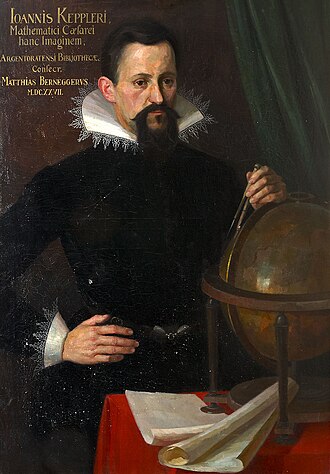
Fludd is best known for his compilations in occult philosophy. He had a celebrated exchange of views with Johannes Kepler concerning the scientific and hermetic approaches to knowledge.
Early life
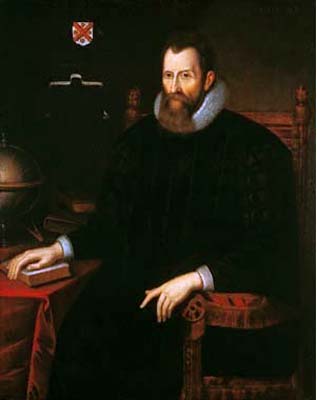
He was born at Milgate House, Bearsted, Kent, on 17 January 1573/4. He was the son of Sir Thomas Fludd, a high-ranking governmental official (Queen Elizabeth I's treasurer for war in Europe), and Member of Parliament. His mother was Elizabeth Andrews Fludd. A collage of 12 Coats of Arms of Fludd ancestors are shown in the painting above his right shoulder. His paternal arms goes back to Rhirid Flaidd whose name originates from Welsh meaning bloody or red wolf.
Education
He entered St John's College, Oxford as a commoner in 1591, graduating with a B.A. in 1597 and an M.A. in 1598. St John's College, Oxford was one of the few in England with any provision for Fellowship (medicine); William Huffman suggests that the presence of a Medical Fellow at St John's College, Oxford influenced Fludd's interest in studying medicine. During Fludd's time at St John's College, the Medical Fellow in residence was Matthew Gwinne; Gwinne had previously produced a tract indicating that, while he practiced Galenic medicine, he was also familiar with the main Paracelsian medical work. Fludd may have encountered Gwinne, or his writing, during his time at Oxford, providing an additional influence for his later medical philosophy and practice.
Career
Between 1598 and 1604, following his graduation, Fludd studied medicine, chemistry and hermeticism on the European mainland. His itinerary is not known in detail. On his own account he spent a winter in the Pyrenees studying theurgy (the practice of rituals) with the Jesuits. Furthermore, he indicated that he travelled throughout Spain, Italy and Germany following his time in France.
Upon returning to England in 1604, Fludd matriculated to Christ Church, Oxford. He intended to take a degree in medicine. The main requirements to obtain this, at the time, included demonstrating that he (the supplicant) had read and understood the required medical texts— primarily those by Galen and Hippocrates. Fludd defended three theses based on these texts, and on 14 May 1605, he made his supplication. He graduated with his M.B. and M.D. on 16 May 1605.
Occult interest
While he followed Paracelsus in his medical views rather than the ancient authorities, he was also a believer that real wisdom was to be found in the writings of natural magicians. His view of these mystical authorities was inclined towards the great mathematicians, and he believed, like Pythagoras and his followers, that numbers contained access to great hidden secrets. Certainty in religion could be discovered only through serious study of numbers and ratios. This view later brought Fludd into conflict with Johannes Kepler.
Mystical theory of nature
Tripartite division of matter
Much of Fludd's writing, and his pathology of disease, centered around the sympathies found in nature between man, the terrestrial Earth, and the divine. While Paracelsian in nature, Fludd's own theory on the origin of all things posited that, instead of the Tria Prima, all species and things stemmed from first, dark Chaos, then divine Light which acted upon the Chaos, which finally brought forth the waters. This last element was also called the Spirit of the Lord, and it made up the passive matter of all other substances, including all secondary elements and the four qualities of the ancients. Moreover, the Fluddean tripartite theory concluded that Paracelsus' own conception of the three primary principles—Sulphur, Salt and Mercury—eventually derived from Chaos and Light interacting to create variations of the waters, or Spirit.
The Trinitarian division is important in that it reflects a mystical framework for biology.
Death
Fludd died on 8 September 1637 in London. He was buried in Holy Cross Church, Bearsted.
Controversial works
Fludd's works are mainly controversial. In succession he defended the Rosicrucians against Andreas Libavius, debated with Kepler, argued against French natural philosophers including Gassendi, and engaged in the discussion of the weapon-salve.
Defence of Rosicrucianism
Fludd was not a member of the Rosicrucians, as often alleged, but he defended their thoughts as expressed in numerous manifestos and pamphlets. He produced a quick work, the Apologia Compendiaria, against the claims of Libavius that the Rosicrucians indulged in heresy, diabolical magic and sedition, made in his Analysis confessionis Fraternitatis de Rosea Cruce (Analysis of the Confession of the Rosy Cross) of 1615. Fludd returned to the subject at greater length, the following year.
Apologia Compendiaria, Fraternitatem de Rosea Cruce suspicionis … maculis aspersam, veritatis quasi Fluctibus abluens, &c., Leyden, 1616. Against Libavius.
Tractatus Apologeticus integritatem Societatis de Rosea Cruce defendens, &c., Leyden, 1617.
Cosmology and other works
Fludd's philosophy is presented in Utriusque Cosmi, Maioris scilicet et Minoris, metaphysica, physica, atque technica Historia (The metaphysical, physical, and technical history of the two worlds, namely the greater and the lesser, published in Germany between 1617 and 1621); according to Frances Yates, his memory system (which she describes in detail in The Art of Memory, pp. 321–341) may reflect the layout of Shakespeare's Globe Theatre (The Art of Memory, Chapter XVI).
In 1618, Fludd wrote De Musica Mundana (Mundane Music) which described his theories of music, including his mundane (also known as "divine" or "celestial") monochord.
In 1630, Fludd proposed many perpetual motion machines. People were trying to patent variations of Fludd's machine in the 1870s. Fludd's machine worked by recirculation by means of a water wheel and Archimedean screw. The device pumps the water back into its own supply tank.
His main works are:
Reception
William T. Walker, reviewing two books on Fludd in The Sixteenth Century Journal (by Joscelyn Godwin, and William Huffman), writes that "Fludd relied on the Bible, the Cabbala, and the traditions of alchemy and astrology. Many of his contemporaries labelled Fludd a magician and condemned him for his sympathy for the occult." He cites Godwin's book as arguing that Fludd was part of the tradition of Christian esotericism that includes Origen and Meister Eckhart. He finds convincing the argument in Huffman's book that Fludd was not a Rosicrucian but was "a leading advocate of Renaissance Christian Neo-Platonism. Fludd's advocacy of an intellectual philosophy in decline has done much to assure his general neglect."
以上节选摘自英文维基百科「Robert Fludd」,按 CC BY-SA 4.0 使用,去掉了参考文献、外部链接等尾部小节,公式改写成了纯文本。篇幅所限,较长的小节只摘了开头一部分,有的小节没有收;全文、配图和出处见原文。
同一学科、同时代的科学家

同一学科的科学家
更多 ›