格物
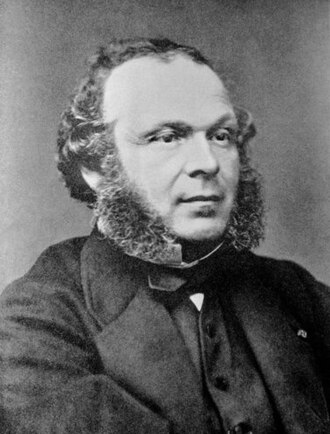
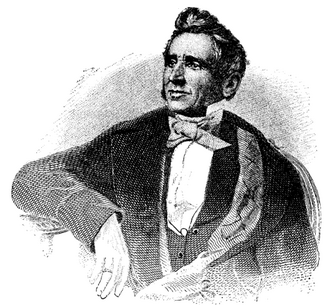
图:作者不详 · Public domain · Wikimedia Commons
武兹1817—1884
Charles Adolphe Wurtz
French chemist (1817–1884)
夏尔-阿道夫·武尔茨,来自阿尔萨斯的法国化学家。最让人津津乐道的是他拥护原子理论和化合物的结构理论,而与持怀疑态度的化学家如马塞兰·贝特洛和亨利·圣克莱尔·德维尔长达几十年的论战。武尔茨在有机化学中最知名的成就就是武兹反应,由烷基卤化物与钠反应形成碳-碳键,以及乙胺、乙二醇和羟醛反应的发现。此外,武尔茨也是一位有影响的作家和教育家。
摘自维基百科「夏尔-阿道夫·武尔茨」,CC BY-SA 4.0
- 出生
- 1817 年 11 月 26 日,斯特拉斯堡
- 逝世
- 1884 年 5 月 12 日,巴黎
- 国籍
- 法国
- 学科
- 化学、医学
- 职业
- 化学家、政治人物、大学教师、医生
- 母语 / 工作语言
- 法语、德语
- 母校
- 斯特拉斯堡大学、吉森大学、让·斯图尔姆文理中学(1834 年)、Séminaire protestant de Strasbourg
- 工作单位
- 巴黎医学院、Faculté de médecine de Strasbourg(1839—)、Institut national agronomique(1850—1852)
研究领域
主要贡献
代表成就
师承
来自 Wikidata 的「博士导师」「师从」「博士生」「学生」记录,可能不全。
所获奖项(7)
- 1854honorary member of the Physics Association (Frankfurt am Main, Germany)
- 1864英国皇家学会外籍会员
- 1864Jecker Prize
- 1879法拉第讲座奖
- 1881科普利奖章
- 1881荣誉军团大军官勋章
- —埃菲尔铁塔上所刻的72人列表
学会与院士
百科正文
英文维基百科补充中文条目比较短,下面是英文条目「Charles Adolphe Wurtz」的原文
Charles Adolphe Wurtz (French: [vyʁts]; 26 November 1817 – 10 May 1884) was an Alsatian French chemist. He is best remembered for his decades-long advocacy for the atomic theory and for ideas about the structures of chemical compounds, against the skeptical opinions of chemists such as Marcellin Berthelot and Henri Étienne Sainte-Claire Deville. He is well known by organic chemists for the Wurtz reaction, to form carbon-carbon bonds by reacting alkyl halides with sodium, and for his discoveries of ethylamine, ethylene glycol, and the aldol reaction. Wurtz was also an influential writer and educator.
Life
Adolphe Wurtz (he never used the name "Charles") was born in Strasbourg, where his father, Johann Jacob (Jean Jacques) Wurtz, was a Lutheran pastor in the nearby town of Wolfisheim. His wife, Adolphe's mother, Sophie Kreiss, died in 1878.
When he left the Protestant gymnasium at Strasbourg in 1834, his father allowed him to study medicine as next best to theology. He devoted himself specially to the chemical side of his profession with such success that in 1839 he was appointed Chef des travaux chimiques at the Strasbourg faculty of medicine. For the summer semester of 1842 he studied under Justus von Liebig at the University of Giessen. After graduating from Strasbourg as M.D. in 1843, with a thesis on albumin and fibrin, he went to Paris, where he first was referred by Jean Baptiste Dumas to Antoine Balard. His employment with Balard lasted a few months, after which Wurtz began work in Dumas's private laboratory. In 1845, he became assistant to Dumas at the École de Médecine, and four years later began to give lectures on organic chemistry in his place.
As there was no laboratory at his disposal at the Ecole de Médecine, he opened a private one in 1850 in the Rue Garanciere; but three years later the building was sold, and the laboratory had to be abandoned. In 1850, he received the professorship of chemistry at the new Institut National Agronomique at Versailles, but the Institut was abolished in 1852. In the following year the chair of "pharmacy and organic chemistry" at the faculty of medicine became vacant by the resignation of Dumas, and the chair of "medical chemistry" by the death of Mathieu Orfila. Both of these chairs were now abolished, and Wurtz was appointed to the newly defined post of "organic and mineral chemistry". (At the same time, a new chair devoted exclusively to pharmacy was awarded to Eugene Soubeiran). In 1866, Wurtz undertook the duties of dean of the faculty of medicine.
Scientific and academic work
Influenced by such leading figures as Liebig and Dumas, by 1856 Wurtz became a powerful advocate of a reform in chemical theory then being led by Charles Gerhardt and Alexander Williamson. This new chemistry of the 1850s took the idea of chemical atoms seriously, adopted atomic weights for the elements that strongly resemble the modern ones, and proposed a unitary schematic plan that opposed the dualistic theory derived from the work of Jons Jacob Berzelius. Soon thereafter, Wurtz also adopted the new structural theory that was developing from the work of younger chemists such as August Kekulé. However, a kind of skeptical positivism was influential in France during the second half of the nineteenth century, and Wurtz's efforts to gain a favorable hearing for atomism and structuralism in his homeland were largely frustrated.
Wurtz's first published paper was on hypophosphorous acid (1841), and the continuation of his work on the acids of phosphorus (1845) resulted in the discovery of sulfophosphoric acid and phosphorus oxychloride, as well as of copper hydride. But his original work was mainly in the domain of organic chemistry. Investigation of the cyanic ethers (1848) yielded a class of substances which opened out a new field in organic chemistry, for, by treating those ethers with caustic potash, he obtained methylamine, the simplest organic derivative of ammonia (1849), and later (1851) the compound ureas. In 1855, reviewing the various substances that had been obtained from glycerin, he reached the conclusion that glycerin is a body of alcoholic nature formed on the type of three molecules of water, as common alcohol is on that of one, and was thus led (1856) to the discovery of the glycols or diatomic alcohols, bodies similarly related to the double water type. This discovery he worked out very thoroughly in investigations of ethylene oxide and the polyethylene alcohols.
以上节选摘自英文维基百科「Charles Adolphe Wurtz」,按 CC BY-SA 4.0 使用,去掉了参考文献、外部链接等尾部小节,公式改写成了纯文本。篇幅所限,较长的小节只摘了开头一部分,有的小节没有收;全文、配图和出处见原文。
同一学科、同时代的科学家




同一学科的科学家
更多 ›