格物

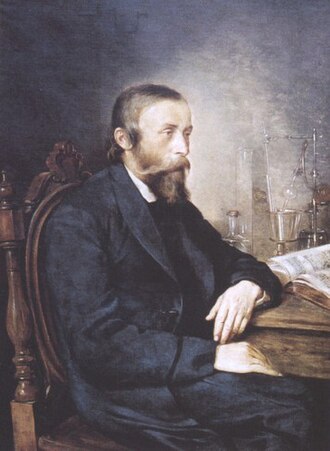
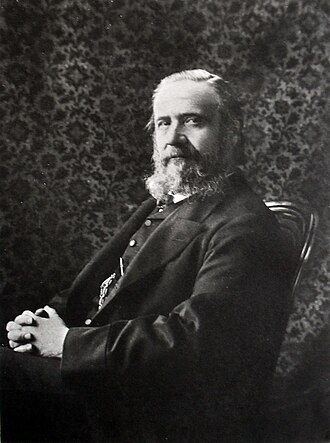
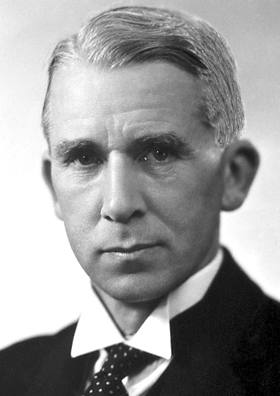
图:作者不详 · Public domain · Wikimedia Commons
- 出生
- 1825 年 6 月 28 日,Wehen
- 逝世
- 1909 年 1 月 22 日,阿沙芬堡
- 国籍
- 普鲁士王国
- 学科
- 化学
- 职业
- 化学家、大学教师、药师
- 母语 / 工作语言
- 德语
- 母校
- 吉森大学、海德堡大学、慕尼黑工业大学
- 工作单位
- 慕尼黑工业大学、海德堡大学
主要贡献
代表成就
师承
博士导师1
博士生3
来自 Wikidata 的「博士导师」「师从」「博士生」「学生」记录,可能不全。
所获奖项(1)
- 1879honorary member of the Physics Association (Frankfurt am Main, Germany)
学会与院士
百科正文
生平
埃米尔·埃伦迈尔生于黑森陶努斯施泰因,在吉森学医学,从1845年开始听尤斯图斯·冯·李比希的化学课,后来赴海德堡学药物学。他在拿骚获得了药剂师的执照后首先在卡岑埃尔恩博根做了五年药剂师。1850年他回到吉森,同年在李比希手下以《碱性氰化铅》(Über basisches Cyanblei)为题获得博士学位。
此后他在威斯巴登买下了一个药铺,此外还在威斯巴登商务和行业学校教授化学。由于他的药铺不盈利,他于1855年在海德堡随罗伯特·威廉·本生以肥料的化学为题获得在高等学校教授的文凭。1857年他成为海德堡大学的无薪讲师,与此同时还开了一个肥料工业的私人咨询实验室。1863年他成为海德堡额外教授,此后受慕尼黑技术学校,今慕尼黑工业大学的前身,的聘请任化学教授,同时他还出任不同化学公司的顾问。
1873年埃伦迈尔被接受为巴伐利亚科学院成员,1874年称为德国化学家协会的副主席,1884年其主席。从1877年至1880年他还出任技术学校的校长。1883年他出于健康缘故退休。1909年逝世于阿沙芬堡
埃伦迈尔年轻时长期研究化合物的结构。由于他从1859年开始任《化学、药物学和数学杂志》的编辑他可以很早就在这里发表他的理论供同行讨论。1862年他是第一个认识到多键的人。由此他阐明了许多化学结构。此外他在书写结构公式的时候始终使用今天的写法,由此推动了这个写法的普及。
在慕尼黑他集中精力研究有机化合物的结构,正确地解释了萘、胍和酪氨酸的结构。他还提出了合成胍和酪氨酸的方法。吖内酯的合成方法是以他命名的。
荣誉
锥形瓶也称埃伦迈尔瓶。
以上内容摘自维基百科「埃米尔·埃伦迈尔」,按 CC BY-SA 4.0 使用,去掉了参考文献、外部链接等尾部小节,公式改写成了纯文本。全文、配图和出处见原文。
英文维基百科补充中文条目比较短,下面是英文条目「Emil Erlenmeyer」的原文
Richard August Carl Emil Erlenmeyer (28 June 1825 – 22 January 1909), known simply as Emil Erlenmeyer, was a German chemist known for contributing to the early development of the theory of chemical structure and formulating the Erlenmeyer rule. He also designed the Erlenmeyer flask, a specialized apparatus ubiquitous in chemistry laboratories, which is named after him.
Biography
Early life and education
Erlenmeyer was born in Wehen, Duchy of Nassau (today Taunusstein, Hesse, near Wiesbaden), in 1825, the son of a Protestant minister. He enrolled in the University of Giessen to study medicine, but after attending lectures of Justus von Liebig changed to chemistry. In the summer of 1846 he went to Heidelberg for one year, and studied physics, botany and mineralogy, returning to Giessen in 1847. After serving as assistant to H. Will and then to Carl Remigius Fresenius, Erlenmeyer decided to devote himself to pharmaceutical chemistry. For this purpose he studied in Nassau, where he passed the state pharmaceutical examination, and shortly afterwards acquired an apothecary's business, first at Katzenelnbogen and then in Wiesbaden. He became dissatisfied with pharmacy and returned to chemistry, finishing his doctorate at Giessen in 1850.For a short time he was also active politically and supported German nationalism and unification.
In 1855 he moved to Heidelberg to work on the chemistry of fertilizers in the laboratory of Robert Bunsen. He wished to teach, but Bunsen's associates were not allowed to take private students. Therefore, with his wife's help, he converted a shed into a private laboratory. In 1857 he became a privatdocent and his habilitation thesis "On the manufacture of the artificial manure known as superphosphate" contained a description of several crystalline substances which greatly interested Robert Bunsen. It was while at Heidelberg that Erlenmeyer was brought under the influence of August Kekulé, whose theoretical views he was one of the first to adopt. He was the first to suggest, in 1862, that double and triple bonds could form between carbon atoms, and he made other important contributions to the development of theories of molecular structure.
Academic career
In 1863 he became associate professor at the University of Heidelberg. In 1868 he was hired as a full professor in Munich to take charge of the laboratories of the new Munich Polytechnic School, a post which he held until he retired from teaching in 1883.
His work mostly focused on theoretical chemistry, where he suggested the structural formula for naphthalene. The Erlenmeyer rule states that all alcohols in which the hydroxyl group is attached directly to a double-bonded carbon atom become aldehydes or ketones (cf. keto-enol tautomerism).
Erlenmeyer's practical investigations were concerned mostly with aliphatic compounds. In 1859 he synthesised aminohexoic acid and proceeded to study the general behavior of albuminoids on hydrolysis. He worked out methods to determine the relative amounts of leucine and tyrosine, which are produced during the degradation of several substances of this class, and was the first (1860) to understand the nature of glycide and to suggest that this substance is related to glycerol in the same way as is metaphosphoric acid to orthophosphoric acid. In the following year he studied the action of hydroiodic acid on glycerol, and showed that the product was isopropyl- and not propyl iodide. His investigations of the higher alcohols produced during fermentation yielded the important proof that these alcohols do not belong to the normal series.
His other work included the isolation of glycolic acid from unripe grapes (1864), synthesis of sodium oxalate by heating sodium formate (1868), hydrolysis of ether to alcohol (1858), synthesis of phenyl-lactic acid (1880), preparation of pyruvic acid by the distillation of tartaric acid (1881) and the formation of carbostyril from quinoline (1885).
His investigations in the aromatic series include isomerism of the cinnamic acids and the synthesis of tyrosine from phenylalanine (1882). In 1875, by nitrating benzoic acid, Erlenmeyer disproved the prevalent opinion that more than three nitrobenzoic acids exist.
In 1860 he published a description of the conical flask that bears his name.
Lineage
Emil Erlenmeyer is the grandfather of Hans Erlenmeyer.
以上内容摘自英文维基百科「Emil Erlenmeyer」,按 CC BY-SA 4.0 使用,去掉了参考文献、外部链接等尾部小节,公式改写成了纯文本。全文、配图和出处见原文。
同一学科、同时代的科学家