格物
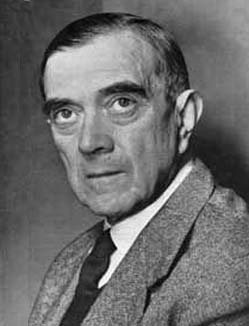
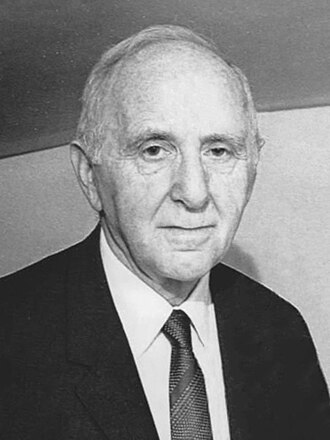
图:no coneguts · CC BY-SA 4.0 · Wikimedia Commons
- 出生
- 1884 年 5 月 23 日,莫塔-迪利文扎
- 逝世
- 1965 年 3 月 13 日,罗马
- 国籍
- 意大利、意大利王国
- 学科
- 数学、博物与综合
- 职业
- 经济学家、统计学家、社会学家、人口学家
- 母语 / 工作语言
- 意大利语
- 母校
- 博洛尼亚大学
- 工作单位
- 罗马大学、帕多瓦大学、卡利亚里大学
研究领域
主要贡献
代表成就
所获奖项(1)
- 1933Fellow of the Econometric Society
学会与院士
百科正文
生平
科拉多·基尼1884年出生于意大利特雷维索省靠近特雷维索的小镇莫塔-迪利文扎。他进入博洛尼亚大学法学院学习,并同时学习了数学、经济和生物课程。
科拉多·基尼的研究方向主要集中在社会科学及统计学两方面,他的兴趣不局限于统计科学,而更广泛地接触社会现象以及生物科学。
以上内容摘自维基百科「科拉多·吉尼」,按 CC BY-SA 4.0 使用,去掉了参考文献、外部链接等尾部小节,公式改写成了纯文本。全文、配图和出处见原文。
英文维基百科补充中文条目比较短,下面是英文条目「Corrado Gini」的原文
Corrado Gini (23 May 1884 – 13 March 1965) was an Italian statistician, demographer and sociologist who developed the Gini coefficient, a measure of the income inequality in a society. Gini was a proponent of organicism and applied it to nations. Gini was a eugenicist, and prior to and during World War II, he was an advocate of Italian Fascism. Following the war, he founded the Italian Unionist Movement, which advocated for the annexation of Italy by the United States.
Career
Gini was born on 23 May 1884, in Motta di Livenza, near Treviso, into an old landed family. He entered the Faculty of Law at the University of Bologna, where, in addition to law, he studied mathematics, economics, and biology.
Gini's scientific work ran in two directions: towards the social sciences and towards statistics. His interests ranged well beyond the formal aspects of statistics, to the laws that govern biological and social phenomena.
His first published work was Il sesso dal punto di vista statistico (1908). This work is a thorough review of the natal sex ratio, looking at past theories and at how new hypotheses fit the statistical data. In particular, it presents evidence that the tendency to produce one or the other sex of child is, to some extent, heritable.
Under fascism
In 1926, he was appointed President of the Central Institute of Statistics in Rome. This he organised as a single centre for Italian statistical services. He was a close intimate of Mussolini throughout the 20s. He resigned from his position within the institute in 1932.
In 1926, he also founded the journal "Italian economic life" (La vita economica italiana), which was published until 1943.
In 1927, he published a treatise entitled The Scientific Basis of Fascism.
In 1929, Gini founded the Italian Committee for the Study of Population Problems (Comitato italiano per lo studio dei problemi della popolazione), which, two years later, organised the first Population Congress in Rome.
A eugenicist apart from being a demographer, Gini led an expedition to survey Polish populations, among them the Karaites.
Italian Unionist Movement
On 12 October 1944, Gini joined with the Calabrian activist Santi Paladino, and fellow-statistician Ugo Damiani to found the Italian Unionist Movement, for which the emblem was the Stars and Stripes, the Italian flag and a world map. According to the three men, the government of the United States should annex all free and democratic nations worldwide, thereby transforming itself into a world government, and allowing Washington, D.C. to maintain Earth in a perpetual condition of peace. The party existed up to 1948 but had little success and its aims were not supported by the United States.
Organicism and nations
Gini was a proponent of organicism and saw nations as organic in nature. Gini shared the view held by Oswald Spengler that populations go through a cycle of birth, growth, and decay. Gini claimed that nations at a primitive level have a high birth rate, but, as they evolve, the upper classes birth rate drops while the lower class birth rate, while higher, will inevitably deplete as their stronger members emigrate, die in war, or enter into the upper classes. If a nation continues on this path without resistance, Gini claimed the nation would enter a final decadent stage where the nation would degenerate as noted by decreasing birth rate, decreasing cultural output, and the lack of imperial conquest. At this point, the decadent nation with its ageing population can be overrun by a more youthful and vigorous nation.
Honours
- The following honorary degrees were conferred upon him:
- Economics by the Catholic University of the Sacred Heart in Milan (1932),
- Sociology by the University of Geneva (1934),
- Sciences by Harvard University (1936),
Social Sciences by the University of Cordoba, Argentina (1963).
Partial bibliography
Il sesso dal punto di vista statistica: le leggi della produzione dei sessi (1908)
Sulla misura della concentrazione e della variabilità dei caratteri (1914)
Quelques considérations au sujet de la construction des nombres indices des prix et des questions analogues (1924)
Memorie di metodologia statistica. Vol.1: Variabilità e Concentrazione (1955)
Memorie di metodologia statistica. Vol.2: Transvariazione (1960)
— (March 1927). "The Scientific Basis of Fascism". Political Science Quarterly. 42 (1): 99–115. doi:10.2307/2142862. JSTOR 2142862.
以上节选摘自英文维基百科「Corrado Gini」,按 CC BY-SA 4.0 使用,去掉了参考文献、外部链接等尾部小节,公式改写成了纯文本。篇幅所限,较长的小节只摘了开头一部分,有的小节没有收;全文、配图和出处见原文。
同一学科、同时代的科学家





同一学科的科学家
更多 ›