格物
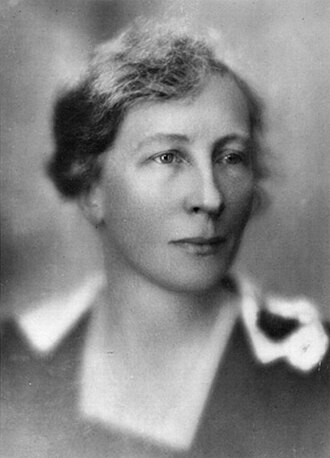
图:Richard Arthur Norton (1958- ) at en.wikipedia · Public domain · Wikimedia Commons
莉莲·莫勒·吉尔布雷斯1878—1972
Lillian Moller Gilbreth
American psychologist and industrial engineer (1878–1972)
Lillian Evelyn Gilbreth was an American psychologist, industrial engineer, consultant, and educator who was an early pioneer in applying psychology to time-and-motion studies. She was described in the 1940s as "a genius in the art of living."
摘自英文维基百科「Lillian Moller Gilbreth」(英文维基百科,暂无中文条目),CC BY-SA 4.0
- 出生
- 1878 年 5 月 24 日,奥克兰
- 逝世
- 1972 年 1 月 2 日,菲尼克斯
- 国籍
- 美国
- 学科
- 工程与发明
- 职业
- 工业工程师、心理学家、教师、摄影师
- 母语 / 工作语言
- 英语
- 母校
- 加州大学伯克利分校、布朗大学(哲学博士,1915 年)、奥克兰高中
- 工作单位
- 威斯康星大学麦迪逊分校、普渡大学
研究领域
主要贡献
代表成就
所获奖项(4)
- 1944Henry Laurence Gantt Medal
- 1954华盛顿奖
- 1966胡佛奖章
- 1995全国女性名人堂
学会与院士
百科正文
本条目暂无中文维基百科条目,下面是英文维基百科原文。
Gilbreth, one of the first female engineers to earn a Ph.D., is considered to be the first industrial/organizational psychologist. She and her husband, Frank Bunker Gilbreth, were efficiency experts who contributed to the study of industrial engineering, especially in the areas of motion study and human factors.
Cheaper by the Dozen (1948) and Belles on Their Toes (1950), written by two of their children (Ernestine and Frank Jr.) tell the story of their family life and describe how time-and-motion studies were applied to the organization and daily activities of their large family. Both books were later made into feature films.
Early life and education
Lillie Evelyn Moller was born in Oakland, California, on May 24, 1878, to Annie (née Delger) and William Moller, a builder's supply merchant. She was their second child and the eldest of the family's nine surviving children. Their first child, Anna Adelaide, had died at age four months. Her maternal grandfather Frederick Delger was a German immigrant who became the richest man in Oakland.
Educated at home until the age of nine, Moller began formal schooling in the first grade at a public elementary school and was rapidly promoted through the grade levels. She was elected vice president of her senior class at Oakland High School and graduated with exemplary grades in May 1896.
Although Moller wanted to go to college, her father was opposed to such education for his daughters, but she persuaded her father to let her try college for a year and was admitted to the University of California.
After her first-year grades were near the top of her class, her father agreed to allow her to continue her studies.
Marriage and family
Lillian Moller met Frank Bunker Gilbreth in June 1903 in Boston, Massachusetts, en route to Europe with her chaperone, who was Frank's cousin. He had apprenticed in several building trades in the East and established a contracting business with offices in Boston, New York, and London.
The couple married on October 19, 1904, in Oakland, California, and settled in New York. They later moved to Providence, Rhode Island, and eventually relocated their family to Montclair, New Jersey.
As planned, the Gilbreths became the parents of a large family that included twelve children. One died young in 1912; one was still-born in 1915; and eleven of them lived to adulthood, including Ernestine Gilbreth, Frank Bunker Gilbreth Jr., and Robert Moller Gilbreth.
After Frank died of a heart attack on June 14, 1924, Lillian never remarried.
Career
For just under 50 years, Gilbreth's career combined psychology with the study of scientific management and engineering. She also included her perspectives as a wife and mother in her research, writing, and consulting work. Gilbreth became a pioneer in what is now known as industrial and organizational psychology. She helped industrial engineers recognize the importance of the psychological dimensions of work. In addition, she became the first American engineer ever to create a synthesis of psychology and scientific management. (Gilbreth introduced the concept of using psychology to study management at the Dartmouth College Conference on Scientific Management in 1911).
In addition to jointly running Gilbreth, Incorporated, their business and engineering consulting firm, Lillian and Frank wrote numerous publications as sole authors, as well as co-authoring multiple books and more than fifty papers on a variety of scientific topics.
Death and legacy
Gilbreth died of a stroke on January 2, 1972, in Phoenix, Arizona, at the age of ninety-three. Her ashes were scattered at sea.
Gilbreth was best known for her work as an industrial engineer and a pioneer in the field of management theory. Dubbed "America's first lady of engineering," she brought her training in psychology to time-and-motion studies and demonstrated how companies and industries could improve their management techniques, efficiency, and productivity. Gilbreth's extensive research and writings on her own and in collaboration with her husband emphasized "the human element in scientific management." Her expertise and major contribution to the field of scientific management was integrating the psychological and mental processes with the time-and-motion studies. She also helped make these types of studies widely accepted. In addition, Gilbreth was among the first to establish industrial engineering curricula in college and university engineering schools.
Awards and honors
Gilbreth received numerous awards and honors for her contributions.
Gilbreth is the recipient of twenty-three honorary degrees from schools such as Rutgers University, Princeton University, Brown University, Smith College, and the University of Michigan.
Her portrait hangs in the National Portrait Gallery.
The Gilbreth Engineering Library at Purdue University is named in honor of Lillian and Frank Gilbreth.
In 1921, Lillian Gilbreth was the second person to be named an honorary member of the American Society of Industrial Engineers.
She joined the British Women's Engineering Society in 1924.
Gilbreth was accepted to the membership of the American Society of Mechanical Engineers in 1926, becoming its second female member.
In 1931 she received the first Gilbreth Medal, which was initiated in honor of her late husband.
In 1941 the Purdue University chapter of Mortar Board, a national honor society, named Gilbreth an honorary member.
Selected published works
A Primer of Scientific Management (1912), co-authored with Frank B. Gilbreth
The Psychology of Management: the Function of the Mind in Determining, Teaching and Installing Methods of Least Waste (1914)
Motion Models (1915) with Frank B. Gilbreth
Fatigue Study: The Elimination of Humanity's Greatest Unnecessary Waste; a First Step in Motion Study] (1916) with Frank B. Gilbreth
Applied Motion Study; A collection of papers on the efficient method to industrial preparedness. (1917) with Frank B. Gilbreth
- Motion Study for the Handicapped (1920) with Frank B. Gilbreth
- The Quest of the One Best Way: A Sketch of the Life of Frank Bunker Gilbreth (1925)
- The Home-maker and Her Job (1927)
- Living With Our Children (1928)
- The Foreman in Manpower Management (1947), with Alice Rice Cook
- Normal Lives for the Disabled (1948), with Edna Yost
Management in the Home: Happier Living Through Saving Time and Energy (1954), with Orpha Mae Thomas and Eleanor Clymer
As I Remember: An Autobiography (1998), published posthumously
以上节选摘自英文维基百科「Lillian Moller Gilbreth」,按 CC BY-SA 4.0 使用,去掉了参考文献、外部链接等尾部小节,公式改写成了纯文本。篇幅所限,较长的小节只摘了开头一部分,有的小节没有收;全文、配图和出处见原文。