格物

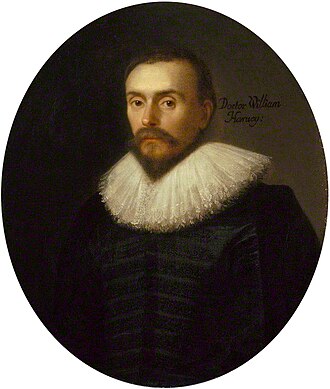
图:Attributed to Louis Finson · Public domain · Wikimedia Commons
尼古拉斯-克劳迪·法布里·德·佩瑞斯特1580—1637
Nicolas-Claude Fabri de Peiresc
法国天文学家 (1580–1637)
尼古拉-克洛德·法布里·德·佩雷斯克,法国天文学家、古董收藏家兼学者。他与众多科学家保持着广泛的书信往来,还卓有成效地组织了许多科学探究活动。他的研究工作包括测定欧洲、地中海周边及北非各地之间的经度差。此外,他曾担任伽利略的法律顾问,是鲁本斯的挚友和玛丽·德·美第奇的艺术顾问,埃及学先驱。他绘制了首张基于望远镜观测的月面图。马克·富马罗利曾称他为“文人共和国的王子”。
摘自维基百科「尼古拉-克洛德·法布里·德·佩雷斯克」,CC BY-SA 4.0
- 出生
- 1580 年 12 月 1 日,贝尔让捷
- 逝世
- 1637 年 6 月 24 日,普罗旺斯地区艾克斯
- 国籍
- 法兰西王国
- 学科
- 生物学、数学、天文学、博物与综合
- 职业
- 天文学家、考古学家、哲学家、植物学家
- 母语 / 工作语言
- 法语、拉丁语
- 母校
- 帕多瓦大学、蒙彼利埃大学
研究领域
主要贡献
本站收录的发现与发明

学会与院士
百科正文
英文维基百科补充中文条目比较短,下面是英文条目「Nicolas-Claude Fabri de Peiresc」的原文
Nicolas-Claude Fabri de Peiresc (1 December 1580 – 24 June 1637), often known simply as Peiresc (French: [pɛʁɛsk]), or by the Latin form of his name, Peirescius, was a French astronomer, antiquary and savant, who maintained a wide correspondence with scientists, and was a successful organizer of scientific inquiry.
His research included a determination of the difference in longitude of various locations in Europe, around the Mediterranean, and in North Africa.
He is notably known for having been Galileo’s lawyer, a close friend of Rubens, an art advisor to Marie de' Medici, a pioneer of Egyptology, and for undertaking the first map of the Moon based on telescopic observations. Marc Fumaroli described him as the prince of the Republic of Letters.
Early life
Peiresc's father was a higher magistrate and city surgeon in Provence from a wealthy noble family, who with his wife fled their home town of Aix-en-Provence to avoid the plague raging there, settling in Belgentier in Var. Peiresc was born in Belgentier and educated in Aix-en-Provence and Avignon, as well as at the Jesuit college at Tournon. At Toulon, he first became interested in astronomy. Studying law and becoming interested in archaeology, he travelled to Italy, Switzerland and France in 1599, and finally finished his legal studies in 1604 at the University of Montpellier. It was also in 1604 that he assumed the name Peiresc after a domain in Alpes-de-Haute-Provence (now spelled Peyresq) which he had inherited from his father, although he himself never visited it.
Intellectual and collector
From 1615 until 1622, Peiresc again visited Paris with du Vair. He then returned to Provence to serve as senator of the sovereign court. He became a patron of science and art, studied fossils, and supported the astronomer Pierre Gassendi from 1634 to 1637. Virginio Cesarini proposed him for membership of the Accademia dei Lincei in 1621, but it is not certain whether he joined.
Peiresc's position as a great intellectual at the time of the Scientific Revolution has led to his being called a "Prince of the Republic of Letters". He was also a noted politician in his home region, and a tireless letter-writer (10,000 of his letters survive, and he was in constant correspondence with François de Malherbe, Hugo Grotius, the brothers Dupuy, Alphonse-Louis du Plessis de Richelieu, and with his great friend Rubens. His correspondence to Malherbe throws light on the personality of Malherbe's troubled son Marc-Antoine Malherbe.
Astronomer
Peiresc was also an astronomer. In 1610 du Vair purchased a telescope, which Peiresc and Joseph Gaultier used for observing the skies, including Jupiter's moons; his courtly suggestion that individual names from the Medici family be applied to these "Medicean stars" was not taken up. Peiresc also made detailed observations of the Orion Nebula in 1610; Gaultier became the second person to see it in the telescope. To determine longitude with greater precision, he coordinated the observation of the lunar eclipses of 28 August 1635 right across the Mediterranean; this allowed him to work out that the Mediterranean sea was in fact 1,000 km shorter than had previously been thought. Peiresc also wrote letters to Galileo, Pierre Gassendi and Tommaso Campanella, two of whom he defended when they were arrested by the Inquisition.
Final years
Peiresc wrote an "abridged history of Provence", but died before editing it: it was only published (edited by Jacques Ferrier and Michel Feuillas) in 1982. With Gassendi's support, notably financially, he and the engraver Claude Mellan began to produce a map of the Moon's surface, but again Peiresc died before completing it.
Peiresc died on 24 June 1637 in Aix-en-Provence.
Legacy
A bronze bust of Peiresc stands on the square of the university in Aix-en-Provence, facing the cathedral of Saint Sauveur. His home near the palais de Justice was demolished to build the present Palais, and has completely disappeared.
The village museum in Peyresq near Digne-les-Bains is wholly given over to his work.
Peiresc was honored in 1935 by the naming of the lunar crater Peirescius (46.5S, 67.6E, 61 km diameter); and in 1993 by the naming of the asteroid 19226 Peiresc.
以上节选摘自英文维基百科「Nicolas-Claude Fabri de Peiresc」,按 CC BY-SA 4.0 使用,去掉了参考文献、外部链接等尾部小节,公式改写成了纯文本。篇幅所限,较长的小节只摘了开头一部分,有的小节没有收;全文、配图和出处见原文。
同一学科、同时代的科学家
同一学科的科学家
更多 ›