格物

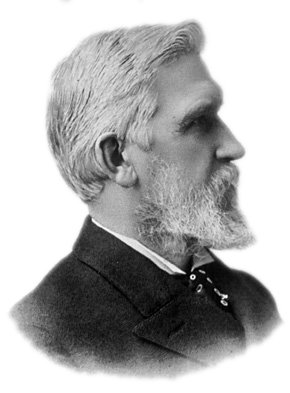
图:作者不详 · Public domain · Wikimedia Commons
- 出生
- 1868 年 7 月 7 日,费尔菲尔德
- 逝世
- 1924 年 6 月 14 日,蒙特克莱
- 国籍
- 美国
- 学科
- 工程与发明
- 职业
- 工程师、承建商
- 母语 / 工作语言
- 英语
- 母校
- 波士顿英格兰高校
- 工作单位
- 普渡大学
主要贡献
代表成就
所获奖项(1)
- 1944Henry Laurence Gantt Medal
百科正文
动素分析
吉尔布雷斯与妻子于1915年首次提出‘动素’(英语:Therblig)的概念,并以其姓氏Gilbreth的倒写therblig命名。动素即为完成一件工作所需的基本动作,可由17个基本动作构成。(后来美机械工程师学会增加了"发现"动素,用F表示,动素增加至18种。)
家庭
吉尔布雷斯于1904年10月19日在加利福尼亚州奥克兰与莉莲·伊芙琳·莫勒结婚;他们有12个孩子。其自传后被改编成电影《儿女一箩筐》。
以上内容摘自维基百科「弗蘭克·邦克·吉爾布雷斯」,按 CC BY-SA 4.0 使用,去掉了参考文献、外部链接等尾部小节,公式改写成了纯文本。全文、配图和出处见原文。
英文维基百科补充中文条目比较短,下面是英文条目「Frank Bunker Gilbreth」的原文
Frank Bunker Gilbreth (July 7, 1868 – June 14, 1924) was an American engineer, consultant, and author known as an early advocate of scientific management and a pioneer of time and motion study, and is perhaps best known as the father and central figure of Cheaper by the Dozen.
Both he and his wife Lillian Moller Gilbreth were industrial engineers and efficiency experts who contributed to the study of industrial engineering in fields such as motion study and human factors.
Biography
Early life and education
Gilbreth was born in Fairfield, Maine, on July 7, 1868. He was the third child and only son of John Hiram Gilbreth and Martha Bunker Gilbreth. His mother had been a schoolteacher. His father owned a hardware store and was a stockbreeder. When Gilbreth was three and a half years old his father died suddenly from pneumonia.
After his father's death his mother moved the family to Andover, Massachusetts, to find better schools for her children. The substantial estate left by her husband was managed by her husband's family. By the fall of 1878 the money had been lost or stolen and Martha Gilbreth had to find a way to make a living. She moved the family to Boston where good public schools existed. She opened a boarding house since a schoolteacher's salary would not support the family.
Gilbreth was not a good student. He attended Rice Grammar School, but his mother was concerned enough to teach him at home for a year. He attended Boston's English High School, and his grades improved when he became interested in his science and math classes. He took the entrance examinations for the Massachusetts Institute of Technology, but wanted his mother to be able to give up the boarding house. He decided to go to work rather than to college.
Work
Motion studies
Gilbreth served as a major in the U.S. Army during World War I. His assignment was to find quicker and more efficient means of assembling and disassembling small arms. However, he was stricken with rheumatic fever and then pneumonia just weeks into his service, and spent four months in recovery before being discharged. The heart damage from this episode would contribute to his premature death six years later. According to Claude George (1968), Gilbreth reduced all motions of the hand into some combination of 17 basic motions. These included grasp, transport loaded, and hold. Gilbreth named the motions therbligs — "Gilbreth" spelled (approximately) backwards. He used a motion picture camera that was calibrated in fractions of minutes to time the smallest of motions in workers.
Their emphasis on the "one best way" and therbligs predates the development of continuous quality improvement (CQI), and the late 20th century understanding that repeated motions can lead to workers experiencing repetitive motion injuries.
Gilbreth was the first to propose the position of "caddy" (Gilbreth's term) to a surgeon, who handed surgical instruments to the surgeon as needed.
Legacy
Frank and Lillian Gilbreth often used their large family (and Frank himself) as guinea pigs in experiments. Their family exploits are lovingly detailed in the 1948 book Cheaper by the Dozen, written by son Frank Jr. and daughter Ernestine (Ernestine Gilbreth Carey). The book inspired a film and the title inspired a second and third unrelated film of the same name. The first, in 1950, starred Clifton Webb and Myrna Loy. The second, in 2003, starred comedians Steve Martin and Bonnie Hunt, and bears no resemblance to the book, except that it features a family with twelve children, and the wife's maiden name is Gilbreth. The third, in 2022, also bears no relation to the book and starred Gabrielle Union and Zach Braff. A 1952 sequel titled Belles on Their Toes chronicled the adventures of the Gilbreth family after Frank's 1924 death. A later biography of his parents, Time Out For Happiness, was written by Frank Bunker Gilbreth, Jr. alone in 1962.
The award for lifetime achievement by the Institute of Industrial and Systems Engineers (IISE) is named in Frank and Lillian Gilbreth's honor.
以上节选摘自英文维基百科「Frank Bunker Gilbreth」,按 CC BY-SA 4.0 使用,去掉了参考文献、外部链接等尾部小节,公式改写成了纯文本。篇幅所限,较长的小节只摘了开头一部分,有的小节没有收;全文、配图和出处见原文。
同一学科、同时代的科学家