格物
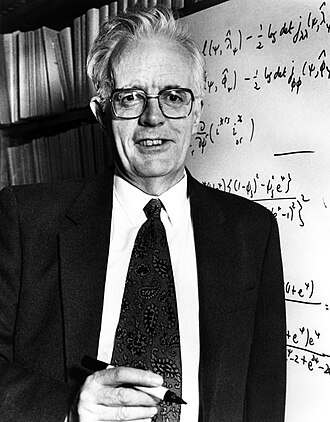
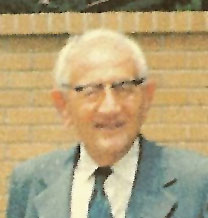
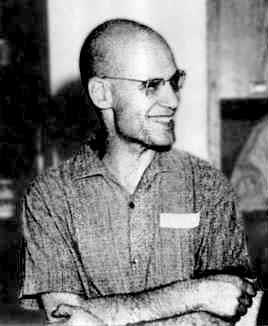
图:Unknown, donated by the General Motors Cancer Research Found… · Public domain · Wikimedia Commons
戴维·科克斯1924—2022
David Cox
英国统计学家
戴维·罗斯贝·科克斯爵士,FRS,英国统计学家,英国皇家学会院士暨英国社会科学院院士,美国科学院、丹麦皇家科学院外籍院士。曾任国际统计学会、伯努利数理统计与概率学会、英国皇家统计学会主席。主要学术贡献包括科克斯过程和影响深远且应用广泛的科克斯比例风险模型等。
摘自维基百科「戴维·科克斯」,CC BY-SA 4.0
- 出生
- 1924 年 7 月 15 日,伯明翰
- 逝世
- 2022 年 1 月 18 日,牛津
- 国籍
- 英国
- 学科
- 数学、博物与综合
- 职业
- 数学家、统计学家、大学教师
- 母语 / 工作语言
- 英语
- 母校
- 利兹大学、剑桥大学圣约翰学院、King Edward VI Handsworth Grammar School for Boys
- 工作单位
- 伦敦帝国学院、伦敦大学伯贝克学院、皇家航空研究院(1944—1946)、羊毛工业研究协会(1946—1950)
研究领域
师承
博士导师2
博士生65
来自 Wikidata 的「博士导师」「师从」「博士生」「学生」记录,可能不全。
所获奖项(15)
- 1956数理统计学会会士
- 1961Guy Medal in Silver
- 1962Fellow of the American Statistical Association
- 1973Guy Medal in Gold
- 1973英国皇家学会院士
- 1985下级勋位爵士
- 1988honorary doctorate of Hasselt University
- 1990Kettering Prize
- 1992马克斯·普朗克研究奖
- 1998honorary doctorate from University of Bordeaux-II
- 2010科普利奖章
- 2016BBVA基金会前沿奖
- 2016国际统计学奖
- —honorary doctor of the University of Padua
- —英国科学院院士
学会与院士
百科正文
英文维基百科补充中文条目比较短,下面是英文条目「David Cox (statistician)」的原文
Sir David Roxbee Cox (15 July 1924 – 18 January 2022) was a British statistician and educator. His wide-ranging contributions to the field of statistics included introducing logistic regression, the proportional hazards model and the Cox process, a point process named after him.
Cox was a professor of statistics at Birkbeck College, London, Imperial College London and the University of Oxford, and served as Warden of Nuffield College, Oxford. The first recipient of the International Prize in Statistics, he also received the Guy, George Box and Copley medals, as well as a knighthood.
Early life
Cox was born in Birmingham on 15 July 1924. His father was a die sinker and part-owner of a jewellery shop, and they lived near the Jewellery Quarter. The aeronautical engineer Harold Roxbee Cox was a distant cousin. He attended Handsworth Grammar School, Birmingham. He received a Master of Arts in mathematics at St John's College, Cambridge, and obtained his PhD from the University of Leeds in 1949, advised by Henry Daniels and Bernard Welch. His dissertation was entitled Theory of Fibre Motion.
Career
Cox was employed from 1944 to 1946 at the Royal Aircraft Establishment, from 1946 to 1950 at the Wool Industries Research Association in Leeds, and from 1950 to 1955 worked at the Statistical Laboratory at the University of Cambridge. From 1956 to 1966 he was Reader and then Professor of Statistics at Birkbeck College, London. In 1966, he took up the Chair position in Statistics at Imperial College London where he later became head of the mathematics department. In 1988 he became Warden of Nuffield College and a member of the Department of Statistics at Oxford University. He formally retired from these positions in 1994, but continued to work at Oxford.
Cox supervised, collaborated with, and encouraged many notable researchers prominent in statistics. He collaborated with George Box on a study of transformations such as the Box–Cox transformation and they were especially delighted to be credited as Box and Cox.
Personal life and death
In 1947, Cox married Joyce Drummond, and they had four children. He died at his home in Oxford, on 18 January 2022, at the age of 97. Cox is buried in Wolvercote cemetery.
Research
Cox made pioneering and important contributions to numerous areas of statistics and applied probability, of which the best known are:
Logistic regression, which is employed when the variable to be predicted is categorical (i.e., can take a limited number of values, e.g., gender, race (in the US census)), binary (a special case of categorical with only two values - e.g., success/failure, disease/no disease), or ordinal, where the categories can be ranked (e.g., pain intensity can be absent, mild, moderate, severe, unbearable). Cox's 1958 paper and further publications in the 1960s addressed the case of binary logistic regression.
The proportional hazards model, which is widely used in the analysis of survival data, was developed by him in 1972. An example of the use of the proportional hazards model is in survival analysis in medical research. The model can be used in clinical trials to investigate time-based information about cohorts of patients, such as their response to exposure to certain chemical substances.
The Cox process was named after him.
Awards
Cox received numerous awards and honours for his work. He was awarded the Guy Medals in Silver (1961) and Gold (1973) of the Royal Statistical Society. He was elected Fellow of the Royal Society of London in 1973. The next year, he was elected to the American Academy of Arts and Sciences. He was knighted by Queen Elizabeth II in 1985. He was elected to the American Philosophical Society in 1990. Cox became an Honorary Fellow of the British Academy in 1997 and was a Fellow of the American Statistical Association. He was a Foreign Associate of the US National Academy of Sciences and a foreign member of the Royal Danish Academy of Sciences and Letters. In 1990, he won the Kettering Prize and Gold Medal for Cancer Research for "the development of the Proportional Hazard Regression Model." In 2010 he was awarded the Copley Medal of the Royal Society "for his seminal contributions to the theory and applications of statistics", the same year in which he was elected a foreign fellow of the Royal Society of Canada.
以上节选摘自英文维基百科「David Cox (statistician)」,按 CC BY-SA 4.0 使用,去掉了参考文献、外部链接等尾部小节,公式改写成了纯文本。篇幅所限,较长的小节只摘了开头一部分,有的小节没有收;全文、配图和出处见原文。
同年获同一奖项
同一学科、同时代的科学家



同一学科的科学家
更多 ›