格物
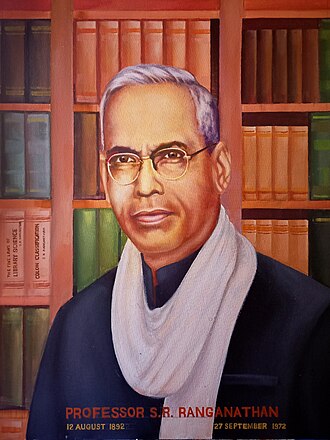
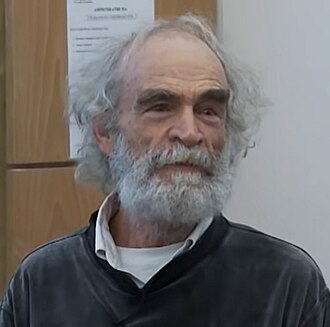
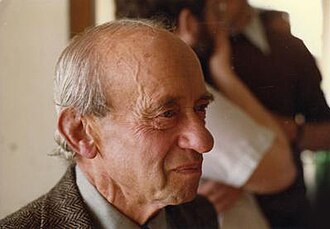
图:BHASKAR SHIKHA SAIKIA · CC BY-SA 4.0 · Wikimedia Commons
- 出生
- 1892 年 8 月 9 日,锡尔格济
- 逝世
- 1972 年 9 月 27 日,班加罗尔
- 国籍
- 印度、英属印度
- 学科
- 数学、博物与综合
- 职业
- 数学家、图书馆员、作家、大学教师
- 母语 / 工作语言
- 英语、泰米尔语
- 母校
- 马德拉斯大学、Hindu High School, Matanhail(文学士,1916 年)
- 工作单位
- 德里大学、马德拉斯大学(1925—1944)、德里大学(1947—1954)、贝拿勒斯印度大学(1945—1947)
研究领域
主要贡献
代表成就
师承
师从1
来自 Wikidata 的「博士导师」「师从」「博士生」「学生」记录,可能不全。
所获奖项(3)
- 1970Margaret Mann Citation
- —Library Hall of Fame
- —Padma Shri in literature and education
百科正文
生平
早年
兰加纳坦出生于印度的马德拉斯锡尔格济地区(今泰米尔纳德邦)。15岁时(1907年)与鲁克米尼(Rukmini,逝世于1928年,无子女)结婚。
兰加纳坦毕业于数学系,曾为大学的助理讲师(1917年—1921年)。
图书馆生涯
1924年至印度马德拉斯大学担任图书馆馆长,并前往英国伦敦的伦敦大学学院进修图书馆学。1929年与萨拉达(Sarada,逝世于1985年,协助兰加纳坦的图书馆事业,育有1子)再婚。1931年发表“图书馆学五律”(Five laws of Library Science)。1944年卸下职位。
1945年至1947年在瓦拉纳西的贝拿勒斯印度教大学担任图书馆馆长及图书馆学教授、1947年至1954年在德里大学(Delhi University)任教、1954年至1957年在苏黎世从事研究及写作、1957年至1959年回印度担任乌贾因(Ujjain)的维克拉姆大学客座教授、1962年创建班加罗尔文籍管理研究及训练中心,成为该中心主管直到逝世。1965年获印度政府授予图书馆学国家研究教授的头衔。
影响
图书馆学五律至今图书馆对读者服务上仍深受其影响。图书馆学五律源于兰加纳坦冒号分类法(Colon Classification,于1933年发表),原是为了图书分类,但之后也广泛运用在读者服务方面。
以上内容摘自维基百科「希亚利·拉马姆里塔·兰加纳坦」,按 CC BY-SA 4.0 使用,去掉了参考文献、外部链接等尾部小节,公式改写成了纯文本。全文、配图和出处见原文。
英文维基百科补充中文条目比较短,下面是英文条目「S. R. Ranganathan」的原文
Shiyali Ramamrita Ranganathan ( 12 August 1892 – 27 September 1972) was an Indian librarian and mathematician. S. R. Ranganathan is widely known as the “Father of Library Science in India.” His most notable contributions to the field were his five laws of library science and the development of the first major faceted classification system, the colon classification. He is considered to be the father of library science, documentation, and information science in India and is widely known throughout the rest of the world for his fundamental thinking in the field. His birthday is observed every year as National Librarian Day in India.
He was a university librarian and professor of library science at Banaras Hindu University (1945–47) and professor of library science at the University of Delhi (1947–55), the first Indian school of librarianship to offer higher degrees. He was president of the Indian Library Association from 1944 to 1953. In 1957 he was elected as an honorary member of the International Federation for Information and Documentation (FID) and was made vice-president for life of the Library Association of Great Britain.
Early life and education
Ranganathan was born on 12 August 1892 in Siyali, Sirkazhi, Mayiladuthurai district, Tamil Nadu into a Brahmin family. His birth date is sometimes written as 12 August 1892 but he wrote his own birth date as 9 August 1892 in his book, The Five Laws of Library Science.
Ranganathan began his professional life as a mathematician; he earned B.A. and M.A. degrees in mathematics from Madras Christian College in his home state, and then went on to earn a teaching license in 1917. His lifelong goal was to teach mathematics, and he was successively a member of the mathematics faculties at universities in Mangalore, Coimbatore, and Madras. As a mathematics professor, he published papers mainly on the history of mathematics.
Early career
In 1923, the University of Madras created the post of University Librarian to oversee their poorly organized collection. Among the 900 applicants for the position, none had any formal training in librarianship, and Ranganathan's handful of papers satisfied the search committee's requirement that the candidate should have a research background. His only knowledge of librarianship came from an Encyclopædia Britannica article he read days before the interview. Ranganathan was initially reluctant to pursue the position, and had forgotten about his application by the time he was called for an interview. To his surprise, he received the appointment and accepted the position in January 1924.
At first, Ranganathan found the solitude of the position intolerable.
Later career
After two decades of serving as librarian at Madras – a post he had intended to keep until his retirement –, Ranganathan resigned from his position at the age of 54 after conflicts with a new university vice-chancellor. After a brief bout with depression, he accepted a professorship in library science at Banaras Hindu University in Varanasi, his last formal academic position, in August 1945. There, he catalogued the university's collection; by the time he left four years later, he had personally classified over 100,000 items.
Ranganathan headed the Indian Library Association from 1944 to 1953, but left amid controversy when the Delhi Public Library chose to use the Dewey Decimal Classification system instead of his own colon classification.
Influence and legacy
Ranganathan dedicated his book The Five Laws of Library Science to his maths tutor at Madras Christian College, Edward Burns Ross. Ranganathan’s influence was analyzed bibliometrically in 1992. His birthday, August 12, has been denoted National Librarians' Day in India.
In 2001, S.R. Ranganathan: Pragmatic philosopher of information science, a personal biography by Ranganathan Yogeshwar (son of Ranganathan) was published by Bharatiya Vidya Bhavan. The book offers an insider's perspective to the thought process, ideas, and contributions of Ranganathan to the field. It is liberally sprinkled with personal and professional photos as well as quotes which showcase Ranganathan's values and motivation. The book serves as an important historical document of information science development in India (e.g.
以上节选摘自英文维基百科「S. R. Ranganathan」,按 CC BY-SA 4.0 使用,去掉了参考文献、外部链接等尾部小节,公式改写成了纯文本。篇幅所限,较长的小节只摘了开头一部分,有的小节没有收;全文、配图和出处见原文。
同一学科、同时代的科学家

同一学科的科学家
更多 ›