格物
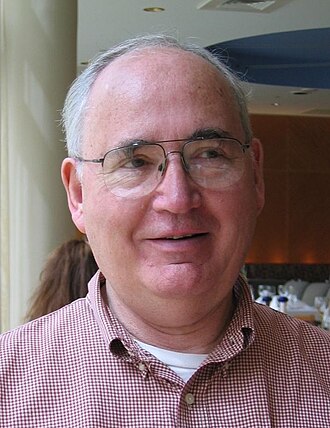
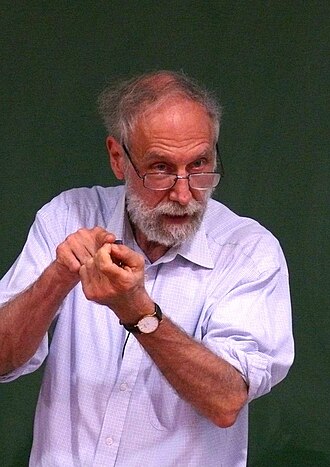
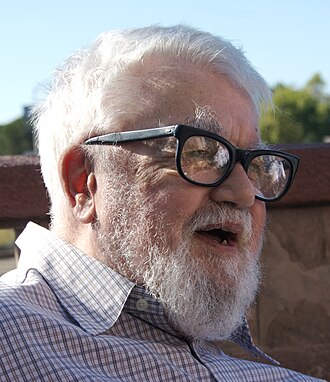
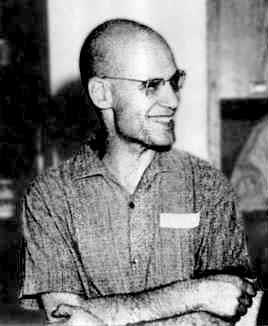
图:Andrej Bauer · CC BY-SA 2.5 si · Wikimedia Commons
- 出生
- 1932 年 10 月 11 日,伯克利
- 国籍
- 美国
- 学科
- 数学、计算机科学、工程与发明、博物与综合
- 职业
- 数学家、计算机科学家、工程师、拓扑学家
- 母语 / 工作语言
- 英语
- 母校
- 普林斯顿大学(哲学博士,1958 年)、加州大学伯克利分校(文学士,1954 年)
- 工作单位
- 加州大学伯克利分校(1960—1962)、芝加哥大学(?—1960)、卡内基梅隆大学(1981—2003)、约翰内斯·开普勒林茨大学(1992—1993)、加州大学伯克利分校(1962—1963)、斯坦福大学(1967—1969)、阿姆斯特丹大学(1968—1969)、普林斯顿大学(1969—1972)、牛津大学(1972—1981)
研究领域
师承
博士导师1
博士生51
来自 Wikidata 的「博士导师」「师从」「博士生」「学生」记录,可能不全。
所获奖项(13)
- 1972勒罗伊·P·斯蒂尔奖
- 1976图灵奖
- 1978古根海姆学者奖
- 1986honorary doctor of the University of Utrecht
- 1990哈罗德·彭德奖
- 1991Gödel Lecturer
- 1994ACM会士
- 1995honorary doctor of the University of Edinburgh
- 1997Rolf Schock Prize in Logic and Philosophy
- 1997肖克奖
- 2001Bernard Bolzano Honorary Medal for Merit in the Mathematical Sciences
- 2007EATCS award
- 2013美国数学会会士
学会与院士
百科正文
简介
斯科特1932年10月11日生于美国加利福尼亚州,在加州大学伯克利分校获得学士学位以后,进入普林斯顿大学研究生院学习,与迈克尔·拉宾一起师从阿隆佐·邱奇,1958年取得博士学位。
他先后在芝加哥大学、加州大学伯克利分校、斯坦福大学、荷兰的阿姆斯特丹大学、普林斯顿大学和英国牛津大学等学府任教。1981年被卡内基梅隆大学聘为计算机科学、数理逻辑和哲学教授。
1959年,拉宾和达纳·斯科特共同发表了“有限自动机与其判定性问题”(Finite Automata and Their Decision Problems)的论文,提出了非确定自动机的观点。他们也因此获得了1976年的图灵奖,并做“逻辑与程序设计语言”(logic and Programming Language)的演讲。图灵奖的引文是:
以上内容摘自维基百科「达纳·斯科特」,按 CC BY-SA 4.0 使用,去掉了参考文献、外部链接等尾部小节,公式改写成了纯文本。全文、配图和出处见原文。
英文维基百科补充中文条目比较短,下面是英文条目「Dana Scott」的原文
Dana Stewart Scott (born October 11, 1932) is a retired American logician. Along with Michael O. Rabin he received the 1976 ACM Turing Award for their joint work on automata theory. He has made seminal contributions to automata theory, modal logic, set theory, and the theory of programming languages. He created domain theory, a branch of mathematics that provides a foundation for the theory of programming languages and computability.
Early life and education
Dana Stewart Scott was born on October 11, 1932, in Berkeley, California. He completed his undergraduate education at the University of California, Berkeley, receiving a Bachelor of Arts in 1954.
He then pursued graduate studies in mathematics at Princeton University, where he held a Bell Telephone Fellowship from 1956 to 1957. Scott earned his Ph.D. in 1958 under the supervision of the mathematical logician Alonzo Church, with a dissertation titled Convergent Sequences of Complete Boolean Algebras.
Solomon Feferman writes of this period:
Scott began his studies in logic at Berkeley in the early 50s while still an undergraduate. His unusual abilities were soon recognized and he quickly moved on to graduate classes and seminars with Tarski and became part of the group that surrounded him, including me and Richard Montague; so it was at that time that we became friends. Scott was clearly in line to do a Ph. D. with Tarski, but they had a falling out for reasons explained in our biography of Tarski.
Academic career
Chicago and Berkeley (1958–1963)
After completing his doctorate in 1958, Scott served as an instructor at the University of Chicago until 1960. He subsequently joined the faculty at the University of California, Berkeley, serving as an assistant professor and later associate professor from 1960 to 1963, during which time he was also appointed a Miller Institute Research Fellow (1960–1961) at Berkeley, and involved himself with classical issues in mathematical logic, especially set theory and Tarskian model theory. He proved that the axiom of constructibility is incompatible with the existence of a measurable cardinal, a result considered seminal in the evolution of set theory.
During this period he started supervising Ph.D. students, such as James Halpern (Contributions to the Study of the Independence of the Axiom of Choice) and Edgar Lopez-Escobar (Infinitely Long Formulas with Countable Quantifier Degrees).
Modal and tense logic
Scott also began working on modal logic in this period, beginning a collaboration with John Lemmon, who moved to Claremont, California, in 1963.
Stanford, Amsterdam and Princeton, 1963–1972
Following an initial observation of Robert Solovay, Scott formulated the concept of Boolean-valued model, as Solovay and Petr Vopěnka did likewise at around the same time. In 1967, Scott published a paper, A Proof of the Independence of the Continuum Hypothesis, in which he used Boolean-valued models to provide an alternate analysis of the independence of the continuum hypothesis to that provided by Paul Cohen. This work led to the award of the Leroy P. Steele Prize in 1972.
University of Oxford, 1972–1981
Scott took up a post as Professor of Mathematical Logic on the Philosophy faculty of the University of Oxford in 1972. He was member of Merton College while at Oxford and is now an Honorary Fellow of the college.
Semantics of programming languages
This period saw Scott working with Christopher Strachey, and the two
managed, despite administrative pressures, to do work on providing a mathematical foundation for the semantics of programming languages, the work for which Scott is best known. Together, their work constitutes the Scott–Strachey approach to denotational semantics, an important and seminal contribution to theoretical computer science. One of Scott's contributions is his formulation of domain theory, allowing programs involving recursive functions and looping-control constructs to be given denotational semantics. Additionally, he provided a foundation for the understanding of infinitary and continuous information through domain theory and his theory of information systems.
Scott's work of this period led to the bestowal of:
Carnegie Mellon University, 1981–2003
At Carnegie Mellon University, Scott proposed the theory of equilogical spaces as a successor theory to domain theory; among its many advantages, the category of equilogical spaces is a cartesian closed category, whereas the category of domains is not. In 1994, he was inducted as a Fellow of the Association for Computing Machinery. In 2012 he became a fellow of the American Mathematical Society.
以上节选摘自英文维基百科「Dana Scott」,按 CC BY-SA 4.0 使用,去掉了参考文献、外部链接等尾部小节,公式改写成了纯文本。篇幅所限,较长的小节只摘了开头一部分,有的小节没有收;全文、配图和出处见原文。
同年获同一奖项
同一学科、同时代的科学家



同一学科的科学家
更多 ›