格物
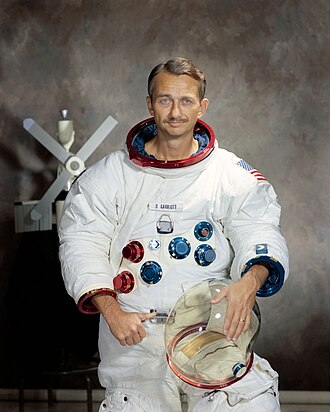
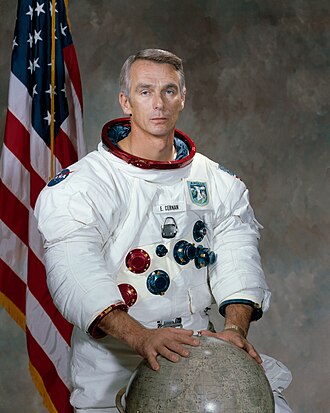
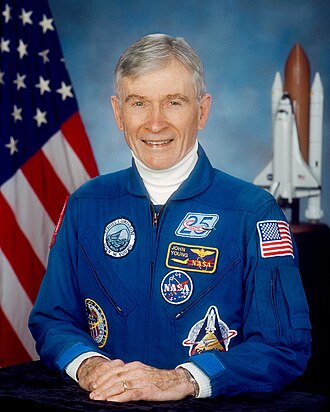
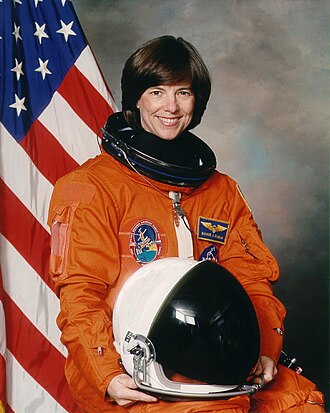
图:NASA · Public domain · Wikimedia Commons
- 出生
- 1930 年 11 月 22 日,伊尼德
- 逝世
- 2019 年 4 月 15 日,亨茨维尔
- 国籍
- 美国
- 学科
- 工程与发明、博物与综合
- 职业
- 军官、电气工程师、航天员、飞行员
- 母语 / 工作语言
- 英语
- 母校
- 俄克拉何马大学(理学士,1953 年)、伊尼德高中、斯坦福大学(理学硕士,1957 年)
- 工作单位
- 美国国家航空航天局、斯坦福大学、亚拉巴马大学亨斯维尔校区
研究领域
所获奖项(4)
- 1973美国宇航局杰出服务奖章
- 1975罗伯特·H·戈达德博士纪念奖
- 1983美国宇航局太空飞行奖章
- —美国宇航员名人堂
学会与院士
百科正文
英文维基百科补充中文条目比较短,下面是英文条目「Owen Garriott」的原文
Owen Kay Garriott (November 22, 1930 – April 15, 2019) was an American electrical engineer and NASA astronaut, who spent 60 days aboard the Skylab space station in 1973 during the Skylab 3 mission, and 10 days aboard Spacelab-1 on a Space Shuttle mission in 1983.
After serving in the United States Navy, Garriott was an engineering professor at Stanford University before attending the United States Air Force Pilot Training Program and later joining NASA. After his NASA career, he worked for various aerospace companies, consulted on NASA-related committees, taught as an adjunct professor, and conducted research on microbes found in extreme environments.
Early life
Owen Kay Garriott was born in Enid, Oklahoma, on November 22, 1930, to Owen and Mary Catherine Garriott (née Mellick). Owen's middle name was based on his mother's middle name. He was a Boy Scout (earning the rank of Star Scout), and graduated from Enid High School in 1948, where he served as senior class president and was voted "Most Likely To Succeed." He received a Bachelor of Science degree in electrical engineering from the University of Oklahoma in 1953, where he was a member of Phi Kappa Psi fraternity. He was also the elected president of the senior class. He later earned Master of Science and Ph.D. degrees from Stanford University in electrical engineering in 1957 and 1960, respectively.
Career
U.S. military
Garriott served as electronics officer in the United States Navy from 1953 to 1956. From 1961 through 1965, he was an assistant professor and associate professor of electrical engineering at Stanford University. He performed research and led graduate studies in ionospheric physics after obtaining his doctorate, and authored or co-authored more than 45 scientific papers, chapters and one book, principally in areas of the physical sciences.
As a prerequisite of the era's scientist-astronaut training, he completed a one-year United States Air Force pilot training program in 1966, receiving qualification as pilot in jet aircraft.
NASA
In 1965, Garriott was among the six scientist-astronauts selected by NASA. His first spaceflight, the Skylab 3 mission in July–September 1973, set a record for duration of over 59 days, more than doubling the one of the spring's Skylab 2, just to be soon beaten by Skylab 4.
Personal life and death
Garriott married Helen Mary Walker, his high school sweetheart, in 1952. They had four children, including Robert Garriott and Richard Garriott. After he divorced his first wife, Garriott married Evelyn L. Garriott, who had three children from a previous relationship.
His son Richard was launched as a space tourist on board Soyuz TMA-13 on October 12, 2008, the first American and the second person worldwide to follow a parent into space. Owen Garriott was in mission control at the Baikonur Cosmodrome in Kazakhstan for the launch and was in attendance when his son returned 12 days later.
Garriott died on April 15, 2019, at his home in Huntsville, Alabama.
Organizations
Garriott was a member of the following organizations: American Astronautical Society (fellow), American Institute of Aeronautics and Astronautics (associate fellow), Institute of Electrical and Electronics Engineers, American Geophysical Union, American Association for the Advancement of Science, Association of Space Explorers (Board of Directors), Astronaut Scholarship Foundation (vice president and vice chairman).
Awards and honors
Garriott received the following honors: National Science Foundation Fellowship, 1960–1961; Honorary Doctorate of Science, Phillips University (Enid, Okla.), 1973; NASA Distinguished Service Medal, 1973; Fédération Aéronautique Internationale V. M. Komarov Diploma for 1973; the Octave Chanute Award for 1975; and the NASA Space Flight Medal, 1983.
The three Skylab astronaut crews were awarded the 1973 Collier Trophy "For proving beyond question the value of man in future explorations of space and the production of data of benefit to all the people on Earth." Gerald Carr accepted the 1975 Dr. Robert H. Goddard Memorial Trophy from President Ford, awarded to the Skylab astronauts.
He was one of five Oklahoman astronauts inducted into the Oklahoma Aviation and Space Hall of Fame in 1980, the United States Astronaut Hall of Fame in 1997, the Oklahoma Military Hall of Fame in 2000, and the Enid Public Schools Hall of Fame in 2001.
Garriott was presented an Honorary Doctorate of Science from Phillips University in 1973.
以上节选摘自英文维基百科「Owen Garriott」,按 CC BY-SA 4.0 使用,去掉了参考文献、外部链接等尾部小节,公式改写成了纯文本。篇幅所限,较长的小节只摘了开头一部分,有的小节没有收;全文、配图和出处见原文。