格物

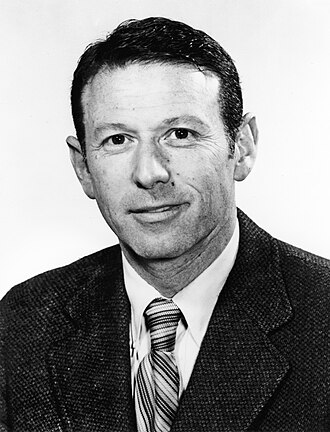
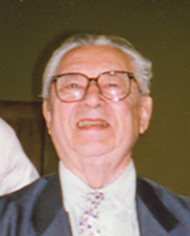
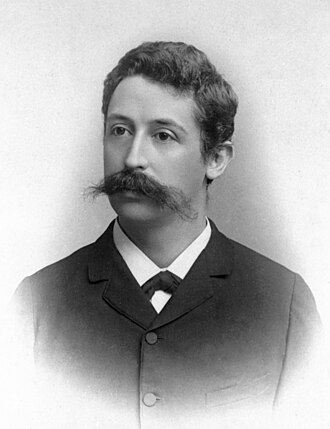
图:פרופ' אלכסנדר לויצקי · Attribution · Wikimedia Commons
亚历山大·莱维茨基1940—
Alexander Levitzki
Israeli biochemist
Alexander Levitzki is an Israeli biochemist who is a professor of biochemistry at the Alexander Silberman Institute of Life Sciences, the Hebrew University of Jerusalem.
摘自英文维基百科「Alexander Levitzki」(英文维基百科,暂无中文条目),CC BY-SA 4.0
- 出生
- 1940 年 8 月 13 日,耶路撒冷
- 国籍
- 以色列
- 学科
- 化学、生物学
- 职业
- 生物化学家、大学教师
- 母语 / 工作语言
- 英语
- 母校
- 耶路撒冷希伯来大学
- 工作单位
- 耶路撒冷希伯来大学
研究领域
所获奖项(4)
- 1990以色列国家奖
- 2005沃尔夫医学奖
- 2017艾迈特艺术科学与文化奖
- —欧洲分子生物学组织成员
学会与院士
百科正文
本条目暂无中文维基百科条目,下面是英文维基百科原文。
Birth and education
Levitzki was born in 1940 in British Mandate for Palestine. He attended high school at the Hebrew University Secondary School. He completed his M.Sc. in chemistry from the Hebrew University of Jerusalem in Israel. He received his Ph.D. in biochemistry and biophysics from the Hebrew University of Jerusalem and the Weizmann Institute of Science, in 1968. From 1968 to 1971, he was a post-doctoral fellow at the Department of Biochemistry, University of California at Berkeley in California, with Professor Daniel E. Koshland, Jr., where he worked in particular on negative cooperativity and half-of-the-sites reactivity. Levitzki is not a descendant of the Hebrew Levite tribe.
Academic career
In 1970, Levitzki became a senior scientist at the Department of Biophysics, Weizmann Institute of Science. In 1974, he became an associate professor at the same institute.
In 1974, he became an associate professor at the Hebrew University of Jerusalem. In 1976, he was promoted to professor of biochemistry at the Hebrew University of Jerusalem. He has been visiting scientist at the National Cancer Institute, and Fogarty International Scholar, NIH, Bethesda, Maryland, visiting scholar at Stanford University in California, visiting professor at the University of Oregon (Eugene) and visiting professor at the University of California, San Francisco. He is also a member of the Israel Academy of Sciences and Humanities and was the head of its science section.
Research
Levitzki is known for developing specific chemical inhibitors of cancer-induced protein kinases. He was the first to develop systematically tyrosine phosphorylation inhibitors (tyrphostins) against a wide spectrum of protein tyrosine kinases. Levitzki demonstrated (1993) that such an inhibitor of Bcr-Abl kinase induces death of chronic myeloid leukemia (CML) cells. This work led to the development of Gleevec by Novartis (1996), which is currently used, with great success, for therapy of patients afflicted by this disease. Levitzki also pioneered the inhibitors of EGF receptor, PDGF receptor, Her-2/neu, Jak-2, VEGFR and peptide based cell permeable PKB/Akt inhibitors. Levitzki also showed that PDGFR kinase inhibitors (PDGFR directed tyrphostins), released from nanoparticles or from a drug eluting stent can be used to inhibit restenosis after balloon angioplasty.
In 2006 his research team developed a method for inducing brain tumor cells to "commit suicide".
Awards
In 1990, he was awarded the Israel Prize, in life sciences (following in the footsteps of his father, Jacob Levitzki, who had received the prize, for exact sciences, in 1953).
In 2005, he was awarded the Wolf Prize in Medicine for "pioneering signal transduction therapy and for developing tyrosine kinase inhibitors as effective agents against cancer and a range of other diseases".
I. & H. Wachter Award, I. & H. Wachter Foundation (2014)
以上内容摘自英文维基百科「Alexander Levitzki」,按 CC BY-SA 4.0 使用,去掉了参考文献、外部链接等尾部小节,公式改写成了纯文本。全文、配图和出处见原文。