格物
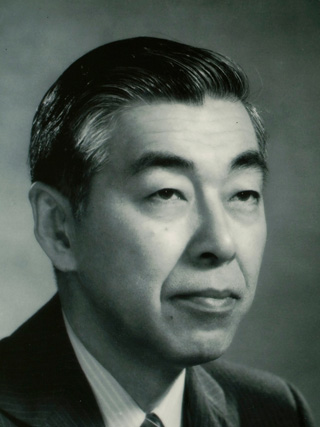
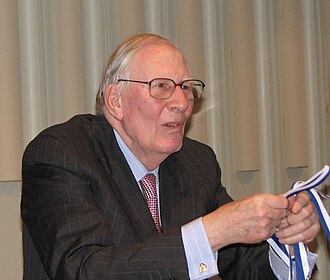
图:日本学士院 · CC BY 4.0 · Wikimedia Commons
石坂公成1925—2018
Kimishige Ishizaka
Japanese Immunologist (1925-2018)
石坂公成,日本科学家、医学家、免疫学家,美国国家科学院外籍院士,现任拉霍亚过敏与免疫学研究所名誉所长,也是经团连原会长石坂泰三的外甥。
摘自维基百科「石坂公成」,CC BY-SA 4.0
- 出生
- 1925 年 12 月 3 日,东京
- 逝世
- 2018 年 7 月 6 日,山形市
- 国籍
- 日本、大日本帝国
- 学科
- 生物学
- 职业
- 免疫学家、大学教师、医生、过敏症専科医生
- 母语 / 工作语言
- 日语、英语
- 母校
- 东京大学
- 工作单位
- 约翰·霍普金斯大学、京都大学、科罗拉多大学丹佛分校、丹佛大学
研究领域
所获奖项(7)
- 1973盖尔德纳国际奖
- 1973保罗·埃尔利希和路德维希‧达姆施泰特奖
- 1973朝日奖
- 1974日本文化勋章
- 1974文化功劳者
- 1974恩赐奖
- 2000日本国际奖
学会与院士
百科正文
石坂公成与他的妻子石坂照子是免疫球蛋白E的发现者。在日本,为纪念石坂的重要发现,每年2月20日及其当周被定为“过敏纪念日”与“过敏纪念周”。
石坂夫妇是最初的日本人盖尔德纳国际奖得主,长年被视为诺贝尔奖的热门人选。
生平
出生于东京府(今 东京都),父亲是大日本帝国陆军少将石坂弘毅。他从东京大学医学部毕业并取得医学博士学位。
石坂家系出埼玉县大里郡奈良村(现熊谷市)的地主之家。
石坂公成历任国立预防卫生研究所免疫血清室长、小儿喘息研究所(丹佛)免疫部长、约翰·霍普金斯大学医学院教授(兼任京都大学医学部教授)、加州大学圣地亚哥分校教授、拉霍亚过敏与免疫学研究所所长等职。
石坂公成与他的学生岸本忠三(第14任大阪大学校长)曾在约翰·霍普金斯大学共事,他也与妻子石坂照子(英文名:Terry)一起从事科学研究。
退休后的石坂夫妇在山形县养老。
贡献
1966年2月20日,石坂公成与石坂照子发现免疫球蛋白E,使得世界过敏研究取得重大突破。
基于其对免疫学的毕生贡献,石坂先后获得1973年的盖尔德纳国际奖与2000年的日本国际奖,并名列《美国科学名人录》。
荣誉
- 1972年 Passano Award
- 1973年 武田医学奖
- 1973年 朝日奖
- 1973年 盖尔德纳国际奖
- 1974年 恩赐奖・日本学士院奖、文化勋章、文化功劳者
- 1983年 当选美国国家科学院外籍院士
- 1997年 日本学士院会员
1995年开始,日本过敏协会定每年2月20日及其当周为“过敏纪念日”与“过敏纪念周”,以纪念石坂公成发现免疫球蛋白E
1999年 勲一等瑞宝章
2000年 日本国际奖
以上内容摘自维基百科「石坂公成」,按 CC BY-SA 4.0 使用,去掉了参考文献、外部链接等尾部小节,公式改写成了纯文本。全文、配图和出处见原文。
英文维基百科补充中文条目比较短,下面是英文条目「Kimishige Ishizaka」的原文
Kimishige "Kimi" Ishizaka (石坂 公成, Ishizaka Kimishige; 3 December 1925 – 6 July 2018) was a Japanese immunologist who, with his wife Teruko Ishizaka, discovered the antibody class Immunoglobulin E (IgE) in 1966–1967. Their work was regarded as a major breakthrough in the understanding of allergy. He was awarded the 1973 Gairdner Foundation International Award and the 2000 Japan Prize for his work in immunology.
Early life and education
Ishizaka was born in Tokyo to Koki and Kiku Ishizaka. His father was a career soldier who retired in 1933 as a lieutenant general.
Ishizaka obtained his medical qualifications and PhD in 1948 from the University of Tokyo. He "was captivated by immunology while taking a summer course in college" and abandoned plans to become a physician.
Career
From 1953 to 1962, he headed the immunoserology division at the department of serology at the Japanese National Institute of Health. During his tenure in that position he spent two years as a research fellow at Caltech (1957–1959).
In 1962, Ishizaka and his wife Teruko were recruited by Sam Bukantz, medical director of the Children's Asthma Research Institute and Hospital (CARIH), and moved to Denver, Colorado. He assumed the post of assistant professor of microbiology at the University of Colorado Medical School, as well as chief of immunology of its associated Children's Asthma Research Institute and CARIH. In 1965, he was promoted to associate professor at University of Colorado Denver.
While at Denver, the Ishizakas discovered the antibody class Immunoglobulin E (IgE) in 1966–1967 and its interplay with mast cells. They demonstrated the IgE's critical role in mediating the release of histamine from mast cells. The discovery of IgE is considered a milestone in immunology and the understanding of allergy.
In 1970, Ishizaka was appointed as O'Neill Professor of Medicine and Microbiology at Johns Hopkins University School of Medicine in Baltimore, Maryland, as well as professor of biology at the Faculty of Arts and Science. From 1982 to 1986, he served as president of the Collegium International Allergologicum. He was elected a foreign associate of the United States National Academy of Sciences in 1983. Ishaka remained at the university until 1989, when he became scientific director, and then president in 1990, of the La Jolla Institute for Allergy and Immunology in La Jolla, California.
After retiring in 1996, he returned to Japan and served as honorary director of the Institute of Immunology at Yamagata University.
Recognition
The Ishizakas received numerous awards for their work in allergy and immunology. In 1972, they received the Passano Foundation Award. In 1973, he received the German Paul Ehrlich and Ludwig Darmstaedter Prize, the Takeda Medical Award, the first Scientific Achievement Award of the International Association of Allergology and together received the Gairdner Foundation International Award. In 1974, he received the Asahi Cultural Award, the Imperial Prize of the Japan Academy, and the Japanese Order of Culture. In 1979, they received the Borden Award. In 2000, he was awarded the 16th Japan Prize.
Personal life and death
Ishizaka was married to Teruko Ishizaka, his partner in many of their discoveries. He died of heart failure at the age of 92 on 6 July 2018 at Yamagata University Hospital in Yamagata, Yamagata.
以上内容摘自英文维基百科「Kimishige Ishizaka」,按 CC BY-SA 4.0 使用,去掉了参考文献、外部链接等尾部小节,公式改写成了纯文本。全文、配图和出处见原文。
同年获同一奖项
同一学科、同时代的科学家