格物
约翰·爱德华·马尔1857—1933
John Edward Marr
British geologist (1857–1933)
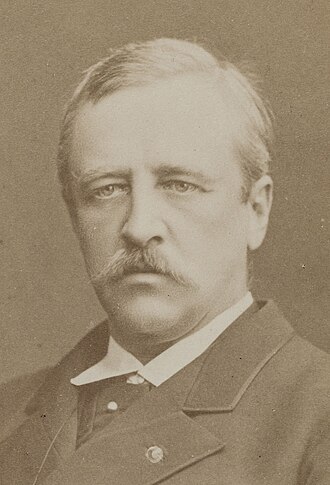
约翰·爱德华·马尔 是一位英国地质学家。
摘自维基百科「约翰·爱德华·马尔」,CC BY-SA 4.0
- 出生
- 1857 年 6 月 14 日,Poulton-le-Sands
- 逝世
- 1933 年 10 月 1 日,剑桥
- 国籍
- 英国、大不列颠及爱尔兰联合王国
- 学科
- 生物学、地球科学、博物与综合
- 职业
- 古生物学家、大学教师、地质学家
- 母语 / 工作语言
- 英语
- 母校
- 剑桥大学圣约翰学院、Lancaster Royal Grammar School
- 工作单位
- 剑桥大学
研究领域
所获奖项(5)
- 1900莱伊尔奖章
- 1914沃拉斯顿奖章
- 1930皇家奖章
- —英国皇家学会院士
- —Fellow of the Geological Society of London
学会与院士
百科正文
荣誉
1891年当选皇家学会会士,1904至1906年任伦敦地质学会会长,1900年获得莱尔奖章,1914年获沃拉斯顿奖章,1930年获皇家奖章。
以上内容摘自维基百科「约翰·爱德华·马尔」,按 CC BY-SA 4.0 使用,去掉了参考文献、外部链接等尾部小节,公式改写成了纯文本。全文、配图和出处见原文。
英文维基百科补充中文条目比较短,下面是英文条目「John Edward Marr」的原文
John Edward Marr (14 June 1857 – 1 October 1933) was a British geologist.
After studying at Lancaster Royal Grammar School, he matriculated to St John's College, Cambridge, graduating with First Class Honours in 1878. Following undergraduate work in the Lake District, he travelled to Bohemia to investigate the fossil collection of Joachim Barrande, where his work won him the Sedgwick Prize in 1882. In 1886, Marr became a lecturer at the University of Cambridge Department of Geology, a position he held for 32 years until he succeeded Thomas McKenny Hughes as Woodwardian Professor of Geology in 1917.
Early life and education
Marr was born in Poulton-le-Sands on 14 June 1857 to John Marr, a retired silk merchant, and his wife Mary Simpson. After the family stayed in Caernarfon in 1863, Marr became interested in geology, having discovered a fossil which was named after him. From 1867 to 1875 he studied at the Lancaster Royal Grammar School, where he met R. H. Tiddeman, who took Marr on a number of field trips and geological surveys. In 1875, he matriculated to St John's College, Cambridge to study geology as an exhibitioner, having won a Foundation Scholarship. There he studied under Thomas George Bonney and Thomas McKenny Hughes, graduating with First Class Honours in 1878. As an undergraduate, he published several papers, including one on his discovery of Cambrian fossils in Caernarfonshire that could not be accurately dated, something that occupied a lot of his later work. He was also a member of the Sedgwick Club during his time at Cambridge. In 1879, he became a Fellow of the Geological Society of London, and in 1881 was elected a Fellow of St John's College.
Research work and Later Life
After graduation, Marr used two research funds from the Worts Fund of Cambridge University to investigate the work done in Bohemia and Scandinavia to reorder the older palaeozoic rocks, his work in the Lake District having convinced him that it was possible to order the confusing succession of paleozoic rocks as it then stood. In 1879, he travelled to the collection of Joachim Barrande, who had found newer Upper Silesian fossils among older Lower Silesian ones and hypothesised that the two groups existed side by side. Marr instead proved that the younger fossils had "dropped" into the older rock as a result of faults in the stone. Barrande himself was not convinced, but Marr's work on recategorising the Silesian fossils won him the Sedgwick Prize in 1882.
Marr then returned to the Lake District, where he worked with Henry Alleyne Nicholson on the succession of the Stockdale Shales. He then worked with Alfred Harker on a similar project in Shap. In his Lake District work Marr came up with the idea of lag faulting to explain the topography of the District, subscribing much of the layout to glacial erosion. His theories were later published in a 1916 book The Geology of the Lake District.
Having retired as a professor in 1930, he died in Cambridge on 1 October 1933.
Other work and awards
In 1886, Marr became University Lecturer in Geology at the University of Cambridge, a position he held for 32 years until he succeeded Thomas McKenny Hughes as Woodwardian Professor of Geology in 1917. He spent 13 years as Professor before retiring due to ill-health in 1930, followed by his death on 1 October 1933.The Marr Memorial Fund supports the "study of Geology in the field", with preference given to students of the department.
Marr served as Secretary of the Geological Society of London from 1888 to 1898, Vice-President and President from 1904 to 1906, serving on the council for 35 years and as Foreign Secretary for 3. The Society awarded him the Lyell Medal in 1900 and the Wollaston Medal in 1914. In 1891 he was made a Fellow of the Royal Society, serving on the Society council from 1904 to 1906, and was awarded their Royal Medal in 1930.
He was made an Honorary Fellow of the Royal Society of Edinburgh in 1930.
The fossil Marrella, from the Burgess Shale, was named in his honour by its discoverer, Charles Doolittle Walcott. The mineral marrite, a lead-silver-arsenic sulphide, was named in his honour in 1905.
以上内容摘自英文维基百科「John Edward Marr」,按 CC BY-SA 4.0 使用,去掉了参考文献、外部链接等尾部小节,公式改写成了纯文本。全文、配图和出处见原文。
同一学科、同时代的科学家



同一学科的科学家
更多 ›