格物
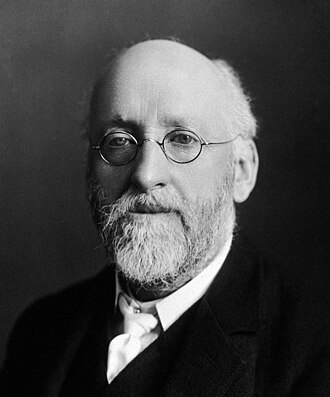
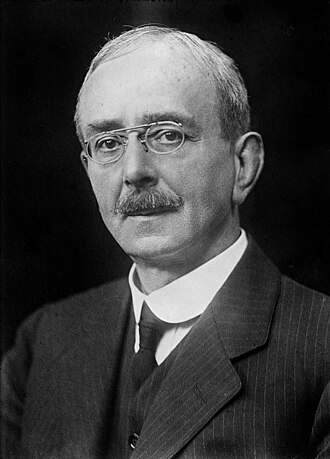
图:Maull & Fox · CC BY 4.0 · Wikimedia Commons
威廉·贝利斯1860—1924
William Bayliss
British physiologist (1860–1924)
威廉·贝利斯爵士,英国生理学家。他以揭示分泌素的作用机理而知名,此外还研究了酶的机理、心电图的原理以及血管的收缩扩张。
摘自维基百科「威廉·贝利斯」,CC BY-SA 4.0
- 出生
- 1860 年 5 月 2 日,伍尔弗汉普顿
- 逝世
- 1924 年 8 月 27 日,伦敦
- 国籍
- 大不列颠及爱尔兰联合王国
- 学科
- 生物学
- 职业
- 生理学家、大学教师
- 母语 / 工作语言
- 英语
- 母校
- 牛津大学瓦德汉学院、伦敦大学学院
- 工作单位
- 伦敦大学学院
研究领域
所获奖项(7)
- 1904克鲁内演讲
- 1911皇家奖章
- 1917贝利奖章
- 1919科普利奖章
- 1922下级勋位爵士
- 1923honorary doctorate from the University of Strasbourg
- —英国皇家学会院士
学会与院士
百科正文
生平
贝利斯生于斯塔福德郡温斯伯里市。1880年进入伦敦大学学院。1882年成为理学学士,1885年进入牛津大学攻读生理学,1888年获博士学位。后任教于大学学院。1902年与其导师恩斯特·亨利·斯塔林(Ernest Henry Starling)发现了激素作用的原理。1914年出版了《普通生理学原理》一书。晚年的贝利斯还参与了社会主义运动。
以上内容摘自维基百科「威廉·贝利斯」,按 CC BY-SA 4.0 使用,去掉了参考文献、外部链接等尾部小节,公式改写成了纯文本。全文、配图和出处见原文。
英文维基百科补充中文条目比较短,下面是英文条目「William Bayliss」的原文
Sir William Maddock Bayliss (2 May 1860 – 27 August 1924) was an English physiologist.
Life
He was born in Wednesbury, Staffordshire but shortly thereafter his father, a successful merchant of ornamental ironwork, moved his family to a house he had built on West Heath Road in Hampstead in north London, which he named St Cuthberts. It stood in four acres of gardens. William was his sole heir. He began to study medicine at University College London in 1880, but dropped out when he failed anatomy. Attracted to physiology, he studied under John Burdon Sanderson at Wadham College, Oxford, where he won a first class degree, investigating electrical changes occurring during salivary secretion. He returned to University College London in 1888 as an assistant to Edward Sharpey-Schafer. In 1890 he began to collaborate with Ernest Starling, who was at Guy's Hospital, on the electrical activity of the heart. They complemented each other in many ways: for instance, Bayliss dealt with the recording apparatus while Starling worked with the preparation.
Bayliss married Starling's sister Gertrude in 1893; they had three sons and one daughter. They enjoyed entertaining at their London estate, even hosting all those attending London meetings of the Physiological Society. He built a laboratory in a corrugated iron shed in his four-acre garden. Bayliss and Starling first studied pressures in the veins and capillaries, but in 1897 they radically changed direction to work on the control of the motility of the gut. Collaboration became easier when Starling moved to University College London as the Jodrell Chair of Physiology in 1899.
Hormones
It was known that injecting hydrochloric acid into the intestinal lumen evoked secretion by the pancreas; injection into the blood did not. Bayliss & Starling set out to determine which nerves were involved, but denervation did not block the response. In a flash of inspiration they ground up a sample of intestinal mucosa in sand containing hydrochloric acid; injecting the filtered extract elicited copious pancreatic secretion. They called the responsible chemical secretin and named such messenger chemicals hormones. A "discovery must, as it seems to me, ever rank as one of the landmarks of physiology—-the discovery not merely of a new thing, but of a new process of life".
In 1903 he was demonstrating to the medical students an experiment on an anesthetized dog. Two visiting Swedish ladies believed that the anesthesia was insufficient and reported this to Stephen Coleridge, secretary of the anti-vivisection society: his charges of torture were widely reported in the newspapers. The wealthy Bayliss had the resources to demand an apology, and when this was denied to sue for libel. The trial in the Brown Dog affair filled the newspapers, the jury found for Bayliss.
Bayliss then studied the circulation of the brain and the action of enzymes, he was a founder of the Biochemical Society. In 1912 a Professorship in General Physiology was created for him at University College London.
During the first years of World War I Starling was in the army, so Bayliss taught physiology and served on the Royal Society Food (War) Committee. In 1916 he presented a paper on wound shock. It was known that in shock blood volume is decreased, even when the patient has not bled. This loss of blood causes the fall in blood pressure, because the heart has less blood to pump. This fall in blood pressure is responsible for the symptoms of shock. If blood volume is restored by injecting a salt solution then blood pressure rises, but only transitionally. Intravenous salt solutions had not helped men shocked during the Battle of the Somme. Using cats Bayliss demonstrated that if the salt solution contains five per cent gelatin or gum arabic the rise in blood pressure is sustained and shock is alleviated.
Honours and awards
Bayliss was elected a Fellow of the Royal Society in June 1903. He jointly delivered their Croonian lecture in 1904 and was awarded their Royal Medal in 1911 and their Copley Medal in 1919.
He was knighted for his contribution to medicine in 1922.
Death
Bayliss died in London in 1924.
The Bayliss and Starling Society was founded in 1979 as a forum for scientists with research interests in central and autonomic peptide function.
Family
His son, Dr Leonard Ernest Bayliss FRSE (1901–1964) was also a physiologist. who continued the family tradition of writing physiology textbooks.
以上节选摘自英文维基百科「William Bayliss」,按 CC BY-SA 4.0 使用,去掉了参考文献、外部链接等尾部小节,公式改写成了纯文本。篇幅所限,较长的小节只摘了开头一部分,有的小节没有收;全文、配图和出处见原文。
同一学科、同时代的科学家



同一学科的科学家
更多 ›