格物

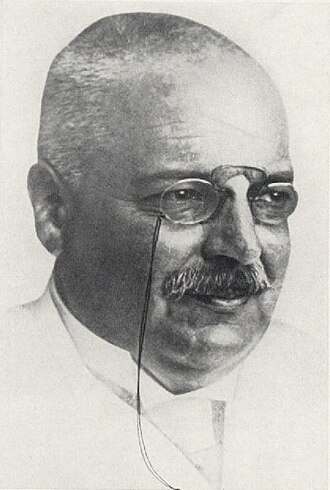
图:Thomas Herbert Maguire · Public domain · Wikimedia Commons
George Busk1807—1886
surgeon, zoologist and palaeontologist (1807-1886)
George Busk FRS FRAI was a British naval surgeon, zoologist and palaeontologist.
摘自英文维基百科「George Busk」(英文维基百科,暂无中文条目),CC BY-SA 4.0
- 出生
- 1807 年 8 月 12 日,圣彼得堡
- 逝世
- 1886 年 8 月 10 日,伦敦
- 国籍
- 大不列颠及爱尔兰联合王国
- 学科
- 生物学、地球科学、医学、博物与综合
- 职业
- 古生物学家、动物学家、外科医生
- 母语 / 工作语言
- 英语
- 母校
- 伦敦医学院
所获奖项(6)
- 1846Fellow of the Linnean Society of London
- 1850英国皇家学会院士
- 1871皇家奖章
- 1878莱伊尔奖章
- 1885沃拉斯顿奖章
- —Fellow of the Ethnological Society of London
学会与院士
百科正文
本条目暂无中文维基百科条目,下面是英文维基百科原文。
Early life, family and education
Busk was born in St. Petersburg, Russia. He was the son of the merchant Robert Busk and his wife Jane. Robert Busk was the son of Sir Wadsworth Busk, who was an Attorney General of the Isle of Man and grandfather of Anna Jane Busk (1813-1888) whose grandson, William George Lupton (1871-1911), was named in honour of George. Jane Busk's father, John Westly, was Customs House clerk in St. Petersburg.
Busk studied at Dr. Hartley's School in Yorkshire. He studied surgery in London, at both St Thomas' Hospital and for one session at St Bartholomew's Hospital.
Career
Busk was appointed assistant-surgeon to the Greenwich Hospital in 1832. He served as naval surgeon first in HMS Grampus. He later served for many years in HMS Dreadnought, which had fought at Trafalgar. In Busk's time it was used by the Seamen's Hospital Society as a hospital ship for ex-members of the Merchant Navy or fishing fleet and their dependants. During this period Busk made important observations on cholera and on scurvy.
He founded the Greenwich Natural History Society in 1852, serving as its president until 1858.
In 1855, he retired from service and from medicine and settled in London, where he devoted himself mainly to the study of zoology and palaeontology. As early as 1842, he assisted in editing the Microscopical Journal; and later he edited the Quarterly Journal of Microscopical Science (1853–68) and the Natural History Review (1861–65). He was a member of the famous X-Club, founded by T. H. Huxley, which was active in revitalising science in the period 1865–1885. Busk and his wife Ellen were close friends of Huxley. Busk successfully nominated Charles Darwin for the Copley Medal, the highest award of the Royal Society, in 1864.
From 1856 to 1859, he was Hunterian Professor of Comparative Anatomy and Physiology in the Royal College of Surgeons, and he became President of the college in 1871. He was elected Fellow of the Royal Society in 1850. Busk was an active member of the Linnean Society, the Geological Society and president of the Ethnological Society and then the Anthropological Institute (1873–74). He received the Royal Society's Royal Medal and the Geological Society's Wollaston and Lyell medals.
Busk was the leading authority on the Polyzoa; and later the vertebrate remains from caverns and river deposits occupied his attention. In 1862, Busk was again in Gibraltar. He was responsible of bringing to England the Gibraltar skull (the second Neanderthal fossil ever found and the first known adult one) which was excavated at Gibraltar in 1848. The identification of the skull as belonging to a Neanderthal was not made until the 20th century.
Personal life and demise
On 12 August 1843, George Busk married his cousin Ellen, youngest daughter of Jacob Hans Busk. They had two daughters.
He died in London on 10 August 1886 and is buried at Kensal Green Cemetery, London, in the northern section of the central circle.
以上内容摘自英文维基百科「George Busk」,按 CC BY-SA 4.0 使用,去掉了参考文献、外部链接等尾部小节,公式改写成了纯文本。全文、配图和出处见原文。
同一学科、同时代的科学家





同一学科的科学家
更多 ›