格物
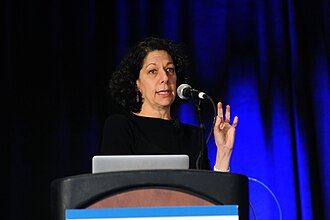
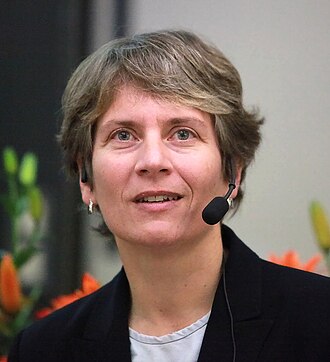
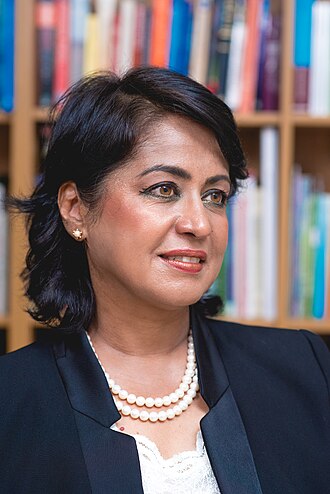
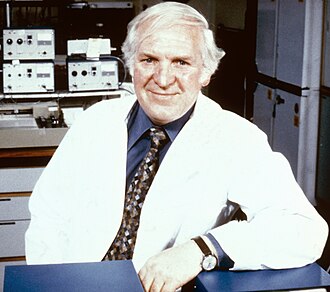
图:Staff Asbmb · CC BY 2.0 · Wikimedia Commons
邦尼·巴斯勒1962—
Bonnie L. Bassler
American molecular biologist
邦尼·林恩·巴斯勒,美国分子生物学家。自1994年以来任普林斯顿大学教授。
摘自维基百科「邦尼·巴斯勒」,CC BY-SA 4.0
- 出生
- 1962 年,芝加哥
- 国籍
- 美国
- 学科
- 化学、生物学
- 职业
- 分子生物学家、大学教师、生物化学家、微生物学家
- 母语 / 工作语言
- 英语
- 母校
- 约翰·霍普金斯大学、戴维斯加利福尼亚大学
- 工作单位
- 普林斯顿大学(1994—)、霍华德·休斯医学研究所(2005—)、普林斯顿大学(2013—)、普林斯顿大学(2010—)、普林斯顿大学(2003—)、普林斯顿大学(1996—)、普林斯顿大学(2000—2003)、普林斯顿大学(1994—2000)
师承
博士生1
来自 Wikidata 的「博士导师」「师从」「博士生」「学生」记录,可能不全。
所获奖项(18)
- 2005美国科学促进会会士
- 2011理查德·劳恩斯伯里奖
- 2012欧莱雅-教科文组织女科学家奖
- 2015邵逸夫生命科学与医学奖
- 2015Howard Taylor Ricketts Prize
- 2016珀尔·美斯特·格林加德奖
- 2016马克斯·普朗克研究奖
- 2016FASEB Excellence in Science Award
- 2018Dickson Prize in Medicine
- 2018恩斯特先灵奖
- 2020格鲁伯遗传学奖
- 2020美国遗传学会奖章
- 2022沃尔夫化学奖
- 2022汤森路透引文桂冠奖
- 2023盖尔德纳国际奖
- 2025美国国家科学奖章
- —麦克阿瑟天才奖
- —阿斯图里亚斯亲王奖科学技术奖
学会与院士
百科正文
生平
巴斯勒出生于芝加哥,并在加利福尼亚州丹维尔长大,在约翰斯·霍普金斯大学的生物化学博士学位。她做出有关细菌交流机制的关键发现,被称为群体感应。 2002年,她被授予麦克阿瑟奖。2006年当选为美国国家科学院院士。
以上内容摘自维基百科「邦尼·巴斯勒」,按 CC BY-SA 4.0 使用,去掉了参考文献、外部链接等尾部小节,公式改写成了纯文本。全文、配图和出处见原文。
英文维基百科补充中文条目比较短,下面是英文条目「Bonnie Bassler」的原文
Bonnie Lynn Bassler (born 1962) is an American molecular biologist; the Squibb Professor in Molecular Biology and chair of the Department of Molecular Biology at Princeton University; and a Howard Hughes Medical Institute Investigator. She has researched cell-to-cell chemical communication in bacteria and discovered key insights into the mechanism by which bacteria communicate, known as quorum sensing. She has contributed to the idea that disruption of chemical signaling can be used as an antimicrobial therapy.
Bassler has received numerous awards for her research, including the Princess of Asturias Award (2023), Paul Ehrlich and Ludwig Darmstaedter Prize (2021), the Pearl Meister Greengard Prize (2016), the L'Oreal-UNESCO award (2012), the Richard Lounsbery Award (2011), the Wiley Prize in Biomedical Sciences (2009), and a MacArthur Fellowship (2002).
She is an elected member of the National Academy of Sciences (as of 2006), a Foreign Member of the Royal Society (as of 2012), a former president of the American Society for Microbiology (2011) and served on the National Science Board with a term expiring May 10, 2016. She was an editor of the Annual Review of Genetics from 2012 to 2017.
Early life and education
Bassler was born in Chicago and raised in Danville, California. She began her career in science at 13 "as a veterinarian's assistant at the Miami Zoo and later at a local dog and cat clinic."
Bassler entered the University of California, Davis as a major in veterinary sciences, but focused on genetics and biochemistry and received a Bachelor of Science in biochemistry. Bassler worked for UC Davis biochemistry and molecular medicine professor Frederic Troy, who assigned her to a bacteria research project. Within this project, Bassler characterized an enzyme in E. coli which cleaved sugars from various membrane glycoproteins. Bassler has stated that prokaryotes are "the perfect creatures to work on." Bassler attended Johns Hopkins University and received a PhD in biochemistry in 1990.
Her postdoctoral research was conducted at the Agouron Institute in La Jolla, California where she worked with Michael R. Silverman from 1990 to 1994.
Silverman was the first to discover quorum sensing, by studying the marine bacterium Vibrio fischeri. The glow-in-the-dark bacteria communicate chemically about their numbers and only give off light when a cohort is large enough to create an effective light source. Bassler determined further that bacteria are "multilingual" and use multiple chemical signal molecules to communicate with each other.
Since then, Bassler has also shown that bacteria use quorum sensing to differentiate self and other, a trait previously thought to be limited to more highly evolved organisms. Bassler has shown that viruses and host cells (such as human cells) as well as bacteria, use quorum sensing, and that the virulence of pathogenic bacteria is in part a result of quorum sensing. Bassler has developed anti-quorum-sensing strategies that, in animal models, halt infection from bacterial pathogens of global significance.
In 1994, Bassler joined the Princeton faculty. She is currently the chair of the department of molecular biology and the Squibb Professor in molecular biology. Her lab at Princeton University researches quorum sensing, the process of cell-cell communication in bacteria.
Research
During her postdoctoral research, Bassler experimented with genetic manipulation of bioluminescent genes in V. harveyi bacteria and discovered that this bacteria had multiple molecules for quorum sensing. She found that these bacteria use quorum sensing to turn on and off a large number of genes in response to communications from other bacteria. These communications and responses allow bacteria of the same species and of different species to cooperate in a similar manner to multi-cellular organisms. She extended this research in a series of experiments leading to the discovery that boron binding is used as a co-factor in communication. Boron is found in abundance in the oceans where V. harveyi is found.
Bassler's lab focuses on intra- and inter-species communication, self versus non-self recognition, information transferring, and population level cooperation. Research topics include: How bacteria distinguish self from other: ligand-receptor interactions, Dynamics: small RNA regulation of quorum sensing, Biofilms under flow and the public goods dilemma, Manipulation of quorum sensing on demand, and microbiome quorum sensing and inter-kingdom communication.
以上节选摘自英文维基百科「Bonnie Bassler」,按 CC BY-SA 4.0 使用,去掉了参考文献、外部链接等尾部小节,公式改写成了纯文本。篇幅所限,较长的小节只摘了开头一部分,有的小节没有收;全文、配图和出处见原文。