格物

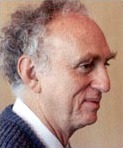
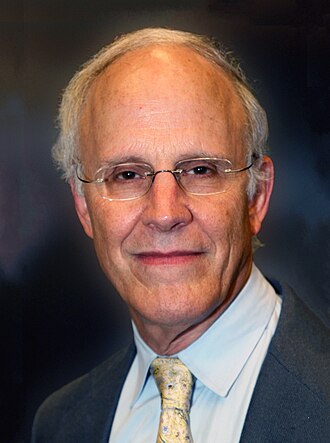
图:Nathan_Seiberg_at_Harvard.jpg: by Lumidek derivative work: B… · CC BY-SA 3.0 · Wikimedia Commons
内森·塞伯格1956—
Nathan Seiberg
Israeli American theoretical physicist
内森·塞伯格,以色列美国籍理论物理学家,研究方向为弦理论。目前,他是新泽西州普林斯顿高等研究院的教授。
摘自维基百科「内森·塞伯格」,CC BY-SA 4.0
- 出生
- 1956 年 9 月 22 日,特拉维夫
- 国籍
- 美国、以色列
- 学科
- 物理学、博物与综合
- 职业
- 物理学家、理论物理学家
- 母校
- 魏茨曼科学研究所
- 工作单位
- 普林斯顿高等研究院
研究领域
师承
博士导师1
博士生6
来自 Wikidata 的「博士导师」「师从」「博士生」「学生」记录,可能不全。
所获奖项(6)
- 1995奥斯卡·克莱因纪念讲座
- 1998希纳曼数学物理奖
- 2012基础物理学突破奖
- 2016狄拉克奖章(ICTP)
- —麦克阿瑟天才奖
- —美国物理学会会士
学会与院士
百科正文
奖项和荣誉
1996年,塞伯格获得了麦克阿瑟奖。1998年,他获得了丹尼·海涅曼数学物理奖。2012年,他获得了第一届基础物理学突破奖。2016年,他获得了ICTP狄拉克奖章。
以上内容摘自维基百科「内森·塞伯格」,按 CC BY-SA 4.0 使用,去掉了参考文献、外部链接等尾部小节,公式改写成了纯文本。全文、配图和出处见原文。
英文维基百科补充中文条目比较短,下面是英文条目「Nathan Seiberg」的原文
Nathan "Nati" Seiberg (; Hebrew: נתן "נתי" זייברג; born September 22, 1956) is an Israeli American theoretical physicist who works on quantum field theory and string theory. He is currently a professor at the Institute for Advanced Study in Princeton, New Jersey, United States.
Honors and awards
He was recipient of a 1996 MacArthur Fellowship and the Dannie Heineman Prize for Mathematical Physics in 1998. In July 2012, he was an inaugural awardee of the Breakthrough Prize in Fundamental Physics, the creation of physicist and internet entrepreneur, Yuri Milner. In 2016, he was awarded the Dirac Medal of the ICTP. He is a Fellow of the American Academy of Arts and Sciences and a Member of the US National Academy of Sciences.
Research
His contributions include:
Ian Affleck, Michael Dine, and Seiberg explored nonperturbative effects in supersymmetric field theories. This work demonstrated, for the first time, that nonperturbative effects in four-dimensional field theories do not respect the supersymmetry nonrenormalization theorems. This understanding led them to find four-dimensional models with dynamical supersymmetry breaking.
In a series of papers, Michael Dine and Seiberg explored various aspects of string theory. In particular, Dine, Ryan Rohm, Seiberg, and Edward Witten proposed a supersymmetry breaking mechanism based on gluino condensation, Dine, Seiberg, and Witten showed that terms similar to Fayet–Iliopoulos D-terms arise in string theory, and Dine, Seiberg, X. G. Wen, and Witten studied instantons on the string worldsheet.
Gregory Moore and Seiberg studied Rational Conformal Field Theories. In the course of doing it, they invented modular tensor categories and described many of their properties. They also explored the relation between Chern–Simons theory and the corresponding Rational Conformal Field Theory. This body of work was later used in mathematics and in the study of topological phases of matter.
In the 90’s, Seiberg realized the significance of holomorphy as the underlying reason for the perturbative supersymmetry nonrenormalization theorems and initiated a program to use it to find exact results in complicated field theories including several N=1 supersymmetric gauge theories in four dimension. These theories exhibit unexpected rich phenomena like confinement with and without chiral symmetry breaking and a new kind of electric-magnetic duality – Seiberg duality. Kenneth Intriligator and Seiberg studied many more models and summarized the subject in lecture notes. Later, Intriligator, Seiberg and David Shih used this understanding of the dynamics to present four-dimensional models with dynamical supersymmetry breaking in a metastable vacuum.
Seiberg and Witten studied the dynamics of four-dimensional N=2 supersymmetric theories – Seiberg–Witten theory. They found exact expressions for several quantities of interest. These shed new light on interesting phenomena like confinement, chiral symmetry breaking, and electric-magnetic duality. This insight was used by Witten to derive the Seiberg–Witten invariants. Later, Seiberg and Witten extended their work to the four-dimensional N=2 theory compactified to three dimensions.
Intriligator and Seiberg found a new kind of duality in three-dimensional N=4 supersymmetric theories, which is reminiscent of the well-known 2D mirror symmetry – 3D mirror symmetry.
In a series of papers with various collaborators, Seiberg studied many supersymmetric theories in three, four, five, and six dimensions. The three-dimensional N=2 supersymmetric theories and their dualities were shown to be related to the four-dimensional N=1 theories. And surprising five-dimensional theories with N=2 supersymmetries were discovered and analyzed.
As part of his work on the BFSS matrix model, Seiberg discovered little string theories. These are limits of string theory without gravity that are not local quantum field theories.
Seiberg and Witten identified a particular low-energy limit (Seiberg–Witten limit) of theories containing open strings in which the dynamics becomes that of noncommutative quantum field theory – a field theory on a non-commutative geometry. They also presented a map (Seiberg–Witten map) between standard gauge theories and gauge theories on a noncommutative space. Shiraz Minwalla, Mark Van Raamsdonk and Seiberg uncovered a surprising mixing between short-distance and long-distance phenomena in these field theories on a noncommutative space.
以上节选摘自英文维基百科「Nathan Seiberg」,按 CC BY-SA 4.0 使用,去掉了参考文献、外部链接等尾部小节,公式改写成了纯文本。篇幅所限,较长的小节只摘了开头一部分,有的小节没有收;全文、配图和出处见原文。
同年获同一奖项
同一学科、同时代的科学家










同一学科的科学家
更多 ›