格物
约珥·斯特宾斯1878—1966
Joel Stebbins
American astronomer (1878–1966)
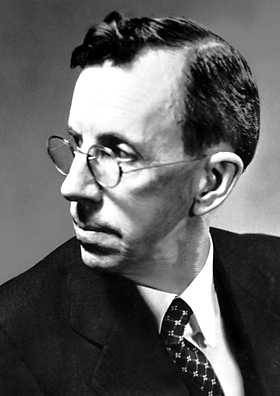
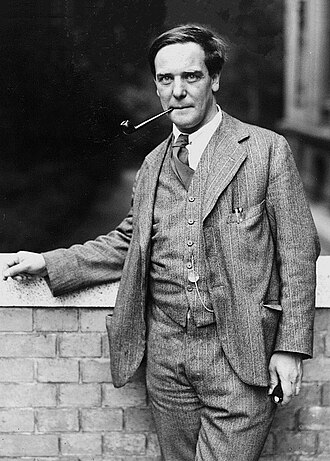
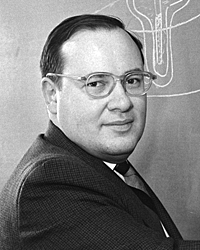
乔尔·斯特宾斯,美国天文学家,他开创了光电测光法。
摘自维基百科「乔尔·斯特宾斯」,CC BY-SA 4.0
- 出生
- 1878 年 7 月 30 日,奥马哈
- 逝世
- 1966 年 3 月 16 日,帕洛阿尔托
- 国籍
- 美国、德国
- 学科
- 物理学、天文学、博物与综合
- 职业
- 天文学家、物理学家
- 母校
- 威斯康星大学麦迪逊分校、内布拉斯加大学林肯分校、加利福尼亚大学(哲学博士,1903 年)
- 工作单位
- 威斯康星大学麦迪逊分校、伊利诺伊大学厄巴纳-香槟分校、加利福尼亚大学
师承
博士导师1
博士生1
来自 Wikidata 的「博士导师」「师从」「博士生」「学生」记录,可能不全。
所获奖项(5)
- 1913伦福德奖金
- 1915亨利·德雷伯奖章
- 1941布鲁斯奖
- 1950英国皇家天文学会金质奖章
- 1956亨利·诺利斯·罗素讲座
学会与院士
百科正文
奖项和荣誉
奖项
- 美国艺术和科学拉姆福德奖 (1913)
- 美国国家科学院亨利·德雷伯奖章 (1915)
- 太平洋天文学会布鲁斯奖章 (1941年)
- 英国皇家天文学会金质奖章 (1950年)
- 美国天文学会亨利·诺里斯·罗素讲座 (1956年)
命名事物
月球上的斯特宾斯环形山
小行星2300 斯特宾斯
以上内容摘自维基百科「乔尔·斯特宾斯」,按 CC BY-SA 4.0 使用,去掉了参考文献、外部链接等尾部小节,公式改写成了纯文本。全文、配图和出处见原文。
英文维基百科补充中文条目比较短,下面是英文条目「Joel Stebbins」的原文
Joel Stebbins (July 30, 1878 – March 16, 1966) was an American astronomer who pioneered photoelectric photometry in astronomy. He was director of the University of Illinois Observatory from 1903 to 1922 where he performed innovative work with the selenium cell. In 1922 he became director of the Washburn Observatory at the University of Wisconsin–Madison where he remained until 1948. After 1948, Stebbins continued his research at Lick Observatory until his final retirement in 1958.
Stebbins brought photoelectric photometry from its infancy in the early 1900s to a mature technique by the 1950s, when it succeeded photography as the primary method of photometry. He used the new technique to investigate eclipsing binaries, the reddening of starlight by interstellar dust, colors of galaxies, and variable stars.
Early life and education
Joel Stebbins was born in Omaha, Nebraska, on July 30, 1878, the son of Charles Stebbins, an office worker at the Union Pacific Railroad and his wife Sara Ann née Stubbs. Stebbins had two sisters, Eunice and Millicent.
He attended elementary and high school in Omaha, before entering the University of Nebraska in 1896. He received his Bachelor of Science (BS) degree in 1899, and remained for a year as a graduate student before leaving for the University of Wisconsin–Madison, where he studied astronomy at the Washburn Observatory under George C. Comstock.
Career
Stebbins published his first paper, concerning the light curve of Nova Persei with Comstock in 1901. He then received a fellowship from the Lick Observatory. He earned his Doctor of Philosophy (PhD) degree there under the supervision of William Wallace Campbell, writing a thesis on the spectra of Omicron Ceti. His was only the third PhD to be awarded for astronomy by the University of California, Berkeley. His thesis was subsequently published in the Astrophysical Journal in 1903.
Even before Stebbins received his doctorate, he took a job as an instructor in astronomy at the University of Illinois at Urbana-Champaign and director of the University of Illinois Observatory. He married May Louise Prentiss, who had been a classmate at the University of Nebraska, in Lincoln on June 27, 1905. They had two children.
Stebbins began making observations with a polarizing photometer. Frustrated by its use, he worked with F.C. Brown to develop a photometer based on a selenium cell. Beginning in 1907, Stebbins began the first measurements using the selenium cell photometer first on the moon and then later, as the sensitivity of the instrument was improved, on variable stars.
Retirement
Stebbins retired from the University of Wisconsin-Madison and the Washburn Observatory in 1948 at the age of seventy, and then went to work at the Lick Observatory, collaborating with Gerald Kron, who had once been his student. They used photometric methods to obtain new values for the luminosity of the Cepheids. This confirmed Walter Baade's extragalactic distance scale.
Having dealt with the bright Cepheids, Stebbins and Kron used photometric techniques to study the Sun, which is orders of magnitude brighter than any other object in the sky. Obtaining an accurate assessment of its stellar color and magnitude. He retired for good at the age of eighty.
Stebbins also contributed to ornithology, with his pioneering paper, with E.A. Fath, The Use of Astronomical Telescopes in Determining the Speeds of Migrating Birds.
Later life and death
In his later years, he suffered from leukaemia. He died at Palo Alto hospital on March 16, 1966. He was survived by his wife May, son Robert and daughter Isabelle. Some of his papers are in the University of Illinois Archives, but most of his correspondence and scientific papers are preserved in the University of Wisconsin-Madison Archives.
Some of his correspondence, related especially to his early and later days at Lick Observatory, resides in the Mary Lea Shane Archive of Lick Observatory, which is held at the archives of the University of California-Santa Cruz.
Honors
Awards
- Rumford Prize of the American Academy of Arts and Sciences (1913)
- Henry Draper Medal of the National Academy of Sciences (1915)
- Bruce Medal of the Astronomical Society of the Pacific (1941)
- Gold Medal of the Royal Astronomical Society (1950)
- Henry Norris Russell Lectureship of the American Astronomical Society (1956)
Honors
- Elected to the United States National Academy of Sciences (1920)
- Elected to the American Academy of Arts and Sciences (1921)
- Elected to the American Philosophical Society (1925)
Named after him
The crater Stebbins on the Moon
Asteroid 2300 Stebbins
以上节选摘自英文维基百科「Joel Stebbins」,按 CC BY-SA 4.0 使用,去掉了参考文献、外部链接等尾部小节,公式改写成了纯文本。篇幅所限,较长的小节只摘了开头一部分,有的小节没有收;全文、配图和出处见原文。
同一学科、同时代的科学家




同一学科的科学家
更多 ›