格物
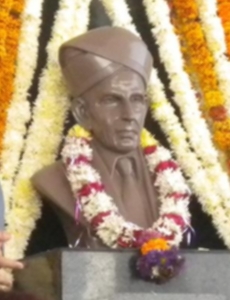
图:Original: Satyajit Dhawale, Derivative: Dharmadhyaksha · CC BY 3.0 · Wikimedia Commons
M. Visvesvaraya1860—1962
Indian engineer, scholar, statesman and the Diwan of Mysore (1861-1962)
Sir Mokshagundam Visvesvaraya, also referred to by his initials, MV, was an Indian civil engineer, administrator, and statesman, who served as the 19th Dewan of Mysore from 1912 to 1918.
摘自英文维基百科「M. Visvesvaraya」(英文维基百科,暂无中文条目),CC BY-SA 4.0
- 出生
- 1860 年 9 月 15 日,Muddenahalli
- 逝世
- 1962 年 4 月 14 日,迈索尔
- 国籍
- 印度、英属印度、印度联邦
- 学科
- 工程与发明
- 职业
- 工程师、政治人物
- 母语 / 工作语言
- 英语
- 母校
- 浦那工程学院、马德拉斯大学、United Mission School、班加罗尔大学、Central College of Bengaluru
所获奖项(2)
- 1915Knight Commander of the Order of the Indian Empire
- 1955印度国宝勋章
百科正文
本条目暂无中文维基百科条目,下面是英文维基百科原文。
Visvesvaraya is regarded in India as one of the foremost civil engineers whose birthday, 15 September, is celebrated every year as Engineer's Day in India, Sri Lanka, and Tanzania. He is also often regarded as "the maker of modern Mysore". According to Prajavani, a Kannada language newspaper, he is also the most popular figure in the southern Indian state of Karnataka.
Visvesvaraya worked as a civil engineer for the government of British India and later as Prime Minister of the Kingdom of Mysore. For his services to British India, he was appointed CIE and later knighted KCIE. For his services to the Kingdom of Mysore and the Republic of India, he was awarded the Bharata Ratna by Government of India in 1955.
Early life
M. Visvesvaraya was born on 15 September 1861 at Muddenahalli, Kingdom of Mysore (in present-day Chikkaballapura district, Karnataka) into a Telugu speaking family of Mokshagundam Srinivasa Shastry and Venkatalakshmi. His ancestors hail from Mokshagundam, a village in present-day Prakasam district of Andhra Pradesh, and had migrated to the kingdom years prior to Visvesvaraya's birth.
Visvesvaraya received his primary education in Bangalore and earned a Bachelor of Science (BSc) degree from the University of Madras. He later studied at the College of Engineering, Pune (then College of Science at the University of Bombay) and graduated as an engineer, receiving Diploma in Civil Engineering (DCE). It was here that he helped found and become a member of the Deccan Club and was its first secretary; he was well-acquainted with the progressives in Pune, including Sir R. G. Bhandarkar, Gopal Krishna Gokhale, and Justice Mahadev Govind Ranade, who were instrumental in starting the club and were its members.
Career
Visvesvaraya began his career by working for the Government of British India, working in Bombay Presidency and other British-held colonies in the Middle East. He later worked for Hyderabad State. After retirement, he began his administrative and statesmanship career and continued his engineering career in the Kingdom of Mysore.
Engineering career
Visvesvaraya became an assistant engineer in 1885 at the Public Works Department, Bombay, in Bombay Presidency.
In 1899, Visvesvaraya was invited to join the Indian Irrigation Commission where he implemented an intricate system of irrigation in the Deccan Plateau and designed and patented a system of automatic weir water floodgates that were first installed in 1903 at Khadakvasla Dam near Pune. These gates raised the storage level in the reservoir to the highest level likely to be attained without causing any damage to the dam. Based on the success of these gates, the same system was installed at Tigra Dam in Gwalior and later at the KRS Dam at Mysore, Karnataka. He later became the chief engineer of the Laxmi Talav Dam near Kolhapur.
In around 1906/1907, the Government of British India sent Visvesvaraya to the British Colony of Aden (present-day Yemen), to study water supply and drainage systems. The project prepared by him was successfully implemented in Aden.
After opting for voluntary retirement in 1908, Visvesvaraya took a foreign tour to study industrialised nations. Then, for a short period, he worked for Nizam Osman Ali Khan. He was one of the chief engineers of the flood protection system for the city of Hyderabad who suggested flood relief measures for the city, which was under constant threat by the Musi river. He achieved celebrity status when he designed a flood protection system for the city. He was instrumental in developing a system to protect Visakhapatnam port from sea erosion. This dam created the biggest reservoir in Asia at the time of its construction.
In November 1909, at the invitation of Dewan V.P. Madhava Rao, Visvesvaraya joined as a chief engineer of Mysore State. He was the Chief Engineer of the KRS Dam at Mysore.
Awards and honours
Visvesvaraya was appointed a Companion of the Order of the Indian Empire (CIE) in 1911 by King Edward VII, when he was the Chief Engineer to the Government of Mysore. In 1915, while he was Dewan of Mysore, Visvesvaraya was knighted as a Knight Commander of the Order of the Indian Empire (KCIE) by King George V for his contributions to the public good.
After India attained independence, Visvesvaraya received the Bharat Ratna, India's highest civilian honour, in 1955. He received an honorary membership from the Institution of Civil Engineers, London, a fellowship from the Indian Institute of Science, Bangalore, and several honorary degrees including D.Sc., LL.D., D.Litt. from eight universities in India. He was the president of the 1923 session of the Indian Science Congress.
Recognition
Visvesvaraya received recognition in many fields, most notably education and engineering. Visvesvaraya Technological University in Belagavi (to which most engineering colleges in Karnataka are affiliated) was named in his honour, as well as prominent colleges like University Visvesvaraya College of Engineering, Bangalore; Sir M. Visvesvaraya Institute of Technology, Bangalore; and Visvesvaraya National Institute of Technology, Nagpur; Visvesvaraya Hostel, IIT (BHU) Varanasi; Visvesvaraya Industrial and Technological Museum, Bangalore.
The College of Engineering, Pune, his alma mater, erected a statue in Visvesvaraya's honour. Two metro stations in India, one in Bangalore on the Purple Line (Sir M. Visveshwaraya Station, Central College), and another one in Delhi on the Pink Line (Sir Vishweshwaraiah Moti Bagh), are named after him. The railway terminal in Baiyyapanahalli at Bangalore is named Sir M. Visvesvaraya Terminal after him.
On 15 September 2018, to celebrate his 157th birth anniversary, Sir Visvesvaraya was honored with a Google Doodle.
Death
Visvesvaraya died on 12/14 April 1962, aged 100.
Visvesvaraya was known for his sincerity, time management and dedication to his cause. Visvesvaraya was a strict lacto-vegetarian who never ate meat or eggs. He was also a non-smoker and a teetotaller.
A very important part of Visvesvaraya's nature was his love for Kannada language. He set up Kannada Parishat for the improvement of Kannada. He wanted seminars for Kannada supporters to be instituted and conducted right in Kannada.
Memorial at Muddenahalli
Visvesvaraya National Memorial Trust manages a memorial for Visvesvaraya at his birthplace of Muddenahalli. The memorial exhibits his awards, titles and personal belongings, including his living room, spectacles, cups, books and block with which his visiting cards were printed. Models of the Krishna Raja Sagar Dam, which Visvesvaraya designed and supervised the construction of, are exhibited. The memorial is adjacent to his house, which was refurbished and is regarded as a shrine by locals.
以上节选摘自英文维基百科「M. Visvesvaraya」,按 CC BY-SA 4.0 使用,去掉了参考文献、外部链接等尾部小节,公式改写成了纯文本。篇幅所限,较长的小节只摘了开头一部分,有的小节没有收;全文、配图和出处见原文。