格物
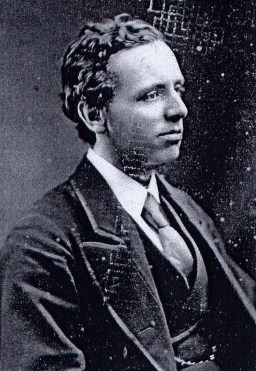
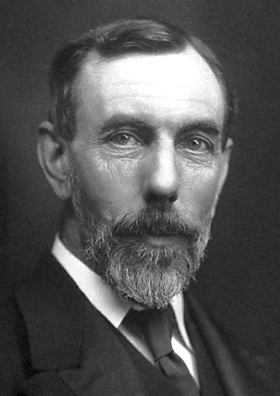
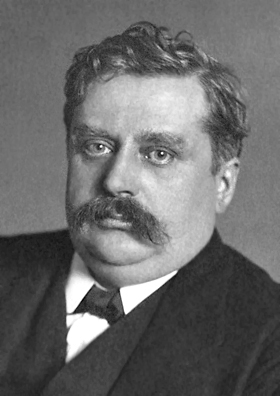
图:Unidentified photographer · CC BY-SA 2.5 · Wikimedia Commons
- 出生
- 1848 年 5 月 6 日,刘易舍姆
- 逝世
- 1937 年 7 月 13 日,刘易舍姆
- 国籍
- 英国、大不列颠及爱尔兰联合王国
- 学科
- 化学
- 职业
- 化学家、有机化学家、教育家、大学教师
- 母语 / 工作语言
- 英语
- 母校
- 莱比锡大学
- 工作单位
- 伦敦大学
研究领域
师承
来自 Wikidata 的「博士导师」「师从」「博士生」「学生」记录,可能不全。
所获奖项(7)
- 1876英国皇家学会院士
- 1911戴维奖章
- 1927Honorary Fellow of the Royal Society Te Apārangi
- 1930阿尔伯特奖章
- 1934爱丁堡皇家学会会员
- 1934honorary doctor of the University of Madrid Complutense
- —Honorary Fellow of the Royal Society of Edinburgh
学会与院士
百科正文
生活与工作
阿姆斯特朗出生于英国伦敦郊区的路厄斯罕,并一生长居于此。1864年,十六岁的他在完成学业之后,由于健康因素,在直布罗陀待了一个冬天。翌年春天,他回到英格兰,进入皇家化学学院(今伦敦帝国学院化学系)就读。他在那里的训练时间并不长,在十八岁时便被爱德华·弗兰克兰选中,协助制订检测污水有机杂质的方法。
阿姆斯特朗随后前往莱比锡进修,在赫尔曼·科尔贝的指导下,于1869年以“硫酸”的研究成果获得了博士学位。他在1879年时,获得帝国理工学院的终身聘用。1884年,三十六岁的阿姆斯特朗成为同样是帝国学院前身的中央研究所的化学教授;而他便是在这里开授了一门三年制的化学工程文凭课程。
阿姆斯特朗早在1881年便开始致力于研究萘衍生物的合成、降解与结构。这些研究建立在苯衍生物与埃米尔·埃伦迈尔对萘结构的一些研究。怀恩是他一生最为重要的合作伙伴,他们以十年岁月所累积的263号萘样本,目前仍保存于伦敦帝国学院的“阿姆斯特朗-怀恩收藏”。这项研究对萘的研究,大大地推动了合成染料工业的发展。
阿姆斯特朗于1937年于伦敦逝世,终年89岁,遗体于戈尔德斯格林火葬场火化。
荣誉
- 英国皇家学会院士(1876年)
- 伦敦化学学会会长(1893年-1895年)
- 戴维奖章(1911年)
- 艾伯特奖章(1930年)
以上内容摘自维基百科「亨利·愛德華·阿姆斯特朗」,按 CC BY-SA 4.0 使用,去掉了参考文献、外部链接等尾部小节,公式改写成了纯文本。全文、配图和出处见原文。
英文维基百科补充中文条目比较短,下面是英文条目「Henry Edward Armstrong」的原文
Henry Edward Armstrong FRS FRSE (Hon) (6 May 1848 – 13 July 1937) was a British chemist. Although Armstrong was active in many areas of scientific research, such as the chemistry of naphthalene derivatives, he is remembered today largely for his ideas and work on the teaching of science. Armstrong acid is named for him.
Life and work
Armstrong was born the son of Richard Armstrong, a commission agent and importer, and Mary Ann Biddle. He lived most of his life in Lewisham, a suburb of London.
After finishing school in 1864 at age 16, he spent a winter in Gibraltar, with a relative, for health reasons. In the spring of 1865, Armstrong returned to England and entered the Royal College of Chemistry in London, now the department of chemistry at Imperial College. Chemical training in those days was not lengthy, and at the age of 18 he was selected by Edward Frankland to assist in devising methods of determining organic impurities in sewage.
Armstrong pursued further studies under Hermann Kolbe at Leipzig, earning a PhD in 1869 for work on "acids of sulfur." He returned to London and worked under Augustus Matthiessen in the medical school of St Bartholomew's Hospital, in charge of chemistry classes for students taking the London degree. A permanent appointment in 1879 at City and Guilds of London Institute, now also a part of Imperial College, followed. At age 36, Armstrong became Professor of Chemistry at yet another Imperial College precursor, the Central Institution in 1884. It was here that he established a three-year diploma course in chemical engineering, "seeing the need for a more scientific attitude of mind among British industrialists"
He had already started on the systematic synthesis, degradation, and structural constitution of many naphthalene derivatives in 1881, building on earlier work on benzene derivatives and Erlenmeyer's proposal for the structure of naphthalene. W. P. Wynne was his most important collaborator; their 263 naphthalene samples, accrued over several decades, are now preserved at Imperial College as the Armstrong-Wynne Collection. This research on naphthalene gave much impetus to the synthetic dye industry.
Armstrong's later researches dealt with terpenes, particularly camphor, with water purification, helping to eradicate typhoid fever, and with crystallography.
In 1887, Armstrong became interested in classifying substituents of benzene in terms of their meta- and ortho-para directing influences. It was in a footnote to an article on that theme in 1890 that his centric formula for benzene first appeared. His six affinities acting within a cycle predated both the discovery of the electron and modern theories of aromaticity. Armstrong recognised that affinities have direction and are not merely point particles, and so he might be said to have anticipated parts of the wave mechanical theories of the 1920s.
He died at his home in Granville Park, Lewisham.
Family
Armstrong married Frances Louisa Lavers on 30 August 1877. They had seven children, four boys and three girls, all of whom survived him. His wife died shortly before he did in her 93rd year.
Honours and affiliations
- Fellow of the Royal Society (1876)
- Chemical Society of London, President (1893–1895)
- Davy Medal (1911)
- Messel medal of the Society of Chemical Industry (1922)
- Horace Brown Medal (1926)
- Albert Medal (1930)
以上内容摘自英文维基百科「Henry Edward Armstrong」,按 CC BY-SA 4.0 使用,去掉了参考文献、外部链接等尾部小节,公式改写成了纯文本。全文、配图和出处见原文。
同一学科、同时代的科学家