格物
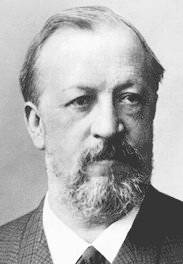
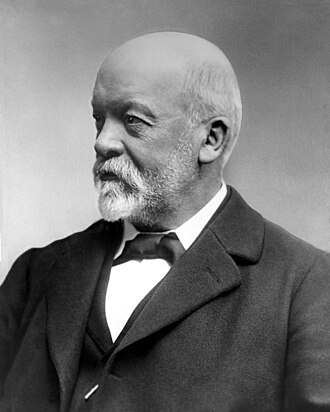
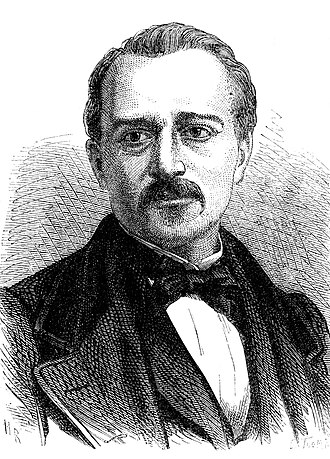
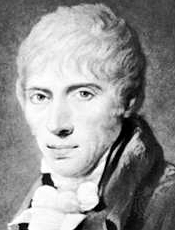
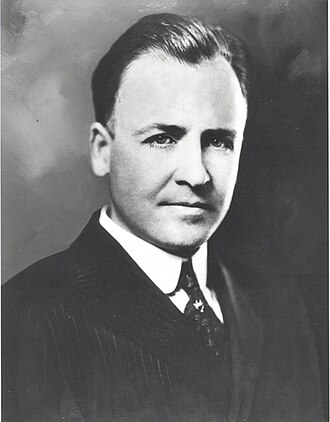
图:作者不详 · Public domain · Wikimedia Commons
- 出生
- 1832 年 6 月 10 日,海德地区霍尔茨豪森
- 逝世
- 1891 年 1 月 26 日,科隆
- 国籍
- 普鲁士王国、拿骚
- 学科
- 工程与发明
- 职业
- 工程师、发明家、企业家、工业家
- 母语 / 工作语言
- 德语
研究领域
主要贡献
代表成就
所获奖项(2)
- 1882Honorary doctorate from the Julius Maximilians University of Würzburg
- 1981美国发明家名人堂
百科正文
早年
其父为农民,同时经营当地邮局。他作为一名在法兰克福和科隆经商的商人学徒,迁回科隆后为研究小型热机、尝试改进艾蒂安·勒努瓦的设计而辞去职务。
配偶是安娜·戈西,合法生有七子,其中一子古斯塔夫·奥托后来成为飞机制造者。
奥托循环
奥托四冲程发动机设计为静止发动机,一冲程为活塞在气缸内上行或下行一次。后来为用于汽车而经过修改的四冲程为:(1)下行吸气冲程——可燃气体和空气的混合气进入气缸;(2)上行压缩冲程——活塞压缩可燃混合气;(3)下行做工冲程——电火花点燃可燃混合气;(4)上行排气冲程——排出气缸内废气。
以上内容摘自维基百科「尼古拉斯·奧托」,按 CC BY-SA 4.0 使用,去掉了参考文献、外部链接等尾部小节,公式改写成了纯文本。全文、配图和出处见原文。
英文维基百科补充中文条目比较短,下面是英文条目「Nicolaus Otto」的原文
Nicolaus August Otto (German pronunciation: [ˈnɪkolaʊ̯s ˈaʊ̯ɡʊst ˈɔto]; 10 June 1832 – 26 January 1891) was a German engineer who successfully developed the compressed charge internal combustion engine which ran on petroleum gas and led to the modern internal combustion engine. The Association of German Engineers (VDI) created DIN standard 1940 which says "Otto Engine: internal combustion engine in which the ignition of the compressed fuel-air mixture is initiated by a timed spark", which has been applied to all engines of this type since.
Biography
Nicolaus August Otto was born on 10 June 1832 in Holzhausen an der Haide, Germany. He was the youngest of six children. His father died in 1832. He began school in 1838. After six years of good performance he moved to the high school in Langenschwalbach until 1848. He did not complete his studies but was cited for good performance.
His main interest in school had been in science and technology but he graduated after three years as a business apprentice in a small merchandise company.
Lenoir engine
In late autumn of 1860 Otto and his brother learned of a novel gas (illuminating gas) engine that Jean Joseph Etienne Lenoir had built in Paris. The brothers built a copy of the Lenoir engine and applied for a patent in January 1861 for a liquid fueled engine based on the Lenoir (Gas) engine with the Prussian Ministry of Commerce, but it was rejected.
First four stroke engine, 1861
Otto was aware of the concept of compressed fuel charge and tried to make an engine using this principle in 1861. It ran for just a few minutes before breaking. Otto's brother gave up on the concept, resulting in Otto looking for help elsewhere.
From 1862 to 1863 Otto experimented with the help of Cologne Mechanic Michael J. Zons in an effort to improve the engine. Running low on funds, in 1862 Otto worked for Carl Mertens in order to continue work on his engine.
Partnership with Eugen Langen
Early in 1864, Otto sought investors to fund his research. He found Eugen Langen, whose father was a sugar industrialist. Together they entered into a partnership on 31 March 1864 and named it NA Otto & Cie in Cologne. This was the world's first company focused entirely on the design and production of internal combustion engines.
The Otto cycle
The Otto engine was designed as a stationary engine and in the action of the engine, the stroke is an upward or downward movement of a piston in a cylinder. Used later in an adapted form as an automobile engine, four strokes are involved:
- (1) downward intake stroke—coal-gas and air enter the piston combustion chamber,
- (2) upward compression stroke—the piston compresses the mixture,
- (3) downward power stroke—ignites the fuel mixture by flame and later electric spark,
Earlier patents
Otto had obtained many patents from several different nations and for several different features. When his former manager Gottlieb Daimler wanted to build small engines for transportation Otto showed no interest. Daimler left and took Wilhelm Maybach with him. Daimler had no desire to pay royalties to Otto (Deutz AG) and so hired a lawyer to find a solution. What the lawyer found was a patent for the concept of a four cycle engine that had been issued to Beau De Rochas, a French engineer, in 1862.
Production
Over 50,000 engines were produced in the 17 years following introduction.
Honors
Otto received numerous honors for his engines.
The 1864 atmospheric engine won the gold medal in the 1867 World Exhibition in Paris.
In 1882 Otto received an Honorary Doctorate from the University of Würzburg.
His home has been turned into a museum which is promoted by the local government.
Milestones
- 1862: First experiments with four-stroke engines
- 1864: Establishing the first engine factory in the world: NA Otto Cie
- 1867: Gold Medal of the World Exhibition in Paris for the gas engine
- 1869: The company relocates and changes its name to Langen, Otto, and Roosen
1872: The company relocates to larger facilities and changes its name to Deutz Gasmotoren Fabrik
- 1876: Development of four-stroke engine (Otto-motor)
- 1882: Production of the Atmospheric engine is discontinued after 2649 were made
以上节选摘自英文维基百科「Nicolaus Otto」,按 CC BY-SA 4.0 使用,去掉了参考文献、外部链接等尾部小节,公式改写成了纯文本。篇幅所限,较长的小节只摘了开头一部分,有的小节没有收;全文、配图和出处见原文。