格物

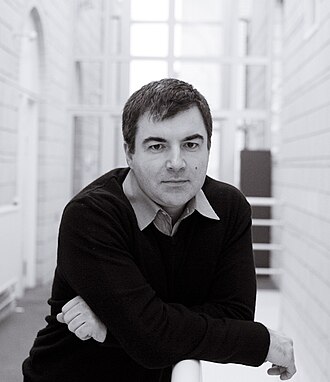
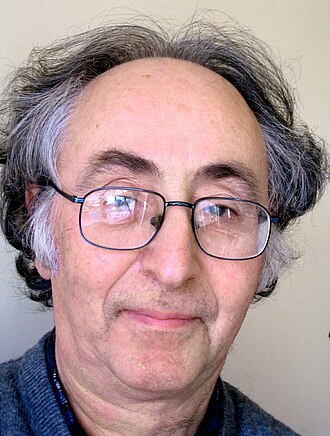
图:The Kavliprize · CC BY-SA 2.0 · Wikimedia Commons
马克西米利安·海德尔1950—
Maximilian Haider
德国物理学家
马克西米利安·海德尔,德国物理学家。1987年获达姆施塔特工业大学物理学博士学位。1989年成为欧洲分子生物学实验室物理仪器项目小组负责人。1992年与克努特·乌尔班、哈拉尔德·罗泽开始了一项电子显微镜项目。2011年获沃尔夫物理学奖。
摘自维基百科「马克西米利安·海德尔」,CC BY-SA 4.0
- 出生
- 1950 年 1 月 23 日,弗赖施塔特
- 国籍
- 奥地利
- 学科
- 物理学、博物与综合
- 职业
- 物理学家、大学教师
- 母校
- 基尔大学、达姆施塔特工业大学
- 工作单位
- 卡尔斯鲁厄理工学院
研究领域
所获奖项(3)
- 2006Karl Heinz Beckurts Award
- 2011沃尔夫物理学奖
- 2013BBVA基金会前沿奖
百科正文
英文维基百科补充中文条目比较短,下面是英文条目「Maximilian Haider」的原文
Maximilian Haider (born 23 January 1950) is an Austrian physicist known for his contributions to electron microscopy. He obtained the 2011 Wolf Prize in Physics and the 2020 Kavli Prize in Nanoscience for the development of the aberration-corrected transmission electron microscopy in collaboration with Harald Rose and Knut Urban.
Biography
Maximilian Haider was born in Freistadt, Austria in 1950.
He studied physics at the University of Kiel and the Technische Universität Darmstadt, where he received his doctoral degree with a thesis entitled "Design, construction and testing of a corrected electron energy loss spectrometer with large dispersion and a large acceptance angle" (in German: "Entwurf, Bau und Erprobung eines korrigierten Elektronen-Energieverlust-Spektrometers mit grosser Dispersion und grossem Akzeptanzwinkel") in 1987. In 1989 he became Group Leader within the Physical Instrumentation Program at the European Molecular Biology Laboratory (EMBL) where he had already performed some experiments during his doctoral studies.
He is honorary professor at the Karlsruhe Institute of Technology (KIT); co-founder, senior advisor and former president of Corrected Electron Optical Systems GmbH (CEOS), a German company that manufactures correction components for electron microscopes.
Honors
He won the 2011 Wolf Prize in Physics, along with Harald Rose and Knut Urban, for his contributions to electron microscopy, specifically for the development of a device to correct electron-optical aberration using magnetic multipole lenses. Their work allowed electron microscopes to achieve a resolution of about 50 pm, comparable to the radius of the smallest atom. The three started working together in 1992. Haider built the first prototype and he is the founder (with Joachim Zach in 1996) of the German company Corrected Electron Optical Systems GmbH (CEOS), which manufactures and sells their invention.
In 2005 Haider, Zach and their company CEOS received the Dr.-Rudolf-Eberle Prize (Innovation prize from Baden-Württemberg).
Haider, Rose and Urban also received the Karl-Heinz-Beckurts Prize in 2006 and the Honda Prize in 2008.
In 2008 he became honorary professor at the Karlsruhe Institute of Technology (KIT).
A symposium on "Advances in Corrected Electron Microscopy in Materials Science and Biology" was held in honor of his 60th birthday on 19 February 2010 in Heidelberg.
Haider also received the 2013 BBVA Foundation Frontiers of Knowledge Award in Basic Sciences, along with Harald Rose and Knut Urban, for greatly enhancing the resolving power of electron microscopy by developing aberration-corrected electron optics, a breakthrough enabling subatomic precision.
In 2015 he also received the Honorary Fellowship of the Royal Microscopical Society (Hon FRMS) and the National Institute for Materials Science (NIMS) Award.
In 2020 he received the Kavli Prize in Nanoscience (together with Harald Rose and Knut Urban and Ondrej Krivanek).
以上内容摘自英文维基百科「Maximilian Haider」,按 CC BY-SA 4.0 使用,去掉了参考文献、外部链接等尾部小节,公式改写成了纯文本。全文、配图和出处见原文。
同年获同一奖项
同一学科、同时代的科学家








同一学科的科学家
更多 ›