格物
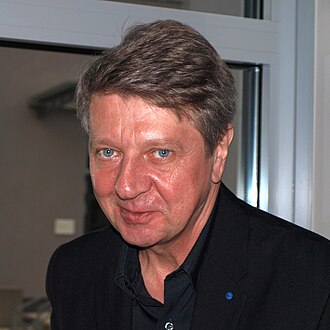
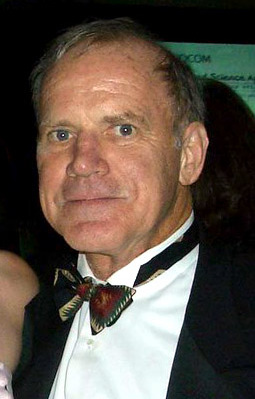
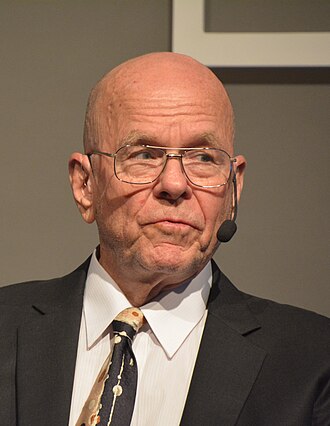
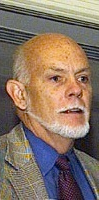
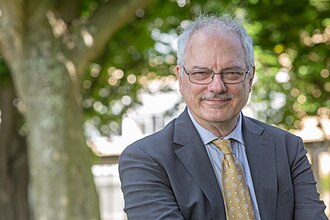
图:Kuebi = Armin Kübelbeck · CC BY-SA 3.0 · Wikimedia Commons
克日什托夫·马蒂亚谢夫斯基1950—
Krzysztof Matyjaszewski
Polish-American chemist famous for discovering 'Atom Transfer Radical Polymerization' (ATRP) technique for polymer synthesis
克日什托夫·马蒂亚谢夫斯基,波兰裔美国化学家,世界上论文引用率最高的前10名化学家之一。
摘自维基百科「克日什托夫·马蒂亚谢夫斯基」,CC BY-SA 4.0
- 出生
- 1950 年 4 月 8 日,罗兹省康斯坦丁努夫
- 国籍
- 波兰、美国
- 学科
- 化学、工程与发明
- 职业
- 化学家、工程师、大学教师、化学技术人员
- 母语 / 工作语言
- 波兰语、英语
- 母校
- 鲍曼莫斯科国立技术大学、罗兹科技大学
- 工作单位
- 巴黎大学、匹兹堡大学、卡内基梅隆大学
研究领域
师承
博士生1
来自 Wikidata 的「博士导师」「师从」「博士生」「学生」记录,可能不全。
所获奖项(15)
- 2002Honorary doctors of Ghent University
- 2002ACS Award in Polymer Chemistry
- 2004Prize of the Foundation for Polish Science
- 2007honorary doctorate of the Łódź University of Technology
- 2008汤森路透引文桂冠奖
- 2010honorary doctorate from INP Toulouse
- 2011沃尔夫化学奖
- 2011Herman Mark Award in Polymer Chemistry
- 2012Dannie Heineman Prize
- 2012Marie Curie Medal
- 2013doctor honoris causa from the Pierre and Marie Curie University
- 2017富兰克林研究所奖项
- 2020威廉·H·尼克尔斯奖
- 2023美国国家科学院化工科学奖
- —威廉·H·尼克尔斯奖
学会与院士
百科正文
马蒂亚谢夫斯基是原子转移自由基聚合(ATRP)的发现者之一,2011年荣获沃尔夫化学奖、2017年与泽本光男同获富兰克林奖章。
生平
他1950年出生于波兰罗兹省康斯坦丁努夫。1985年在波兰罗兹科技大学取得博士学位,1984-1985年期间曾在法国国家科学研究中心工作了两年,后赴美国卡内基梅隆大学,并于1995年成为卡内基梅隆大学的J.C. Warner自然科学教授。
1995年,他和他的博士后王锦山发现了原子转移自由基聚合(ATRP)新化学反应和新活性聚合技术。
以上内容摘自维基百科「克日什托夫·马蒂亚谢夫斯基」,按 CC BY-SA 4.0 使用,去掉了参考文献、外部链接等尾部小节,公式改写成了纯文本。全文、配图和出处见原文。
英文维基百科补充中文条目比较短,下面是英文条目「Krzysztof Matyjaszewski」的原文
Krzysztof "Kris" Matyjaszewski (Polish: [ˈkʂɨʂtɔf matɨjaˈʂɛfskʲi]; born April 8, 1950) is a Polish-American chemist. He is the J.C. Warner Professor of the Natural Sciences at the Carnegie Mellon University Matyjaszewski is best known for the discovery of atom transfer radical polymerization (ATRP), a novel method of polymer synthesis that has revolutionized the way macromolecules are made.
Matyjaszewski was elected a member of the National Academy of Engineering in 2006 and the National Academy of Sciences in 2019 for expanding the capabilities of controlled/living polymerizations and developing ATRP, a robust catalytic process for the radical polymerization of monomers. He received the prestigious Wolf Prize in Chemistry in 2011, the Dreyfus Prize in the Chemical Sciences in 2015, and the Grand Prix de la Fondation de la Maison de la Chimie, France in 2020, the National Academy of Sciences Award in Chemical Sciences in 2023 the Blaise Pascal Medal in Chemistry from the European Academy of Sciences in 2026 and the Gabor A. Somorjai Award for Creative Catalysis from the American Chemical Society in 2027.
Education and career
Matyjaszewski began studying chemistry at Lodz University of Technology in late 1960s and later graduated from the Petrochemical University in Moscow. He received his doctorate from the Center of Molecular and Macromolecular Studies of the Polish Academy of Sciences in 1976 and completed a postdoctoral fellowship at the University of Florida in 1977. From 1978 to 1984, he was a research associate of the Polish Academy of Sciences. From 1984 to 1985, Matyjaszewski held appointments at the University of Paris, first as a research associate and then as a visiting professor. In 1985, he joined the chemistry department at Carnegie Mellon University. He founded and currently directs the university's Center for Macromolecular Engineering. This center is funded both by an active consortium and government agencies, including the National Science Foundation. In 1998, Matyjaszewski was appointed the J.C. Warner Professor of Natural Sciences. In 2004 he was named a university professor, the highest distinction faculty can achieve at Carnegie Mellon. Matyjaszewski is also an adjunct professor in Carnegie Mellon's department of materials science and chemical engineering.
From 1994 to 1998, Matyjaszewski served as head of the department of chemistry at Carnegie Mellon and assisted in recruiting additional faculty with strengths in polymer chemistry. At the same time, he formed a research consortium with various industrial corporations to expand the understanding of controlled radical polymerization, including ATRP, and accelerate the transfer of this technology to different commercial applications. A second consortium, the CRP Consortium, formed under his leadership in 2001, continues and expands these efforts, training university and industrial scientists in procedures for responsive polymeric material development and has comprised 60 industrial members. The same year, Matyjaszewski became an adjunct professor at Polish Academy of Sciences and at the Department of Chemical and Petroleum Engineering of the University of Pittsburgh.
Matyjaszewski is a co-inventor on 72 issued U.S. patented technologies and holds over 150 international patents.
Honorary degrees
- 2002 – University of Ghent, Belgium
- 2006 – Russian Academy of Sciences
- 2007 – Lodz University of Technology, Poland
- 2008 – University of Athens, Greece
- 2010 – l'Institut Polytechnique, Toulouse, France
- 2013 – Pusan National University, Busan, South Korea
- 2013 – Universite P. & M. Curie, Sorbonne, Paris, France
- 2015 – Technion, Haifa, Israel
- 2016 – Adam Mickiewicz University in Poznań, Poznań, Poland
- 2017 – University of Padua, Padua, Italy
- 2018 – University of Coimbra, Coimbra, Portugal
- 2023 – University of Crete, Greece
- 2024 – Rzeszow University of Technology in 2024
- 2026 – Jan Dlugosz University, Częstochowa, Poland
Visiting professorships
- ESPCI ParisTech, 2011
- University of Pusan, 2010
- Lodz University of Technology, 2009
- University of Tokyo, Fellow of the Japanese Society of the Promotion of Science, 2005
- University of Paris, 1985, 1990, 1997, 1998, 2005
- University of Bordeaux, 1996, 2004
- Michigan Molecular Institute, 2004
- University of Pisa, Italy, 2000
- University of Ulm, 1999
- University of Strasbourg, 1992
- University of Beyreuth, 1991
- University of Freiburg, 1988
以上节选摘自英文维基百科「Krzysztof Matyjaszewski」,按 CC BY-SA 4.0 使用,去掉了参考文献、外部链接等尾部小节,公式改写成了纯文本。篇幅所限,较长的小节只摘了开头一部分,有的小节没有收;全文、配图和出处见原文。