格物
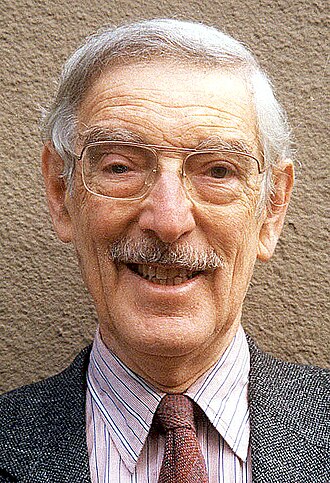
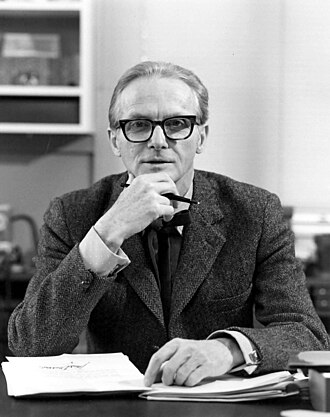
图:Oregon State University · CC BY-SA 2.0 · Wikimedia Commons
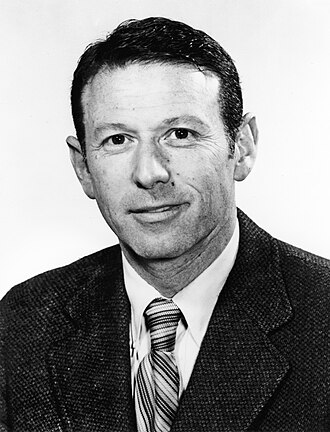
布鲁斯·艾姆斯1928—2024
Bruce N. Ames
American biochemist (1928–2024)
布鲁斯·艾姆斯,美国生物化学学家,加州大学生物化学与分子生物学系教授。
摘自维基百科「布魯斯·艾姆斯」,CC BY-SA 4.0
- 出生
- 1928 年 12 月 16 日,纽约
- 逝世
- 2024 年 10 月 5 日,伯克利
- 国籍
- 美国
- 学科
- 化学、生物学
- 职业
- 生物化学家、大学教师、化学家、分子生物学家
- 母语 / 工作语言
- 英语
- 母校
- 加州理工学院(哲学博士,1953 年)、康奈尔大学(文学士,1950 年)、布朗克斯科学高级中学
- 工作单位
- 加州大学伯克利分校(1968—2024)、国立卫生研究院
研究领域
主要贡献
代表成就
师承
博士导师1
来自 Wikidata 的「博士导师」「师从」「博士生」「学生」记录,可能不全。
所获奖项(13)
- 1975罗森斯特尔奖
- 1978约翰·斯科特奖
- 1983盖尔德纳国际奖
- 1983查尔斯·莫特奖
- 1985泰勒环境成就奖
- 1991美国化学家协会金牌
- 1997日本国际奖
- 1998美国国家科学奖章
- 2001Prize for Health Research
- 2004托马斯·亨特·摩尔根奖
- 2013汤森路透引文桂冠奖
- —美国文理科学院院士
- —Denham Harman Research Award
学会与院士
百科正文
英文维基百科补充中文条目比较短,下面是英文条目「Bruce Ames」的原文
Bruce Nathan Ames (December 16, 1928 – October 5, 2024) was an American biochemist who was a professor of biochemistry and Molecular Biology Emeritus at the University of California, Berkeley, and was a senior scientist at Children's Hospital Oakland Research Institute (CHORI). Ames made contributions to understanding the mechanisms of mutagenesis and DNA repair. He invented the Ames test, a widely used assay for easily and cheaply evaluating the mutagenicity of compounds. The test revolutionized the field of toxicology and has played a crucial role in identifying numerous environmental and industrial carcinogens.
Biography
Ames, raised in New York City, was a graduate of the Bronx High School of Science. His undergraduate studies were at Cornell University in Ithaca, New York, and his graduate studies were completed at the California Institute of Technology.
Ames was elected a Fellow of the American Academy of Arts and Sciences in 1970. He is a recipient of the Bolton S. Corson Medal in 1980, Tyler Prize for Environmental Achievement in 1985, the Japan Prize in 1997, the National Medal of Science in 1998 and the Thomas Hunt Morgan Medal in 2004, among many others.
Ames' research focused on cancer and aging and he authored over 550 scientific publications. He is among the few hundred most-cited scientists in all fields.
Ames' later research included identifying agents that delay the mitochondrial decay of aging, understanding the role of mitochondrial decay in aging, particularly in the brain, optimizing micronutrient intakes in the population to prevent disease, malnutrition, and obesity. He was also interested in mutagens as they relate to cancer prevention and aging.
Ames received more than $650,000 in support from the National Foundation for Cancer Research between 1998 and 2007.
Ames on synthetic carcinogens
In the 1970s, Ames developed the Ames test which is a cheap and convenient assay for mutagens and therefore potential carcinogens. Previous carcinogenic testing used live animals, and the procedures are expensive and time-consuming. This made animal testing impractical for use in screening on a wide scale, and reduced the number of compounds that could be tested. The Ames test on the other hand uses the bacteria Salmonella typhimurium to test for mutagens, and is considerably cheaper and faster. The Ames test became widely used as an initial screen for possible carcinogens and has been used to identify potential carcinogens previously used in commercial products. Their identification led to some of those formulations, such as chemicals used in hair dye, being withdrawn from commercial use. The ease with which Ames test allows widely used chemicals to be identified as possible carcinogens made him an early hero of environmentalism.
Subsequent work in Ames' lab involved looking at an overview of what was mutagenic or carcinogenic, and to what degree.
Awards and honors
- Eli Lilly Award of the American Chemical Society 1964
- Elected to American Academy of Arts and Sciences 1970
- Elected to National Academy of Sciences 1972
- Rosenstiel Award 1975
- Fellow of the American Association for the Advancement of Science 1980
- Wadsworth Award 1981
- Charles S. Mott Prize, GM Cancer Research Foundation 1983
- Gairdner Foundation Award 1983
- IBM-Princess Takamatsu Cancer Res Fund Lectureship 1984
- Tyler Prize for Environmental Achievement 1985
- Elected Foreign Member, The Royal Swedish Academy of Sciences 1989
- Gold Medal Award of the American Institute of Chemists 1991
- Elected Fellow, Academy of Toxicological Sciences 1992
- Elected Fellow, American Academy of Microbiology 1992
- Glenn Foundation Award of the Gerontological Society of America 1992
- Röntgen Prize of the Accademia Nazionale de Lincei (Italy) 1993
- Messel Medal, British Society of Chemical Industry 1996
- Society of Toxicology Public Communications Award 1996
- Honda Prize 1996
- Japan Prize 1997
- Kehoe Award, American College of Occup. and Environ. Med 1997
- Medal of the City of Paris 1998
- U.S. National Medal of Science 1998
- American Society for Microbiology Lifetime Achievement Award 2001
- Linus Pauling Institute Prize for Health Research 2001
- Thomas Hunt Morgan Medal, Genetics Society Am 2004
以上节选摘自英文维基百科「Bruce Ames」,按 CC BY-SA 4.0 使用,去掉了参考文献、外部链接等尾部小节,公式改写成了纯文本。篇幅所限,较长的小节只摘了开头一部分,有的小节没有收;全文、配图和出处见原文。