格物
- 出生
- 1927 年,广州市
- 国籍
- 中华人民共和国
- 学科
- 天文学、博物与综合
- 职业
- 天文学家
- 母校
- 中山大学
学会与院士
百科正文
生平
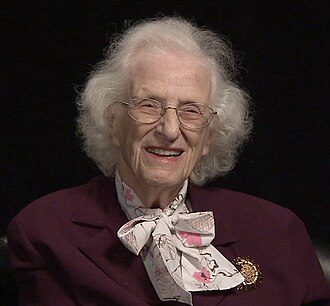
1927年生于广东广州,祖籍广东顺德。1949年毕业于中山大学。1951年加入中国科学院紫金山天文台徐家汇观象台。1980年当选为中国科学院学部委员(后改称院士)。中国科学院上海天文台研究员,曾任该台台长(1981年),国际天文学联合会副主席,上海市科学技术协会主席等。叶叔华也成为中国第一个女天文台台长。1994年,国际小行星组织将一颗小行星命名为“叶叔华星”。
1995年5月,中国科学技术协会第四次代表大会召开,并选举产生第四届全国委员会。5月27日,第四届全国委员会第一次会议召开,其被选为副主席。1998年3月,第九届全国人大第一次会议上,他当选全国人民代表大会常务委员会委员。2001年6月,中国科学技术协会第六次全国代表大会召开,并选举其出任第六届全国委员会荣誉委员。
以上内容摘自维基百科「叶叔华」,按 CC BY-SA 4.0 使用,去掉了参考文献、外部链接等尾部小节,公式改写成了纯文本。全文、配图和出处见原文。
英文维基百科补充中文条目比较短,下面是英文条目「Ye Shuhua」的原文
Ye Shuhua (Chinese: 叶叔华; born June 21, 1927) is a Chinese astronomer and professor at Shanghai Astronomical Observatory, known for achieving one of the world's most precise measurements of Universal Time in the 1960s, and for establishing the very-long-baseline interferometry (VLBI) and satellite laser ranging (SLR) techniques in China.
Ye served as President of Shanghai Astronomical Observatory, Vice-President of the Chinese Astronomical Society, and Vice-President of the International Astronomical Union. She is a member of the Chinese Academy of Sciences and a foreign fellow of the Royal Astronomical Society of Britain. The asteroid 3241 Yeshuhua is named after her.
Early life
Ye Shuhua was born June 21, 1927, in Guangzhou, Guangdong, China. She spent most of her school years during the Second Sino-Japanese War (1937–45), and had to move repeatedly with her family from Guangzhou to Hong Kong, Shaoguan, and Lian County, because of the war.
After the surrender of Japan in 1945, Sun Yat-sen University in Guangzhou resumed its admissions. Ye hoped to study literature at the university, but her father wanted her to study medicine for better career prospects. She was not interested in medicine, and as a compromise with her father, she agreed to study mathematics instead. At the time, mathematics and astronomy were under the same department at Sun Yat-sen University, and under the influence of Professor Zou Yixin, she later chose to major in astronomy.
Career
In 1951, Ye Shuhua moved to Shanghai with her husband Cheng Jitai (程极泰), who taught at the mathematics department of Fudan University. Ye found work at the French-built Zikawei (Xujiahui) Observatory, which later became part of Shanghai Astronomical Observatory. In 1958, she became the leader of a team of scientists working to improve the precision of China's measurement of Universal Time, which ranked the last in the world. By 1963, China's Universal Time measurement leapt to the world's second most precise. It was set as the basic national standard in 1965, and her team later received many national awards for this achievement.
When the Cultural Revolution started in 1966, Ye Shuhua, like many other intellectuals, was persecuted and held in a "cowshed" (牛棚). She also had to work as a house painter.
After the end of the Cultural Revolution in 1976, Ye was appointed research professor of Shanghai Astronomical Observatory, and served as its director between 1981 and 1993. Under her leadership, Shanghai Observatory established a very-long-baseline interferometry (VLBI) and a satellite laser ranging (SLR) research station, and participated in the International Earth Rotation Service (IERS) as one of the most technologically advanced bases. In 1991, she was appointed the chief scientist in a Key Basic Research Project to study China's crustal motion. The project verified that the Indian Plate is causing an eastward movement of China's land mass.
Ye Shuhua served as Vice-President of the Chinese Astronomical Society from 1978 to 1988, after which she became its honorary president. She served as Vice-President of the International Astronomical Union from 1988 to 1994. She was elected a member of the Chinese Academy of Sciences in 1980, and a foreign fellow of the Royal Astronomical Society of Britain in 1985.
Honours and awards
The Purple Mountain Observatory named the asteroid 3241 Yeshuhua after her. She has been awarded the Ho Leung Ho Lee Prize for astronomy.
以上内容摘自英文维基百科「Ye Shuhua」,按 CC BY-SA 4.0 使用,去掉了参考文献、外部链接等尾部小节,公式改写成了纯文本。全文、配图和出处见原文。
同一学科、同时代的科学家


同一学科的科学家
更多 ›