 格物
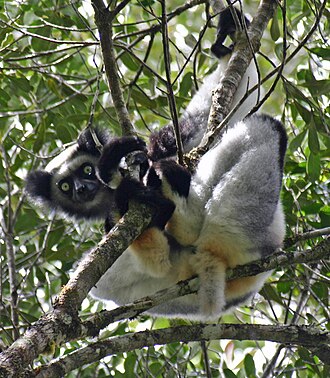
- 学名
- Lemuroidea
- 分类等级
- 总科
- 上级类群
- 狐猴型下目
- 大类
- 哺乳动物
- 命名
- 约翰·爱德华·格雷,1821 年
- 特有于
- 马达加斯加
分类阶元
- 域真核生物
- 未标等级无定形生物 Amorphea
- 演化支后鞭毛生物 Opisthokonta
- 总界动物总界 Holozoa
- 未标等级蜷丝生物 Filozoa
- 未标等级领鞭毛动物 Choanozoa
- 界动物界 Animalia
- 亚界真后生动物亚界 Eumetazoa
- 未标等级副同源异形基因动物 Parahoxozoa
- 亚界两侧对称动物 Bilateria
- 总门后口动物总门 Deuterostomia
- 门脊索动物门 Chordata
- 亚门脊椎动物亚门 Vertebrata
- 下门有颌下门 Gnathostomata
- 未标等级正真口类 Euteleostomi
- 总纲肉鳍鱼总纲 Sarcopterygii
- 未标等级扇鳍鱼类 Rhipidistia
- 亚纲四足形类 Tetrapodomorpha
- 未标等级始四足目 Eotetrapodiformes
- 下纲希望螈目 Elpistostegalia
- 未标等级坚头类 Stegocephalia
- 总纲四足总纲 Tetrapoda
- 未标等级爬行形类 Reptiliomorpha
- 未标等级羊膜动物 Amniota
- 未标等级合弓纲 Synapsida
- 未标等级真盘龙类 Eupelycosauria
- 纲哺乳动物 Mammalia
- 未标等级兽形类 Theriimorpha
- 亚纲兽型类 Theriiformes
- 下纲全兽类 Holotheria
- 亚纲兽亚纲 Theria
- 演化支真兽类 Eutheria
- 下纲有胎盘类 Placentalia
- 高目北方真兽高目 Boreoeutheria
- 总目灵长总目 Euarchontoglires
- 大目真统兽总目 Euarchonta
- 未标等级灵长形上目 Primatomorpha
- 目灵长目 Primates
- 亚目曲鼻亚目 Strepsirrhini
- 下目狐猴型下目 Lemuriformes
- 总科狐猴总科 Lemuroidea
下级类群(2)

百科正文
虽然和其他灵长目动物看起来相似程度较高,但其实其演化过程独立于猴与猿。马达加斯加独特的环境使得狐猴产生了比其他灵长目动物高得多的种族多样性,体重最小可达30-克(1.1-盎司)(鼠狐猴),最大可达9-千克(20-磅)(大狐猴),相差悬殊。加上狐猴分类学研究在1990年代初步完善,至今仍存在许多争议。
以上内容摘自维基百科「狐猴总科」,按 CC BY-SA 4.0 使用,去掉了参考文献、外部链接等尾部小节,公式改写成了纯文本。全文、配图和出处见原文。
英文维基百科补充中文条目比较短,下面是英文条目「Lemur」的原文
Lemurs ( LEE-mərz; from Latin lemurēs 'ghosts, spirits of the dead') are wet-nosed primates of the superfamily Lemuroidea ( LEM-yuu-ROY-dee-ə), divided into eight families and consisting of 15 genera and around 100 extant species. They are endemic to the island of Madagascar. Most existing lemurs are small, with a pointed snout, large eyes, and a long tail. They usually live in trees and are active at night. Lemurs share resemblance with other primates, but evolved independently from monkeys and apes. Due to Madagascar's highly seasonal climate, lemur evolution has produced a level of species diversity rivaling that of any other primate group.
Living lemurs range in weight from the 30-gram (1.1 oz) mouse lemur to the 9-kilogram (20 lb) indri. Since the arrival of humans on the island around 2,000 years ago, over a dozen species of "giant lemurs" larger than living lemur species have become extinct, including the gorilla-sized Archaeoindris. Lemurs share many common basal primate traits, such as divergent digits on their hands and feet, and nails instead of claws (in most species). However, their brain-to-body size ratio is smaller than that of anthropoid primates. As with all strepsirrhine primates, they have a "wet nose" (rhinarium).
Lemurs are generally the most social of the strepsirrhine primates, living in groups known as troops. They communicate more with scents and vocalizations than with visual signals. Lemurs have a relatively low basal metabolic rate, and as a result may exhibit dormancy such as hibernation or torpor. They also have seasonal breeding and female social dominance. Most eat a wide variety of fruits and leaves, while some are specialists. Two species of lemurs may coexist in the same forest due to different diets.
Lemur research during the 18th and 19th centuries focused on taxonomy and specimen collection. Modern studies of lemur ecology and behavior did not begin in earnest until the 1950s and 1960s. Initially hindered by political issues on Madagascar during the mid-1970s, field studies resumed in the 1980s. Lemurs are important for research because their mix of ancestral characteristics and traits shared with anthropoid primates can yield insights on primate and human evolution. Most species have been discovered or promoted to full species status since the 1990s; however, lemur taxonomic classification is controversial and depends on which species concept is used.
Many lemur species remain endangered due to habitat loss and hunting. Although local traditions, such as fady, generally help protect lemurs and their forests, illegal logging, economic privation and political instability conspire to thwart conservation efforts. Because of these threats and their declining numbers, the International Union for Conservation of Nature (IUCN) considers lemurs to be the world's most endangered mammals, noting that as of 2013 up to 90% of all lemur species confront the threat of extinction in the wild within the next 20 to 25 years. Ring-tailed lemurs are an iconic flagship species. Collectively, lemurs exemplify the biodiverse fauna of Madagascar and have facilitated the emergence of ecotourism. In addition, conservation organizations increasingly seek to implement community-based approaches to save lemur species and promote sustainability.
以上节选摘自英文维基百科「Lemur」,按 CC BY-SA 4.0 使用,去掉了参考文献、外部链接等尾部小节,公式改写成了纯文本。篇幅所限,较长的小节只摘了开头一部分,有的小节没有收;全文、配图和出处见原文。