格物
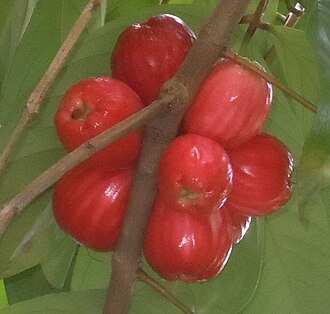
图:Justinisaacs · CC BY-SA 3.0 · Wikimedia Commons
- 学名
- Syzygium malaccense
- 分类等级
- 种
- 上级类群
- 蒲桃属
- 大类
- 被子植物
- 命名
- 埃尔默·德鲁·美林、Lily May Perry,1938 年
- 中文别名
- 马来莲雾、洋蒲桃、马窝果、果马根、马来蒲桃
- 保护状况(IUCN)
- 无危物种
- 用途
- 食物、药用植物
- 数据库
- NCBI 分类 · GBIF · IUCN 红色名录
百科正文
形态特征
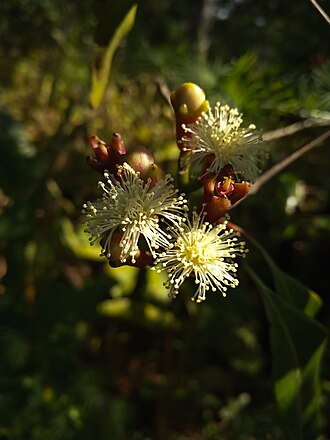
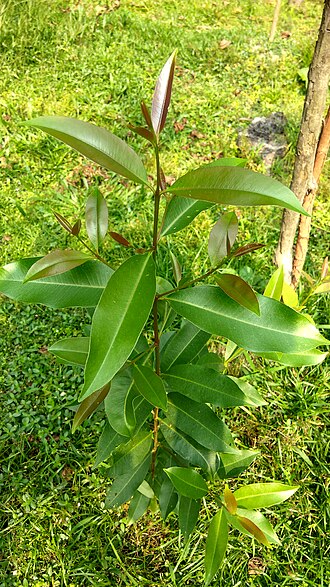
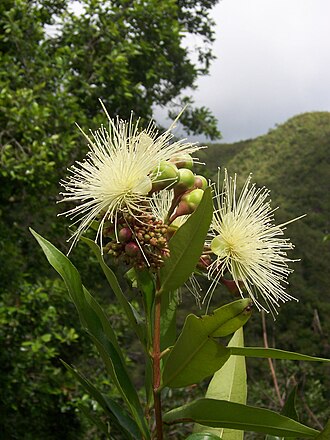
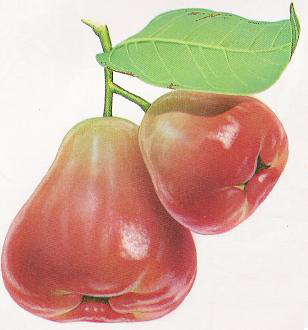
马六甲蒲桃为常绿小乔木或灌木,高可达15米。树皮灰褐色或淡红褐色。叶对生,披针形至椭圆形,叶面光滑有光泽,叶缘全缘。花两性,簇生于枝端或叶腋,花瓣白色或淡粉色,雄蕊多数,伸出明显。果实为浆果状核果,熟时紫红至黑色,味甜多汁,直径约2–4厘米。
用途
马六甲蒲桃的果实可供生食,亦可制成果酱、果冻或饮料。部分地区将其种为观赏植物,因其树形整洁、果实色彩鲜艳。传统东南亚草药中亦有将其叶片用作泡茶、退烧或消炎的用途,但尚缺乏系统医学研究验证。
栽培与繁殖
喜温暖湿润气候,适合种植于排水良好之酸性或中性土壤。繁殖方式以播种为主,亦可扦插。幼苗期需适度遮阴,成株后耐旱能力中等。
以上内容摘自维基百科「马六甲蒲桃」,按 CC BY-SA 4.0 使用,去掉了参考文献、外部链接等尾部小节,公式改写成了纯文本。全文、配图和出处见原文。
英文维基百科补充中文条目比较短,下面是英文条目「Syzygium malaccense」的原文
Syzygium malaccense is a species of flowering tree native to tropical Asia and Australia. It was cultivated from prehistoric times by the Austronesian peoples and introduced deliberately to remote Oceania as canoe plants. In modern times, it has been introduced throughout the tropics, including the Caribbean. The ripe fruit is edible but with little flavor.
Names
Syzygium malaccense has a number of English common names. It is known as Malay rose apple, Malay apple, mountain apple, rose apple, Otaheite apple, pink satin-ash, Jamaican Apple, plumrose and pommerac (derived from pomme Malac, meaning 'Malayan apple' in French).
In Hawaii, S. malaccense is called mountain apple or 'Ōhi'a 'ai. In Costa Rica, it is known as manzana de agua. In Jamaica, it is referred to as the Otaheite Apple. It is found mainly in the rainy zones on the Atlantic coast of the country. In Colombia, Puerto Rico, and other Latin American countries it is also found and known as poma rosa. In Venezuela, it is known as pumalaca. In Vanuatu is it called nakavita.
Description
The tree is a medium to large perennial, growing 5–15 metres (16+1⁄2–49 ft) tall. Its leaves are simple, elliptical, or oval-shaped with pointed tips and smooth edges. The leaves are thick and glossy above. The flowers grow in clusters at the branch ends, displaying bright pink or red colors. The fruit is up to 10 centimetres (4 in) long, oval to bell-shaped, green when unripe, and deep red or pink to white with red streaks when ripe. It contains a single large seed inside.
Distribution and habitat
The species is native to tropical Asia and Australia.
Cultivation
The combination of tree, flowers and fruit has been praised as the most beautiful of its genus.
Malay apple is a strictly tropical tree and will be damaged by freezing temperatures. It thrives in humid climates with an annual rainfall of 152 cm (60 in) or more. It can grow at altitudes from sea level up to 2,740 m (8,990 ft). It flowers in early summer, bearing fruit three months afterward.
When the Polynesians reached the Hawaiian Islands, they brought plants and animals that were important to them. The mountain apple was one of these "canoe plants," arriving 1,000–1,700 years ago. In modern times, it has been introduced throughout the tropics, including many Caribbean countries and territories.
Uses
The mountain apple is an edible fruit that can be consumed when raw and ripe. Its taste is bland but refreshing. In 1793, Captain William Bligh was commissioned to procure edible fruits from the Pacific Islands for Jamaica, including this species. He brought back this from Tahiti (called Otaheite at the time).
In Puerto Rico, the Malay apple is used to make wines, in Hawaiʻi, the fruits are consumed the same way a Pacific Northwest apple is eaten. Indonesians consume the flowers of the tree in salads and in Guyana the skin of the mountain apple is cooked down to make a syrup. A mountain apple has a white fleshy fruit that has a similar texture to a pear but less sweet than an apple. Jam can be prepared by stewing the flesh with brown sugar and ginger.
Coffee growers use the species to both divert birds and provide shade.
Nutrition
Due to the high water content, the Mountain Apple is lower in calories than a Gala apple or a Fuji apple and contains a moderate amount of vitamins and minerals. Below is a chart with more nutrition information derived from Malay apples found in Hawaiʻi, El Salvador, and Ghana.
以上内容摘自英文维基百科「Syzygium malaccense」,按 CC BY-SA 4.0 使用,去掉了参考文献、外部链接等尾部小节,公式改写成了纯文本。全文、配图和出处见原文。