 格物
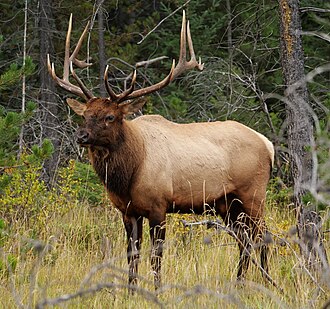
图:Membeth · CC0 · Wikimedia Commons
生命之树 › 真核生物 › 动物界 › 真后生动物亚界 › 两侧对称动物 › 后口动物总门 › 脊索动物门 › 脊椎动物亚门 › 有颌下门 › 肉鳍鱼总纲 › 四足形类 › 希望螈目 › 四足总纲 › 哺乳动物 › 兽型类 › 全兽类 › 兽亚纲 › 有胎盘类 › 北方真兽高目 › 劳亚兽总目 › 偶蹄目 › 鹿科 › 鹿亚科 › 真鹿族
鹿属属
Cervus
鹿属 是鹿科中的一个属,主要包括以下各种:
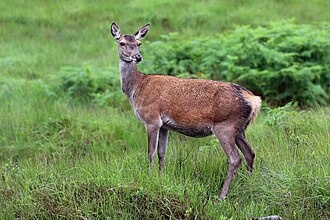
欧洲马鹿(赤鹿) Cervus elaphus
加拿大马鹿(白臀鹿) Cervus canadensis
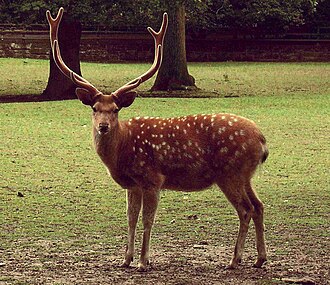
梅花鹿 (森林麋鹿)Cervus nippon
白唇鹿 Cervus albirostris
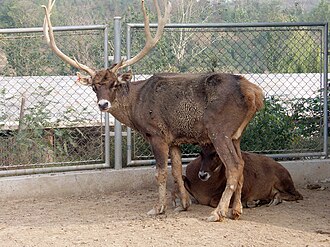
坡鹿 Cervus eldii
摘自维基百科「鹿屬」,CC BY-SA 4.0
- 学名
- Cervus
- 分类等级
- 属
- 上级类群
- 真鹿族
- 大类
- 哺乳动物
- 命名
- 卡尔·林奈,1758 年
- 异名
- Sika
- 数据库
- NCBI 分类 · GBIF
下级类群(5)
百科正文
- 鹿属(学名:Cervus)是鹿科中的一个属,主要包括以下各种:
- 欧洲马鹿(赤鹿) Cervus elaphus
- 加拿大马鹿(白臀鹿) Cervus canadensis
- 梅花鹿 (森林麋鹿)Cervus nippon
- 白唇鹿 Cervus albirostris
- 坡鹿 Cervus eldii
以上内容摘自维基百科「鹿屬」,按 CC BY-SA 4.0 使用,去掉了参考文献、外部链接等尾部小节,公式改写成了纯文本。全文、配图和出处见原文。
英文维基百科补充中文条目比较短,下面是英文条目「Cervus」的原文
Cervus is a genus of deer that primarily are native to Eurasia, although one species occurs in northern Africa and another in North America. In addition to the species presently placed in this genus, it has included a whole range of other species now commonly placed in other genera. Additionally, the species-level taxonomy is in a state of flux.
Taxonomy
Genus
Until the 1970s, Cervus also included the members of the genera Axis, Dama, and Elaphurus, and until the late 1980s, it included members of Rucervus and Rusa.
Species
In the third edition of Mammal Species of the World from 2005, only the red deer (C. elaphus) and sika deer (C. nippon) were recognized as species in the genus Cervus. Genetic and morphological evidence suggest more species should be recognized. For example, the species Cervus canadensis (elk/wapiti) is considered a separate species.
Red deer species group
Within the red deer species group, some sources have recommended the Central Asian red deer (Cervus hanglu) should be treated as a species. If the Central Asian red deer (from the Caspian Sea to western China) is recognized as a species, it includes the Yarkand deer and Bactrian deer (the two may be synonymous), but it could possibly also include the Kashmir stag, which has not been sampled in recent studies. If it is included in the Central Asian red deer, the scientific name of that species is C. hanglu. If it is not included, the scientific name of that species is C. yarkandensis, and the Kashmir stag (C. hanglu) may represent a separate monotypic species. The Central Asian red deer was considered its own species (including the Yarkand deer, Kashmir stag and Bactrian deer as subspecies) by the IUCN in 2017, and by the American Society of Mammalogists in 2021.
Others members of the red deer group, which may represent separate species, are C. corsicanus, C. wallichi and C. xanthopygus. If so, C. corsicanus includes the subspecies C. c. barbarus (perhaps a synonym of corsicanus), and is restricted to Maghreb in North Africa, Corsica and Sardinia. C. wallichi would probably include the subspecies C. w. kansuensis and C. w. macneilli (both are perhaps synonyms of C. w. wallichi), and would be found from Tibet to central China. C. xanthopygus would probably include the subspecies C. x. alashanicus (perhaps a synonym of C. x. xanthopygus), and would be found from the Russian Far East to northeastern China. This would restrict the "true" red deer (C.
Mating system
Members of the genus Cervus have polygynous mating systems within harems. These harems consist of several males, numerous females and their young offspring 1–3 years in age Members of this genus have a yearly breeding season where they display sensory exploitation, intrasexual competition, and weaponry. Females will fight for optimal mating opportunities and sexually selection for males with larger antler size and/or greater roar quality. The degree of polygyny and female aggregation is dependent on the level of food distribution. Females aggregating in areas with more food leading to larger harems Female distribution influences the level of polygyny.
Female-female competition
Female-female competition has been observed within harems in the red deer species (Cervus elaphus) prior to and during the mating season. Aggression is displayed through nose threats, kicking, and displacements. Elevated aggression has only been observed during the breeding season. Competition can be for access to mates or reproductive resources such as food, or nesting areas. Female-female aggression in ungulates is often overlooked because it is not as extravagant as male antler combat. Female conflicts occur so the winner has first access to the harem male at the start of the mating season before he is exhausted or low on sperm storage.
Secondary sexual traits
While an emphasis in observations of sexual selection is placed on combat using antlers, males with higher roaring rates are also being selected for. During the breeding season males will make calls to attract mates and compete with other males. Like antler size, mating call quality is an indicator of mate potential. Red deer can distinguish the calls of the males in their harem, others and their offspring.
Indirect benefits
Females select for males with larger antlers which indirectly benefits them. Large antler size in males is a sign of health and strength. The visual display is a reliable indicator of mate quality, providing indirect benefits. The females are not directly affected by these characteristics, but they will produce more viable and fit offspring.
以上节选摘自英文维基百科「Cervus」,按 CC BY-SA 4.0 使用,去掉了参考文献、外部链接等尾部小节,公式改写成了纯文本。篇幅所限,较长的小节只摘了开头一部分,有的小节没有收;全文、配图和出处见原文。