格物
帕邢定律
Paschen's law
physical law about electrical discharge in gases
帕邢定律 ;二电极间开始形成电弧或放电的击穿电压是气体的压力和电极距离乘积的函数,通常写成; . 此处;p是气体的压力;d是电极的距离。
帕邢找到此函数的形式是 . 此处a和b是常数;和气体的成分有关。在标准气压下,a=
43.66;b=12.8.
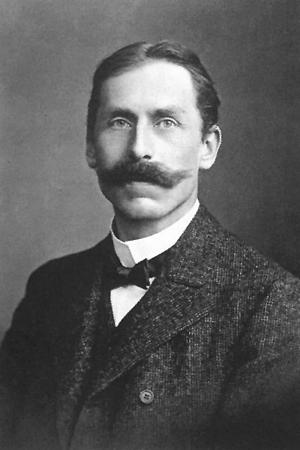
帕邢定律表示二极间开始的击穿电压和气体压力及二极间距乘积的关系;实际是一条弯曲的曲线;开始时,气体压力减少,电压也随之下降;但当气压再下降时,电压又慢慢上升;一直升至比开始时的电压高2-3倍;这条击穿电压和气体压力及电极距离乘积的曲线又称帕邢曲线。帕邢定律是德国物理学家帕邢于1889年发现的;故以他的名字命名。
帕邢定律在气压很高和二电极距离很短时不能成立。
摘自维基百科「帕邢定律」,CC BY-SA 4.0
- 类型
- 物理定律
- 命名来源
- 弗里德里希·帕邢
- 学科
- 物理学
相关科学家
百科正文
帕邢找到此函数的形式是 V=apd/ln(pd)+b. 此处a和b是常数;和气体的成分有关。在标准气压下,a=
43.66;b=12.8.
以上内容摘自维基百科「帕邢定律」,按 CC BY-SA 4.0 使用,去掉了参考文献、外部链接等尾部小节,公式改写成了纯文本。全文、配图和出处见原文。
英文维基百科补充中文条目比较短,下面是英文条目「Paschen's law」的原文
Paschen's law is an equation that gives the breakdown voltage– the voltage necessary to start a discharge or electric arc –between two electrodes in a gas as a function of pressure and gap length. It is named after Friedrich Paschen who discovered it empirically in 1889.
Paschen studied the breakdown voltage of various gases between parallel metal plates as the gas pressure and gap distance were varied:
With a constant gap length, the voltage necessary to arc across the gap decreased as the pressure was reduced and then increased gradually, exceeding its original value.
With a constant pressure, the voltage needed to cause an arc reduced as the gap size was reduced but only to a point. As the gap was reduced further, the voltage required to cause an arc began to rise and again exceeded its original value.
For a given gas, the voltage is a function only of the product of the pressure and gap length. The curve he found of voltage versus the pressure-gap length product (right) is called Paschen's curve. He found an equation that fit these curves, which is now called Paschen's law.
At higher pressures and gap lengths, the breakdown voltage is approximately proportional to the product of pressure and gap length, and the term Paschen's law is sometimes used to refer to this simpler relation. However, this is only roughly true, over a limited range of the curve.
Paschen curve
Early vacuum experimenters found a rather surprising behavior. An arc would sometimes take place in a long irregular path rather than at the minimal distance between the electrodes. For example, in air, at a pressure of one atmosphere, the distance for minimal breakdown voltage is about 7.5 μm. The voltage required to arc this distance is 327 V, which is insufficient to ignite the arcs for gaps that are either wider or narrower. For a 3.5 μm gap, the required voltage is 533 V, nearly twice as much. If 500 V were applied, it would not be sufficient to arc at the 2.85 μm distance, but would arc at a 7.5 μm distance.
Physical mechanism
The mean free path of a molecule in a gas is the average distance between its collision with other molecules. This is inversely proportional to the pressure of the gas, given constant temperature. In air at STP the mean free path of molecules is about 96 nm. Since electrons are much smaller, their average distance between colliding with molecules is about 5.6 times longer, or about 0.5 μm. This is a substantial fraction of the 7.5 μm spacing between the electrodes for minimal arc voltage.
Derivation
Basics
To calculate the breakthrough voltage, a homogeneous electrical field is assumed. This is the case for a parallel-plate capacitor. The electrodes may have the distance d. The cathode is located at the point x=0.
To get impact ionization, the electron energy Eₑ must become greater than the ionization energy E_(I) of the gas atoms between the plates. Per length of path x a number of α ionizations will occur. α is known as the first Townsend coefficient as it was introduced by Townsend.
The increase of the electron current Γ ₑ, can be described for the assumed setup as
Conclusions, validity
Paschen's law requires that:
There are already free electrons at the cathode ( Γ ₑ(x=0)≠ 0) which can be accelerated to trigger impact ionization. Such so-called seed electrons can be created by ionization by natural radioactivity or cosmic rays.
The creation of further free electrons is only achieved by impact ionization. Thus Paschen's law is not valid if there are external electron sources. This can, for example, be a light source creating secondary electrons by the photoelectric effect. This has to be considered in experiments.
Effects with different gases
Different gases will have different mean free paths for molecules and electrons. This is because different molecules have ionization cross sections, that is, different effective diameters. Noble gases like helium and argon are monatomic, which makes them harder to ionize and tend to have smaller effective diameters. This gives them greater mean free paths.
Ionization potentials differ between molecules, as well as the speed that they recapture electrons after they have been knocked out of orbit. All three effects change the number of collisions needed to cause an exponential growth in free electrons.
以上节选摘自英文维基百科「Paschen's law」,按 CC BY-SA 4.0 使用,去掉了参考文献、外部链接等尾部小节,公式改写成了纯文本。篇幅所限,较长的小节只摘了开头一部分,有的小节没有收;全文、配图和出处见原文。