格物

图:Albarubescens · CC BY-SA 4.0 · Wikimedia Commons
- 发现 / 发明时间
- 1816 年
- 发现者 / 提出者
- 大卫·布儒斯特
- 学科
- 物理学
- 上级概念
- optical toy、光学仪器
相关科学家
百科正文
名称
Kaleidoscope字源是希腊文来源于kalos,是美丽的意思,而eidos 是form 的意思,即观看美丽的形状。
结构
万花筒是一个筒内放置三片镜子,两端密封,其中一端放有颜色的物体(如玻璃碎片),另一端开孔的圆柱。
现代万花筒是由黄铜管、彩色玻璃、木材、钢材、葫芦或几乎任何材质都可以使用。
历史
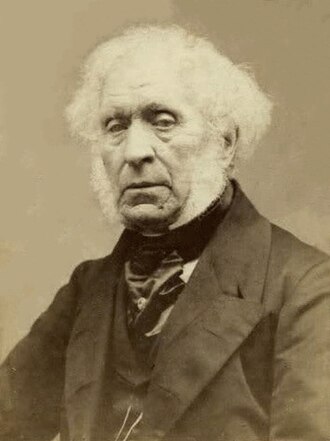
1815年大卫·布儒斯特爵士的工作主要从事光学和光谱研究,这导致万花筒的发明,他正实验光的偏振,但一开始它没有申请专利。1817年布鲁斯特以“Kaleidoscope”之名申请专利,开始有万花筒专利。由当时著名的光学公司Philip Carpenter承包万花筒的制造。三个月内,伦敦和巴黎一共售出20万个万花筒,但大部分的万花筒都是盗版品,布鲁斯特未获得应有的金钱回报。布鲁斯特写信给妻子说:“数以千计的穷人都靠制作和销售万花筒为生”。19世纪,万花筒传入中国,作为大清王朝达官贵人的珍藏。
轶事
日本设计师山见浩司深入钻研万花筒,连续15年入选有“万花筒奥斯卡”之称的Brewster conventions,并两度获得美国全美民选奖。
以上内容摘自维基百科「萬花筒」,按 CC BY-SA 4.0 使用,去掉了参考文献、外部链接等尾部小节,公式改写成了纯文本。全文、配图和出处见原文。
英文维基百科补充中文条目比较短,下面是英文条目「Kaleidoscope」的原文
A kaleidoscope is an optical instrument with two or more reflecting surfaces (or mirrors) tilted to each other at an angle, so that one or more (parts of) objects on one end of these mirrors are shown as a symmetrical pattern when viewed from the other end, due to repeated reflection. These reflectors are often enclosed in a tube, usually containing on one end a cell with loose, colored pieces of glass or other transparent (and/or opaque) materials to be reflected into the viewed pattern. Rotation of the cell causes motion of the materials, resulting in an ever-changing view being presented.
Etymology
The term "kaleidoscope" was coined by its Scottish inventor David Brewster. It is derived from the Ancient Greek word καλός (kalos), "beautiful, beauty", εἶδος (eidos), "form, appearance" and σκοπέω (skopeō), "to look, to examine", hence "observation of beautiful forms". It was first published in the patent that was granted on July 10, 1817.
History
Multiple reflection by two or more reflecting surfaces has been known since antiquity and was described as such by Giambattista della Porta in his Magia Naturalis (1558–1589). In 1646, Athanasius Kircher described an experiment with a construction of two mirrors, which could be opened and closed like a book and positioned in various angles, showing regular polygon figures consisting of reflected aliquot sectors of 360°. Richard Bradley's New Improvements in Planting and Gardening (1717) described a similar construction to be placed on geometrical drawings to show an image with multiplied reflection. However, an optimal configuration that produces the full effects of the kaleidoscope was not recorded before 1815.
In 1814, Sir David Brewster conducted experiments on light polarization by successive reflections between plates of glass and first noted "the circular arrangement of the images of a candle round a center, and the multiplication of the sectors formed by the extremities of the plates of glass". He forgot about it, but noticed a more impressive version of the effect during further experiments in February 1815. A while later, he was impressed by the multiplied reflection of a bit of cement that was pressed through at the end of a triangular glass trough, which appeared more regular and almost perfectly symmetrical in comparison to the reflected objects that had been situated further away from the reflecting plates in earlier experiments. This triggered more experiments to find the conditions for the most beautiful and symmetrically perfect conditions.
Variations
General variations
David Brewster defined several variables in his patent and publications:
variations in size (Brewster deemed a length of five to ten inches convenient, for one to four inches he suggested the use of a lens with a focus length equal to the length of the reflectors)
variations in the angle of inclination of the reflecting surfaces. In his patent Brewster deemed 18°, 20° or 22 1/2° most pleasing. In the treatise 45°, 36° and 30° are the primary examples.
variations in material of the reflecting surfaces (plates of plain glass, quicksilvered glass (mirror) or metal, or the reflecting inner surfaces of a solid prism of glass or rock crystal) The choice of material can have some influence of the tint and the quality of the image.
a wide variety of objects, small figures, fragments, liquids and materials of different colors and shapes can be used in object cells (apart from the more usual transparent fragments, for instance twisted pieces of iron or brass wire, or some lace, can produce very fine effects)
Different versions suggested by Brewster
In his patent, Brewster perceived two forms for the kaleidoscope:
"most common form": two reflectors, small objects should be placed close to the aperture to be viewed at the other end
"The compound, or telescopic Kaleidoscope": a tube with two reflectors, sliding inside another tube with one to three convex lenses, to be applied to any object at any distance (this was later re-introduced as the teleidoscope)
In his Treatise on the Kaleidoscope (1819) he described the basic form with an object cell:
"simple form": a tube with two reflectors and objects such as pieces of colored glass either fixed or placed loosely in cell on the end of the instrument
In popular culture
The Rise and Fall of a Midwest Princess, the 2023 album by Chappell Roan contains the song "Kaleidoscope", which compares love to the unpredictable nature of the kaleidoscope, mentioning them four times.
以上节选摘自英文维基百科「Kaleidoscope」,按 CC BY-SA 4.0 使用,去掉了参考文献、外部链接等尾部小节,公式改写成了纯文本。篇幅所限,较长的小节只摘了开头一部分,有的小节没有收;全文、配图和出处见原文。