格物
- 类型
- 热力学定律
- 发现 / 发明时间
- 1824 年
- 发现者 / 提出者
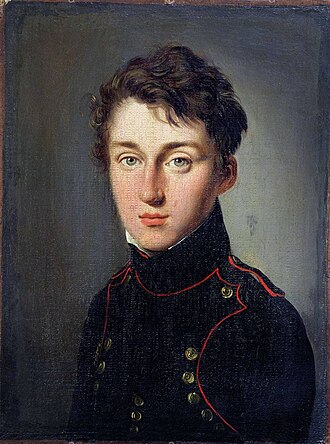
- 尼古拉·莱昂纳尔·萨迪·卡诺
- 属于
- 热力学
- 研究学科
- 能量守恒定律
- 学科
- 物理学
- 上级概念
- 能量守恒定律
- 前一项
- 热力学第零定律
- 后一项
- 热力学第二定律
- 主题
- 能量守恒定律
相关科学家
百科正文
式中 Δ Eᵢₙₜ 为系统内能的变化量,若系统对外界作正功,则 W 为正,反之则为负。
写成微分形式为: d Eᵢₙₜ=δ Q-δ W
阐述方式
系统内能的变化等于其吸收的热量减去系统对外界所作的功。
系统在绝热状态时,功只取决于系统初始状态和结束状态的能量,和过程无关。
孤立系统的能量永远守恒。
系统经过绝热循环,其所做的功为零,因此第一类永动机是不可能的(即不消耗能量做功的机械)。
两个系统相互作用时,功具有唯一的数值,可以为正、负或零。
热力学第一定律功率平衡方程: (公式略)
这里: (公式略) 系统随时间的变化量。 (公式略) 通过系统边界的热量。 (公式略) 通过系统边界的功。 (公式略) 流入系统内部的质量流。 (公式略) 流到系统外部的质量流。 h 比焓。 g· z 质量流所具有的势能。 (公式略) 质量流所具有的动能。
- 特例以及简化形式:
- 封闭系统: (公式略)
- 稳定系统: (公式略)
- 绝热系统: (公式略)
以上内容摘自维基百科「热力学第一定律」,按 CC BY-SA 4.0 使用,去掉了参考文献、外部链接等尾部小节,公式改写成了纯文本。全文、配图和出处见原文。
英文维基百科补充中文条目比较短,下面是英文条目「First law of thermodynamics」的原文
The first law of thermodynamics is a formulation of the law of conservation of energy in the context of thermodynamic processes. For a thermodynamic process affecting a thermodynamic system without transfer of matter, the law distinguishes two principal forms of energy transfer, heat and thermodynamic work. The law also defines the internal energy of a system, an extensive property for taking account of the balance of heat transfer, thermodynamic work, and matter transfer, into and out of the system. Energy cannot be created or destroyed, but it can be transformed from one form to another. In an externally isolated system, with internal changes, the sum of all forms of energy is constant.
An equivalent statement is that perpetual motion machines of the first kind are impossible; work done by a system on its surroundings requires that the system's internal energy be consumed, so that the amount of internal energy lost by that work must be resupplied as heat by an external energy source or as work by an external machine acting on the system to sustain the work of the system continuously.
Fluid dynamics
In fluid dynamics, the first law of thermodynamics reads (公式略).
以上节选摘自英文维基百科「First law of thermodynamics」,按 CC BY-SA 4.0 使用,去掉了参考文献、外部链接等尾部小节,公式改写成了纯文本。篇幅所限,较长的小节只摘了开头一部分,有的小节没有收;全文、配图和出处见原文。