格物
- 类型
- 猜想
- 发现者 / 提出者
- 埃米尔·阿廷
- 命名来源
- 埃米尔·阿廷
- 研究学科
- 数论
- 学科
- 数学
相关科学家
百科正文
如果这个整数不是次方数,而且他的无平方因数部分除以4的余数也不是1,则这些质数在质数集合中的密度为0.3739558136...,该数也被称作阿廷常数。
例如1000以内,以2为原根的质数有67个,1000以内的所有质数共有168个,其比例为67/168=0.3988095238...
以上内容摘自维基百科「阿廷猜想」,按 CC BY-SA 4.0 使用,去掉了参考文献、外部链接等尾部小节,公式改写成了纯文本。全文、配图和出处见原文。
英文维基百科补充中文条目比较短,下面是英文条目「Artin's conjecture on primitive roots」的原文
In number theory, Artin's conjecture on primitive roots states that a given integer a that is neither a square number nor −1 is a primitive root modulo infinitely many primes p. The conjecture also ascribes an asymptotic density to these primes. This conjectural density equals Artin's constant or a rational multiple thereof.
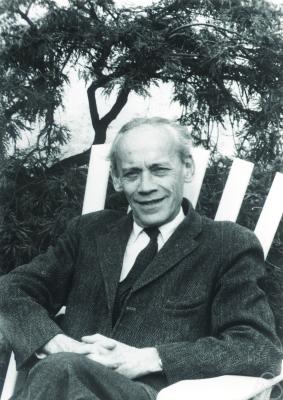
The conjecture was made by Emil Artin to Helmut Hasse on September 27, 1927, according to the latter's diary. The conjecture is still unresolved as of 2026. In fact, there is no single value of a for which Artin's conjecture is proved. However, it is proven that there cannot be more than two primes for which Artin's conjecture fails.
In October 2026, OpenAI released a catalogue of manuscripts produced by an internal model, including a paper (029) claiming an unconditional proof of the existence part of Artin's conjecture on primitive roots, establishing a density lower bound of cₐx/(log x)² that is lower than the conjectured density. The result had not been reviewed by the mathematical community and did not have a Lean formalization at the time of its release.
Formulation
Let a be an integer that is not a square number and not −1. Write a = a0b2 with a0 square-free. Denote by S(a) the set of prime numbers p such that a is a primitive root modulo p. Then the conjecture states
S(a) has a positive asymptotic density inside the set of primes. In particular, S(a) is infinite.
Under the conditions that a is not a perfect power and a0 is not congruent to 1 modulo 4 (sequence A085397 in the OEIS), this density is independent of a and equals Artin's constant, which can be expressed as an infinite product (公式略) (sequence A005596 in the OEIS).
The positive integers satisfying these conditions are:
2, 3, 6, 7, 10, 11, 12, 14, 15, 18, 19, 22, 23, 24, 26, 28, 30, 31, 34, 35, 38, 39, 40, 42, 43, 44, 46, 47, 48, 50, 51, 54, 55, 56, 58, 59, 60, 62, 63, … (sequence A085397 in the OEIS)
The negative integers satisfying these conditions are:
Examples
For example, take a = 2. The conjecture is that the set of primes p for which 2 is a primitive root has the density CArtin. The set of such primes is (sequence A001122 in the OEIS)
S(2) = {3, 5, 11, 13, 19, 29, 37, 53, 59, 61, 67, 83, 101, 107, 131, 139, 149, 163, 173, 179, 181, 197, 211, 227, 269, 293, 317, 347, 349, 373, 379, 389, 419, 421, 443, 461, 467, 491,...}.
It has 38 elements smaller than 500 and there are 95 primes smaller than 500. The ratio (which conjecturally tends to CArtin) is 38/95 = 2/5 = 0.4.
For a = 4 = 22, which is a square number, the density is 0, and for a = 8 = 23, which is a power of 2, the conjectured density is 3/5C, and for a = 5, which is congruent to 1 mod 4, the conjectured density is 20/19C.
Partial results
In 1967, Christopher Hooley published a conditional proof for the conjecture, assuming certain cases of the extended Riemann hypothesis.
Without the generalized Riemann hypothesis, there is no single value of a for which Artin's conjecture is proved. However, D. R. Heath-Brown proved in 1986 that at least one of 2, 3, or 5 is a primitive root modulo infinitely many primes p. He also proved (Corollary 2) that there are at most two primes for which Artin's conjecture fails, (Corollary 3) that there are at most three square-free integers for which Artin's conjecture fails, and (Corollary 4) that there is a constant c>0 such that among all integers of magnitude up to x at most c(ln(x))² fail Artin's conjecture.
If p is a prime of the form p=4q+1 with q itself a prime, then a=2 is known to be a primitive root modulo p. Proving that there are infinitely many p of this type would establish a=2 as an explicit a for which Artin's conjecture is known to hold.
Abelian varieties
Unconditionally, the infinite part of Artin's primitive root conjecture for general abelian varieties was proved in:
C. Virdol, Artin's conjecture for abelian varieties, Kyoto Journal of Mathematics, 2016.
Moreover, unconditionally, the strong form of Artin's primitive root conjecture for general CM elliptic curves was proved in:
C. Virdol, On Artin's conjecture for CM elliptic curves, Kyoto Journal of Mathematics, 2020.
Conditionally, under the Generalized Riemann Hypothesis,
Gupta and Murty proved Artin's primitive root conjecture for elliptic curves with complex multiplication, for primes splitting in the relevant imaginary quadratic field.
以上节选摘自英文维基百科「Artin's conjecture on primitive roots」,按 CC BY-SA 4.0 使用,去掉了参考文献、外部链接等尾部小节,公式改写成了纯文本。篇幅所限,较长的小节只摘了开头一部分,有的小节没有收;全文、配图和出处见原文。