格物
- 类型
- 物理定律
- 命名来源
- 弗里德里希·洪德
- 学科
- 物理学
- 组成部分
- 洪德最大多重度规则
相关科学家
百科正文
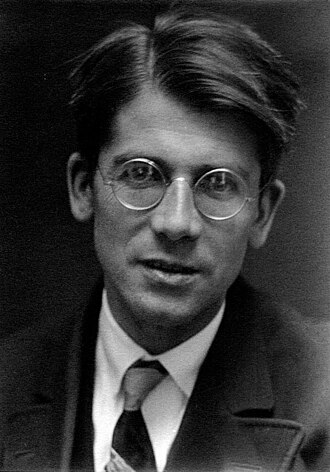
1925年,德国物理学家弗里德里希·洪德提出该规则关于总自旋量子数 S、总方位角量子数 L 的前两条。1927年又加上了关于总角动量量子数 J 的一条,将其扩成三条。(中学课本出现的洪德规则多为下面的第1条洪德规则,又叫洪德最大多重度规则。)
他指出:
对于一组原子态,自旋多重度 2S+1 最大,能量最低。亦可表述为 S 最大的态能量最低 S 相同时, L 最大的态能量最低
a) 一个光谱项的光谱支项中,如果最外亚层电子数小于/等于最外亚层的“最大”电子数的一半, J=L-S 最小的光谱支项能量最低,可命名为正常次序;b) 如果最外亚层电子数大于最外亚层的“最大”电子数的一半, J=L+S 最大的光谱支项能量最低,可命名为倒转次序。
不过,洪德规则对有些原子的低激发态能级次序并不适用!例如,实验表明氦原子的P能级的三重态为倒转次序,其光谱项和光谱支项记为He(1s12p1): 3P{3P0, 3P1, 3P2}。然而,He(1s12p1)的最外亚层(2px)电子数( x)为1,最外亚层(2px)的最大电子数( xₘₐₓ)为6,1≯(0.5×6),与第3b条规则矛盾!这些特例出现的原因是L-S耦合模型在这几个原子身上不再适用。
值得注意的是,洪德规则只能被用来找到能量最低的那一个光谱项,不能被用来给此外的原子能级们比大小。
以上内容摘自维基百科「洪德规则」,按 CC BY-SA 4.0 使用,去掉了参考文献、外部链接等尾部小节,公式改写成了纯文本。全文、配图和出处见原文。
英文维基百科补充中文条目比较短,下面是英文条目「Hund's rules」的原文
In atomic physics and quantum chemistry, Hund's rules refers to a set of rules that German physicist Friedrich Hund formulated around 1925, which are used to determine the term symbol that corresponds to the ground state of a multi-electron atom. The first rule is especially important in chemistry, where it is often referred to simply as Hund's Rule.
The three rules are:
For a given electron configuration, the term with maximum multiplicity has the lowest energy. The multiplicity is equal to (公式略), where S is the total spin angular momentum for all electrons. The multiplicity is also equal to the number of unpaired electrons plus one. Therefore, the term with lowest energy is also the term with maximum S and maximum number of unpaired electrons with equal spin angular momentum (either +1/2 or -1/2).
For a given multiplicity, the term with the largest value of the total orbital angular momentum quantum number L has the lowest energy.
For a given term, in an atom with outermost shell half-filled or less, the level with the lowest value of the total angular momentum quantum number J (for the operator J=L+S) lies lowest in energy. If the outermost shell is more than half-filled, the level with the highest value of J is lowest in energy.
These rules specify in a simple way how usual energy interactions determine which term includes the ground state. The rules assume that the repulsion between the outer electrons is much greater than the spin–orbit interaction, which is in turn stronger than any other remaining interactions. This is referred to as the LS coupling regime.
Closed shells and subshells do not contribute to the quantum numbers for total S, the total spin angular momentum and for L, the total orbital angular momentum. It can be shown that for full orbitals and suborbitals both the residual electrostatic energy (repulsion between electrons) and the spin–orbit interaction can only shift all the energy levels together. Thus when determining the ordering of energy levels in general only the outer valence electrons must be considered.
Rule 1
Due to the Pauli exclusion principle, two electrons cannot share the same set of quantum numbers within the same system; therefore, there is room for only two electrons in each spatial orbital. One of these electrons must have, (for some chosen direction z) ms = 1⁄2, and the other must have ms = −1⁄2. Hund's first rule states that the lowest energy atomic state is the one that maximizes the total spin quantum number for the electrons in the open subshell. The orbitals of the subshell are each occupied singly with electrons of parallel spin before double occupation occurs.
Rule 2
This rule deals with reducing the repulsion between electrons. It can be understood from the classical picture that if all electrons are orbiting in the same direction (higher orbital angular momentum) they meet less often than if some of them orbit in opposite directions. In the latter case the repulsive force increases, which separates electrons. This adds potential energy to them, so their energy level is higher.
Example
For silicon there is only one triplet term, so the second rule is not required.
Rule 3
This rule considers the energy shifts due to spin–orbit coupling. In the case where the spin–orbit coupling is weak compared to the residual electrostatic interaction, L and S are still good quantum numbers and the splitting is given by: (公式略)
The value of ξ (L,S) changes from plus to minus for shells greater than half full. This term gives the dependence of the ground state energy on the magnitude of J.
Examples
The ³ P lowest energy term of Si consists of three levels, J=2,1,0. With only two of six possible electrons in the shell, it is less than half-full and thus ³ P₀ is the ground state.
Excited states
Hund's rules work best for the determination of the ground state of an atom or molecule.
They are also fairly reliable (with occasional failures) for the determination of the lowest state of a given excited electronic configuration. Thus, in the helium atom, Hund's first rule correctly predicts that the 1s2s triplet state (3S) is lower than the 1s2s singlet (1S). Similarly for organic molecules, the same rule predicts that the first triplet state (denoted by T1 in photochemistry) is lower than the first excited singlet state (S1), which is generally correct.
以上节选摘自英文维基百科「Hund's rules」,按 CC BY-SA 4.0 使用,去掉了参考文献、外部链接等尾部小节,公式改写成了纯文本。篇幅所限,较长的小节只摘了开头一部分,有的小节没有收;全文、配图和出处见原文。