格物
- 类型
- 引理、定理
- 命名来源
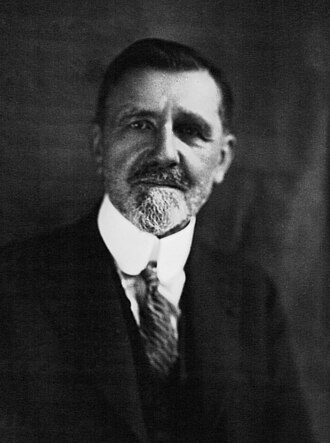
- 弗朗西斯科·保罗·坎泰利、埃米尔·博雷尔
- 学科
- 数学、物理学
相关科学家
百科正文
概率空间中的定理
设 Eₙ 为某个概率空间中的一个事件序列。波莱尔-坎泰利引理说明:
如果所有的事件 Eₙ 发生的概率 P 的总和是有限的, ∑ ₙ₌₁^(∞)P (Eₙ)<∞,
那么它们之中有无限多个同时发生的概率等于零: (公式略)
其中的 (公式略) 是指一个事件序列的上极限。由于每一个事件都是若干个可能结果的集合,所以 (公式略) 就是指使得序列 Eₙ(ω) 里面有无限多个事件一起发生的结果(outcome,或称样本输出) ω 的集合。准确来说, (公式略)。
证明
设(En)是某个概率空间里的一系列事件。假设这些事件发生的概率之和是有限的: ∑ ₙ₌₁^(∞)P (Eₙ)<∞。
这等价于说,正项无穷级数 (P (Eₙ))_(n≥ 1) 收敛。所以,根据无穷级数的性质,级数的余项 ∑ _(n=N)^(∞)P (Eₙ) 的下极限是0: (公式略)
因此, (公式略)
推广
对于更一般的概率空间,波莱尔-坎泰利引理可以叙述如下:
设μ是一个集合X上的测度,装备了σ-代数F。设(An)为F中的一个序列。如果: ∑ ₙ₌₁^(∞)μ (Aₙ)<∞
那么, (公式略)
以上内容摘自维基百科「波莱尔-坎泰利引理」,按 CC BY-SA 4.0 使用,去掉了参考文献、外部链接等尾部小节,公式改写成了纯文本。全文、配图和出处见原文。
英文维基百科补充中文条目比较短,下面是英文条目「Borel–Cantelli lemma」的原文
The Borel–Cantelli lemma is a result in measure theory. It is often stated in the context of probability theory, where it is used to study whether, in a given sequence of events, a finite or infinite number of these events occur. The statement of the lemma is often split into two parts:
The first Borel–Cantelli lemma, which states that if the sum of the probabilities of the events is finite, then the probability that infinitely many of them occur is 0. This result holds for any sequence of events, without additional assumptions;
The second Borel–Cantelli lemma, which states that if the events are independent and the sum of their probabilities is infinite, then the probability that infinitely many of them occur is 1.
It follows that the probability of the limit superior of a sequence of independent events is always either zero or one. For this reason, the Borel–Cantelli lemma is often referred to as a zero-one law. Other examples or similar results include Kolmogorov's zero–one law and the Hewitt–Savage zero–one law.
The Borel–Cantelli lemma is named after Émile Borel and Francesco Paolo Cantelli, who stated it in the first decades of the 20th century.
Statement of lemma for probability spaces
Let E1, E2,... be a sequence of events in some probability space.
The Borel–Cantelli lemma states:
Here, "lim sup" denotes limit supremum of the sequence of events. That is, lim sup En is the outcome that infinitely many of the infinite sequence of events (En) actually occur. Explicitly, (公式略) The set lim sup En is sometimes denoted {En i.o.}, where "i.o." stands for "infinitely often".
Proof
Let (En) be a sequence of events in some probability space.
The sequence of events (公式略) is non-increasing: (公式略) By continuity from above, (公式略) By subadditivity, (公式略) By original assumption, (公式略) As the series (公式略) converges, (公式略)
as required.
Converse result
A related result, sometimes called the second Borel–Cantelli lemma, is a partial converse of the first Borel–Cantelli lemma. The lemma states: If the events En are independent and the sum of the probabilities of the En diverges to infinity, then the probability that infinitely many of them occur is 1. That is:
The assumption of independence can be weakened to pairwise independence, but in that case the proof is more difficult.
The infinite monkey theorem follows from this second lemma.
Generalizations
Renyi–Lamperti lemma
The assumption of independence in the second lemma can be relaxed. The Renyi–Lamperti lemma states that if the events (Aₙ) satisfy (公式略) and a condition of weak dependence regarding the correlation of the events, specifically: (公式略)
then (公式略).
This result is related to the Kochen–Stone theorem, which provides a lower bound for the probability of infinitely many events occurring when the limit inferior in the condition above is positive but not necessarily 1.
Counterpart
Another related result is the so-called counterpart of the Borel–Cantelli lemma. It is a counterpart of the Lemma in the sense that it gives a necessary and sufficient condition for the limsup to be 1 by replacing the independence assumption by the completely different assumption that (Aₙ) is monotone increasing for sufficiently large indices. This Lemma says:
Let (Aₙ) be such that Aₖ⊆ Aₖ₊₁,
Kochen–Stone
Let (Aₙ) be a sequence of events with (公式略) and (公式略) Then there is a positive probability that Aₙ occur infinitely often.
Proof
- Let S_(m,n)=∑ ᵢ₌ₘⁿ1 _(A)ᵢ. Then, note that (公式略)
- and (公式略)
- Hence, we know that (公式略)
- We have that (公式略)
- Now, notice that by the Cauchy-Schwarz Inequality, for any random variable X≥ 0: (公式略)
- therefore, (公式略)
- We then have (公式略)
- Given m, since lim _(n→ ∞)E [S_(1,n)]=∞, we can find n large enough so that (公式略)
- for any given ε >0. Therefore, (公式略)
Applications
Strong Law of Large Numbers
The Borel–Cantelli lemma is a standard tool used to prove the Strong Law of Large Numbers. In many proofs, Chebyshev's inequality is applied to bound the probability that a sum of random variables deviates from its mean. If these probabilities sum to a finite value (often involving a convergence of ∑ n⁻²), the first Borel–Cantelli lemma implies that large deviations occur only finitely often, establishing almost sure convergence.
以上节选摘自英文维基百科「Borel–Cantelli lemma」,按 CC BY-SA 4.0 使用,去掉了参考文献、外部链接等尾部小节,公式改写成了纯文本。篇幅所限,较长的小节只摘了开头一部分,有的小节没有收;全文、配图和出处见原文。