格物
维格纳的友人
Wigner's friend
thought experiment in theoretical quantum physics
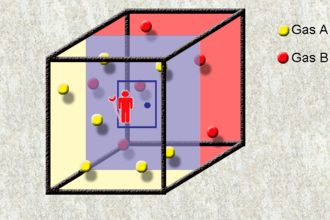
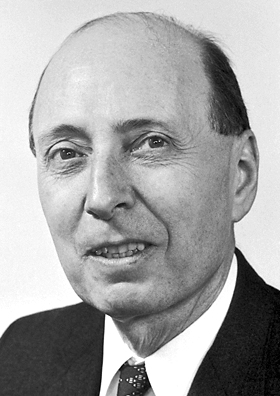
维格纳的友人 是一个理论量子物理学的思想实验,最初由匈牙利裔美国物理学家尤金·维格纳于1961年提出,并由戴维·多伊奇于1985年进一步发展。该情境涉及对量子测量的间接观测:观测者 观测另一位观测者 对物理系统执行量子测量。随后两位观测者依据量子理论法则,共同对测量后物理系统的状态作出陈述。在哥本哈根诠释中,两位观察者得出的陈述相互矛盾。这反映出该诠释中两条法则的表面不相容性:封闭系统状态的确定性与连续时间演化,以及系统状态在测量时发生的非确定性、不连续性坍缩。因此,维格纳的友人问题直接关联到量子力学中的测量问题及其著名的薛定谔猫佯谬。
摘自维基百科「維格納的友人」,CC BY-SA 4.0
- 类型
- 思想实验
- 发现者 / 提出者
- 尤金·维格纳
- 命名来源
- 尤金·维格纳
- 学科
- 物理学
- 创造者
- 尤金·维格纳
- 基于
- 薛定谔的猫
相关科学家
百科正文
维格纳的友人的实验已衍生出多种推广与延伸版本。其中两种涉及多重友人的实验情境,已透过实验室实证实现——实验中以光子替代友人角色进行模拟。然而,将光子作为观察者的做法遭到了特拉维夫大学量子物理学家列夫·瓦伊德曼的批评,他认为此举“荒谬至极;观察者必须是巨观的”。纽约大学物理哲学家提姆·莫德林则指出:“没有人会认为光子是观察者。”
以上内容摘自维基百科「維格納的友人」,按 CC BY-SA 4.0 使用,去掉了参考文献、外部链接等尾部小节,公式改写成了纯文本。全文、配图和出处见原文。
英文维基百科补充中文条目比较短,下面是英文条目「Wigner's friend」的原文
Wigner's friend is a thought experiment in theoretical quantum physics, first published by the Hungarian-American physicist Eugene Wigner in 1961, and further developed by David Deutsch in 1985. The scenario involves an indirect observation of a quantum measurement: An observer W observes another observer F who performs a quantum measurement on a physical system. The two observers then formulate a statement about the physical system's state after the measurement according to the laws of quantum theory. In the Copenhagen interpretation, the resulting statements of the two observers contradict each other. This reflects a seeming incompatibility of two laws in the Copenhagen interpretation: the deterministic and continuous time evolution of the state of a closed system and the nondeterministic, discontinuous collapse of the state of a system upon measurement. Wigner's friend is therefore directly linked to the measurement problem in quantum mechanics with its famous Schrödinger's cat paradox.
Generalizations and extensions of Wigner's friend have been proposed. Two such scenarios involving multiple friends have been implemented in a laboratory, using photons to stand in for the friends. However, the use of photons as observers has been criticized by quantum physicist Lev Vaidman of Tel Aviv University as "ridiculous; the friend has to be macroscopic". Philosopher of physics Tim Maudlin of New York University says that "Nobody thinks a photon is an observer".
Original paradox
Wigner introduced the thought experiment in a 1961 article "Remarks on the Mind-Body Question". He begins by noting that most physicists in the then-recent past had been thoroughgoing materialists who would insist that "mind" or "soul" are illusory, and that nature is fundamentally deterministic. He argues that quantum physics has changed this situation:
All that quantum mechanics purports to provide are probability connections between subsequent impressions (also called "apperceptions") of the consciousness, and even though the dividing line between the observer, whose consciousness is being affected, and the observed physical object can be shifted towards the one or the other to a considerable degree, it cannot be eliminated.
Nature of the wave function
Going into more detail, Wigner says:
Responses in different interpretations of quantum mechanics
Many-worlds interpretations
The various versions of the many worlds interpretation avoid the need to postulate that consciousness causes collapse – indeed, that collapse occurs at all.
Hugh Everett III's doctoral thesis "'Relative state' formulation of quantum mechanics" serves as the foundation for today's many versions of many-worlds interpretations. In the introductory part of his work, Everett discusses the "amusing, but extremely hypothetical drama" of the Wigner's friend paradox. Note that there is evidence of a drawing of the scenario in an early draft of Everett's thesis. It was therefore Everett who provided the first written discussion of the problem four or five years before it was discussed in "Remarks on the mind-body question" by Wigner, of whom it received the name and fame thereafter.
An extension of the Wigner's friend experiment
In 2016, Frauchiger and Renner used an elaboration of the Wigner's-friend scenario to argue that quantum theory cannot be used to model physical systems that are themselves agents who use quantum theory. They provide an information-theoretic analysis of two specifically connected pairs of "Wigner's friend" experiments, where the human observers are modelled within quantum theory. By then letting the four different agents reason about each other's measurement results (using the laws of quantum mechanics), contradictory statements are derived.
The resulting theorem highlights an incompatibility of a number of assumptions that are usually taken for granted when modelling measurements in quantum mechanics.
In fiction
Stephen Baxter's novel Timelike Infinity (1992) discusses a variation of Wigner's friend thought experiment through a refugee group of humans self-named "The Friends of Wigner". They believe that an ultimate observer at the end of time may collapse all possible entangled wave-functions generated since the beginning of the universe, hence choosing a reality without oppression.
以上节选摘自英文维基百科「Wigner's friend」,按 CC BY-SA 4.0 使用,去掉了参考文献、外部链接等尾部小节,公式改写成了纯文本。篇幅所限,较长的小节只摘了开头一部分,有的小节没有收;全文、配图和出处见原文。