格物
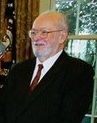
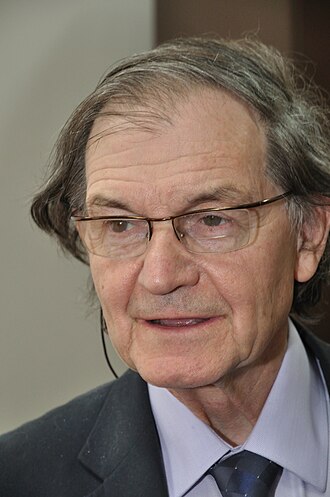
图:Bush6NobelLaureates.jpg: Tina Hager derivative work: Elinnea… · Public domain · Wikimedia Commons
保罗·劳特伯1929—2007
Paul Lauterbur
化学家, 美国
保罗·克里斯琴·劳特伯 是一名美国化学家,因其工作使磁共振成像(MRI)的发展成为可能,他与彼得·曼斯菲尔德共同获得2003年的诺贝尔生理学或医学奖。
摘自维基百科「保罗·劳特伯」,CC BY-SA 4.0
- 出生
- 1929 年 5 月 6 日,悉尼
- 逝世
- 2007 年 3 月 27 日,厄巴纳
- 国籍
- 美国
- 学科
- 物理学、化学、生物学、博物与综合
- 职业
- 化学家、教授、物理学家、生物物理学家
- 母语 / 工作语言
- 英语
- 母校
- 匹兹堡大学、凯斯西储大学、Sidney High School
- 工作单位
- 伊利诺伊大学厄巴纳-香槟分校、伊利诺伊大学芝加哥分校、石溪大学
研究领域
主要贡献
代表成就
所获奖项(17)
- 1983霍华德N.波茨勋章
- 1983马克斯·德尔布吕克奖
- 1984拉斯克临床医学研究奖
- 1985盖尔德纳国际奖
- 1985Kettering Prize
- 1986哈维奖
- 1987IEEE 荣誉奖章
- 1987美国国家科学奖章
- 1987X-ray badge
- 1988国家技术奖章
- 1989Dr A.H. Heineken Prize for Medicine
- 1990Bower Award and Prize for Achievement in Science
- 1993Dickson Prize in Science
- 1994Kyoto Prize in Advanced Technology
- 2001NAS Award for Chemistry in Service to Society
- 2003诺贝尔生理学或医学奖
- 2007美国发明家名人堂
学会与院士
百科正文
劳特伯于1963年至1985年担任石溪大学的教授,他在那里为MRI的发展进行了研究。1985年,他与妻子琼一起成为伊利诺伊大学厄巴纳-香槟分校的教授,直到他在厄巴纳去世。他从未停止与本科生的研究工作,他担任化学教授,并在生物工程、生物物理学、厄巴纳-香槟的医学院和高级研究中心的计算生物学中任职。
以上内容摘自维基百科「保罗·劳特伯」,按 CC BY-SA 4.0 使用,去掉了参考文献、外部链接等尾部小节,公式改写成了纯文本。全文、配图和出处见原文。
英文维基百科补充中文条目比较短,下面是英文条目「Paul Lauterbur」的原文
Paul Christian Lauterbur (May 6, 1929 – March 27, 2007) was an American chemist who shared the Nobel Prize in Physiology or Medicine in 2003 with Peter Mansfield for his work which made the development of magnetic resonance imaging (MRI) possible.
Lauterbur was a professor at Stony Brook University from 1963 until 1985, where he conducted his research for the development of the MRI. In 1985 he became a professor along with his wife Joan Dawson at the University of Illinois at Urbana-Champaign for 22 years until his death in Urbana. He and Dawson established the Biomedical Magnetic Resonance Laboratory (BMRL) there. He never stopped working with undergraduates on research, and he served as a professor of chemistry, with appointments in bioengineering, biophysics, the College of Medicine at Urbana-Champaign and computational biology at the Center for Advanced Study.
Early life
Lauterbur was of Luxembourgish ancestry. Born and raised in Sidney, Ohio, Lauterbur graduated from Sidney High School, where a new Chemistry, Physics, and Biology wing was dedicated in his honor. As a teenager, he built his own laboratory in the basement of his parents' house. His chemistry teacher at school understood that he enjoyed experimenting on his own, so the teacher allowed him to do his own experiments at the back of class.
Education and career
Lauterbur received a BS in chemistry from the Case Institute of Technology, now part of Case Western Reserve University in Cleveland, Ohio where he became a Brother of the Alpha Delta chapter of Phi Kappa Tau fraternity. He then went to work at the Mellon Institute laboratories of the Dow Corning Corporation, with a 2-year break to serve at the Army Chemical Center in Edgewood, Maryland. While working at Mellon Institute he pursued graduate studies in chemistry at the University of Pittsburgh. Earning his PhD in 1962, the following year Lauterbur accepted a position as associate professor at Stony Brook University.
The development of the MRI
Lauterbur credits the idea of the MRI to a brainstorm one day at a suburban Pittsburgh Eat'n Park Big Boy Restaurant, with the MRI's first model scribbled on a table napkin while he was a student and researcher at both the University of Pittsburgh and the Mellon Institute of Industrial Research. The further research that led to the Nobel Prize was performed at Stony Brook University in the 1970s.
The Nobel Prize in Physics in 1952, which went to Felix Bloch and Edward Purcell, was for the development of nuclear magnetic resonance (NMR), the scientific principle behind MRI.
Nobel Prize
Lauterbur was awarded the Nobel Prize along with Mansfield in the fall of 2003. Controversy occurred when Raymond Damadian took out full-page ads in The New York Times, The Washington Post and The Los Angeles Times headlined "The Shameful Wrong That Must Be Righted" saying that the Nobel committee had not included him as a Prize winner alongside Lauterbur and Mansfield for his early work on the MRI. Damadian said that he discovered MRI and the two Nobel-winning scientists refined his technology.
Death
Lauterbur died aged 77 in March 2007 of kidney disease at his home in Urbana, Illinois. University of Illinois Chancellor Richard Herman said, "Paul's influence is felt around the world every day, every time an MRI saves the life of a daughter or a son, a mother or a father."
Other awards and honors
- Albert Lasker Award for Clinical Medical Research, 1984
- General Motors Cancer Research Foundation Kettering Prize, 1985
- Gairdner Foundation International Award, 1985
- The Harvey Prize, 1986
- National Medal of Science, 1987
- National Medal of Technology, 1988, (with Raymond Damadian)
- Bower Award, Franklin Institute of Philadelphia, 1990 (first recipient)
Carnegie Mellon Dickson Prize in Science in 1993.
NAS Award for Chemistry in Service to Society of the National Academy of Sciences, 2001
Charter member, Phi Kappa Tau Hall of Fame in 2006.
National Inventors Hall of Fame, class of 2007
以上节选摘自英文维基百科「Paul Lauterbur」,按 CC BY-SA 4.0 使用,去掉了参考文献、外部链接等尾部小节,公式改写成了纯文本。篇幅所限,较长的小节只摘了开头一部分,有的小节没有收;全文、配图和出处见原文。
同年获同一奖项
同一学科、同时代的科学家


同一学科的科学家
更多 ›