格物
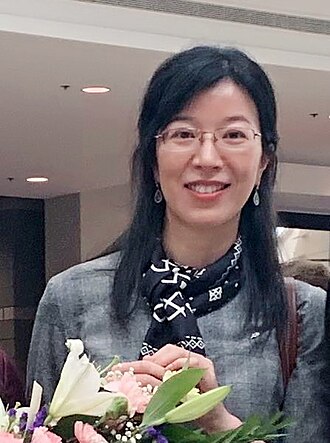
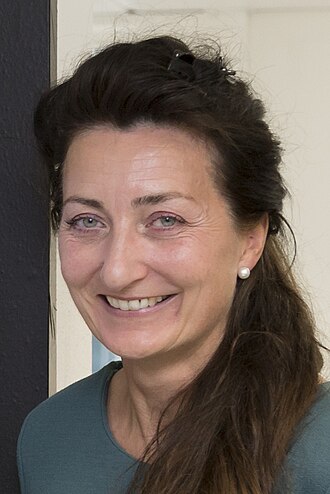
图:Zhewen Shi · CC BY-SA 4.0 · Wikimedia Commons
- 出生
- 1973 年,东阳市
- 国籍
- 中华人民共和国
- 学科
- 生物学
- 职业
- 神经学家
- 母语 / 工作语言
- 中文
- 母校
- 北京大学、加州大学伯克利分校、加州大学伯克利分校(哲学博士,2002 年)、北京大学(哲学博士,1996 年)
- 工作单位
- 浙江大学、浙江大学(2015—)、中国科学院(2009—2015)
百科正文
胡海岚主要从事情绪与社会行为的分子与神经环路机制研究。
生平
1973年9月,胡海岚出生在浙江省杭州市,高中获得全国中学生学科奥林匹克竞赛一等奖而保送北京大学生物系。1996年本科毕业后赴加州大学伯克利分校继续学习。2002年获神经生物学博士学位。分别于2003年至2004年在弗吉尼亚大学实验室,2004年至2008年在冷泉港实验室从事博士后工作。2008年12月回国加入中国科学院神经科学研究所担任研究员、博士生导师,2015年5月起任职浙江大学医学院教授,致力于研究情绪与社会行为的分子与神经环路机制。
2018年2月15日带领团队在期刊《自然》杂志刊发了2篇研究长文。其中一篇文章揭示了快速抗抑郁分子的作用机制,推进了人类关于抑郁症发病机理的认知,并为研发新型抗抑郁药物提供了多个崭新的分子靶点。2019年7月,因胡海岚在情绪神经编码、抑郁症发生分子机制、社会竞争的神经基础等方面的研究成就,被授予国际脑研究奖—凯默理奖,这是该奖项首次颁发给欧洲和北美洲以外的科学家。
2021年,因胡海岚在神经科学(尤其是抑郁症)方面的重大发现而获得第24届世界杰出女科学家奖,她的工作促进了新一代抗抑郁药物的研发。
2025年11月21日,胡海岚当选中国科学院院士。
荣誉
2015年12月22日,获得第十二届“中国青年女科学家奖”。
2021年9月30日,获得第24届世界杰出女科学家奖。
以上内容摘自维基百科「胡海岚」,按 CC BY-SA 4.0 使用,去掉了参考文献、外部链接等尾部小节,公式改写成了纯文本。全文、配图和出处见原文。
英文维基百科补充中文条目比较短,下面是英文条目「Hailan Hu」的原文
Hu Hailan (Chinese: 胡海岚; pinyin: Hú Hǎilán; born September 1973) is a Chinese neuroscientist, professor, and executive director of the Center for Neuroscience at Zhejiang University School of Medicine in Hangzhou, China. Hu explores neural mechanisms underlying social behaviors and psychiatric diseases. She specifically explores the neural substrates of social rank and the role of neuron-glia interactions in driving depressive behaviors. Hu discovered the anatomical and molecular targets of ketamine's fast-acting antidepressant effects to be localized to the lateral habenular circuits in rodents. Hu was also the first scientist outside of Europe and America to be awarded the IBRO-Kemali Prize in over 20 years. She is also a member of the Jiusan Society.
Early life and education
Hu was born in Hangzhou, Zhejiang province with ancestral roots in Dongyang, Jinhua in September 1973. Hu pursued her undergraduate degree at Peking University in Beijing, China. In 1996, she received her Bachelors of Science in biochemistry and molecular biology.
Hu then moved to the United States to work as a research technician for one year at the University of California, San Francisco. She then pursued her graduate studies at the University of California, Berkeley. Under the mentorship of Corey S. Goodman, Hu explored the role of the plexin receptor and the Rho family GTPases in central nervous system development in Drosophila. Plexins are receptors involved in axon guidance, and Hu discovered a seven amino acid sequence in plexin, PlexB, which is necessary for Rac-GTP binding and subsequently axon guidance.
Career and research
In 2008, Hu returned to China and joined the Chinese Academy of Sciences Institute of Neuroscience in Shanghai and became the principal investigator of the Hu Lab. Her lab has been focusing on the neural mechanisms of social dominance in mice as well as the neural mechanisms of depression and the antidepressant effects of ketamine. Her lab has pioneered techniques with which to probe the neural correlates of social rank. In 2015, Hu was recruited to become a professor and senior investigator at the QuiShi Academy for Advanced Studies within the Medical School of Zhejiang University in Hangzhou, China. Hu also became the executive director at the Center for Neuroscience at Zhejiang University School of Medicine. In November 2025, Hu was elected as an academician of the Chinese Academy of Sciences.
Neural circuit mechanisms of social dominance
Hu and her lab pioneered the study of neural circuit mechanisms governing social rank.
Awards and honors
- 2025 Chinese Academy of Sciences Member, Chinese Academy of Sciences
- 2023 Asian Scientist 100, Asian Scientist
- 2022 L’Oréal-UNESCO For Women in Science International Awards
- 2019 Prize for Scientific and Technological Progress Ho Leung Ho Lee Foundation
- 2019 IBRO-Kemali International Prize for research in basic and clinical neurosciences
- 2016 Tan Jia Zhen Life Science Award
- 2015 Chinese Young Female scientist Award
- 2015 Chang Jiang Scholar Award
- 2015 L'Oréal-UNESCO For Women in Science
- 2013 Meiji Life Science Outstanding Award
- 2012 Chinese Outstanding Youth Award
- 2012 and 2014 Excellent Mentorship Award of Chinese Academy of Sciences
- 2010-2012 Shanghai Pujiang Talent Award
- 2009-2012 Chinese Hundred Talent Plan Award
- 2003-2006 Damon Runyon Foundation Postdoctoral Fellowship
- 2002 HHMI and IBRO fellowships for MBL Neurobiology Course
- 1998-2003 Howard Hughes Medical Institute Predoctoral Fellowship
Select publications
Hu H, Cui Y, Yang Y. Circuits and functions of the lateral habenula in health and in disease. Nature Reviews. Neuroscience. 2020 PMID 32269316 DOI: 10.1038/s41583-020-0292-4
Gao Z, Hu H. Star-like cells spark behavioural hyperactivity in mice. Nature. 2019 571: 43–44. PMID 31263260 DOI: 10.1038/d41586-019-01949-2
Cui Y, Hu S, Hu H. Lateral Habenular Burst Firing as a Target of the Rapid Antidepressant Effects of Ketamine. Trends in Neurosciences. 2019 42: 179–191. PMID 30823984 DOI: 10.1016/j.tins.2018.12.002
Fan Z, Zhu H, Zhou T, Wang S, Wu Y, Hu H. Using the tube test to measure social hierarchy in mice. Nature Protocols. 2019 PMID 30770887 DOI: 10.1038/s41596-018-0116-4
Cui Y, Yang Y, Dong Y, Hu H. Decoding Depression: Insights from Glial and Ketamine Regulation of Neuronal Burst Firing in Lateral Habenula. Cold Spring Harbor Symposia On Quantitative Biology. PMID 30718267 DOI: 10.1101/sqb.2018.83.036871
以上节选摘自英文维基百科「Hailan Hu」,按 CC BY-SA 4.0 使用,去掉了参考文献、外部链接等尾部小节,公式改写成了纯文本。篇幅所限,较长的小节只摘了开头一部分,有的小节没有收;全文、配图和出处见原文。
同一学科、同时代的科学家




同一学科的科学家
更多 ›