格物
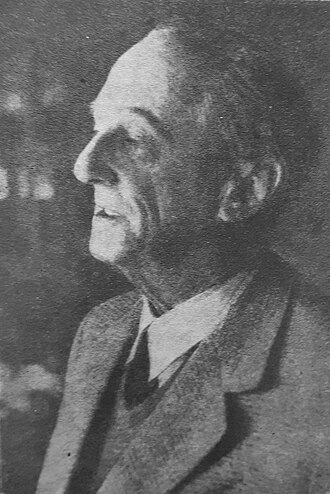
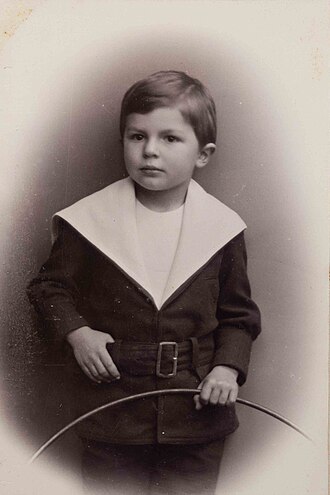
图:作者不详 · Public domain · Wikimedia Commons
胡戈·施泰因豪斯1887—1972
Hugo Steinhaus
波兰数学家 (1887–1972)
Hugo Dyonizy Steinhaus was a Polish mathematician and educator. Steinhaus obtained his PhD under David Hilbert at Göttingen University in 1911 and later became a professor at the Jan Kazimierz University in Lwów, where he helped establish what later became known as the Lwów School of Mathematics. He is credited with "discovering" mathematician Stefan Banach, with whom he gave a notable contribution to functional analysis through the Banach–Steinhaus theorem. After World War II Steinhaus played an important part in the establishment of the mathematics department at Wrocław University and in the revival of Polish mathematics from the destruction of the war.
摘自英文维基百科「Hugo Steinhaus」(英文维基百科,暂无中文条目),CC BY-SA 4.0
- 出生
- 1887 年 1 月 14 日,亚斯沃
- 逝世
- 1972 年 2 月 25 日,弗罗茨瓦夫
- 国籍
- 内莱塔尼亚、波兰
- 学科
- 数学、博物与综合
- 职业
- 数学家、大学教师
- 母语 / 工作语言
- 波兰语
- 母校
- 利沃夫大学(1906 年)、哥廷根大学(1911 年)
- 工作单位
- 弗罗茨瓦夫大学(1945—1963)、利沃夫大学(1916—1941)
研究领域
主要贡献
代表成就
以他 / 她命名
师承
博士导师1
博士生16
学生1
来自 Wikidata 的「博士导师」「师从」「博士生」「学生」记录,可能不全。
所获奖项(7)
- 1946Stefan Banach Prize
- 1954Officer of the Order of Polonia Restituta
- 1955Medal of the 10th Anniversary of People's Poland
- 1957Commander with Star of the Order of Polonia Restituta
- 1959Work Flag Order, 1st class
- 1963honorary doctor of the Adam Mickiewicz University in Poznań
- —honorary doctor of the University of Warsaw
学会与院士
百科正文
本条目暂无中文维基百科条目,下面是英文维基百科原文。
Author of around 170 scientific articles and books, Steinhaus has left his legacy and contribution in many branches of mathematics, such as functional analysis, geometry, mathematical logic, and trigonometry. Notably he is regarded as one of the early founders of game theory and probability theory, which led to later development of more comprehensive approaches by other scholars.
Early life and studies
Steinhaus was born on January 14, 1887, in Jasło, Austria-Hungary to a family with Jewish roots. His father, Bogusław, was a local industrialist, owner of a brick factory and a merchant. His mother was Ewelina, née Lipschitz. Hugo's uncle, Ignacy Steinhaus, was a lawyer and an activist in the Koło Polskie (Polish Circle), and a deputy to the Galician Diet, the regional assembly of the Kingdom of Galicia and Lodomeria.
Hugo finished his studies at the gymnasium in Jasło in 1905. His family wanted him to become an engineer but he was drawn to abstract mathematics and began to study the works of famous contemporary mathematicians on his own. In the same year he began studying philosophy and mathematics at the University of Lemberg. In 1906 he transferred to Göttingen University. At that University he received his Ph.D. in 1911, having written his doctoral dissertation under the supervision of David Hilbert. The title of his thesis was Neue Anwendungen des Dirichlet'schen Prinzips ("New applications to Dirichlet's principle").
At the start of World War I Steinhaus returned to Poland and served in Józef Piłsudski's Polish Legion, after which he lived in Kraków.
He was an atheist.
Academic career
Interwar Poland
During the 1916-1917 period and before Poland had regained its full independence, which occurred in 1918, Steinhaus worked in Kraków for the Ministry of the Interior in the ephemeral puppet state of Kingdom of Poland.
In 1917 he started to work at the University of Lemberg (later Jan Kazimierz University in Poland) and acquired his habilitation qualification in 1920. In 1921 he became a profesor nadzwyczajny (associate professor) and in 1925 profesor zwyczajny (full professor) at the same university. During this time he taught a course on the then cutting edge theory of Lebesgue integration, one of the first such courses offered outside of France.
While in Lwów, Steinhaus co-founded the Lwów School of Mathematics and was active in the circle of mathematicians associated with the Scottish cafe, although, according to Stanislaw Ulam, for the circle's gatherings, Steinhaus would have generally preferred a more upscale tea shop down the street.
World War II
In September 1939, after Nazi Germany and the Soviet Union both invaded and occupied Poland, as a fulfillment of the Molotov–Ribbentrop Pact they had signed earlier, Lwów initially came under Soviet occupation. Steinhaus considered escaping to Hungary but ultimately decided to remain in Lwów.
Mathematical contributions
Steinhaus authored over 170 works. Unlike his student, Stefan Banach, who tended to specialize narrowly in the field of functional analysis, Steinhaus made contributions to a wide range of mathematical sub-disciplines, including geometry, probability theory, functional analysis, theory of trigonometric and Fourier series as well as mathematical logic. He also wrote in the area of applied mathematics and enthusiastically collaborated with engineers, geologists, economists, physicians, biologists and, in Kac's words, "even lawyers".
Probably his most notable contribution to functional analysis was the 1927 proof of the Banach–Steinhaus theorem, given along with Stefan Banach, which is now one of the fundamental tools in this branch of mathematics.
His interest in games led him to propose an early formal definition of a strategy, anticipating John von Neumann's more complete treatment of a few years later. Consequently, he is considered an early founder of modern game theory. As a result of his work on infinite games Steinhaus, together with another of his students, Jan Mycielski, proposed the axiom of determinacy.
Steinhaus was also an early contributor to, and co-founder of, probability theory, which at the time was in its infancy and not even considered an actual part of mathematics.
Legacy
Steinhaus is said to have "discovered" the Polish mathematician Stefan Banach in 1916, after he overheard someone utter the words "Lebesgue integral" while in a Kraków park (Steinhaus referred to Banach as his "greatest mathematical discovery"). Together with Banach and the other participant of the park discussion, Otto Nikodym, Steinhaus started the Mathematical Society of Kraków, which later evolved into the Polish Mathematical Society. He was a member of PAU (the Polish Academy of Learning) and PAN (the Polish Academy of Sciences), PTM (the Polish Mathematical Society), the Wrocławskie Towarzystwo Naukowe (Wrocław Scientific Society) as well as many international scientific societies and science academies.
Steinhaus also published one of the first articles in Fundamenta Mathematicae, in 1921. He also co-founded Studia Mathematica along with Stefan Banach (1929), and Zastosowania matematyki (Applications of Mathematics, 1953), Colloquium Mathematicum, and Monografie Matematyczne (Mathematical Monographs).
He received honorary doctorate degrees from Warsaw University (1958), Wrocław Medical Academy (1961), Poznań University (1963) and Wrocław University (1965).
Chief works
Czym jest, a czym nie jest matematyka (What Mathematics Is, and What It Is Not, 1923).
Sur le principe de la condensation de la singularités (with Banach, 1927)
Theorie der Orthogonalreihen (with Stefan Kaczmarz, 1935).
Kalejdoskop matematyczny (Mathematical Snapshots, 1939).
Taksonomia wrocławska (A Wroclaw Taxonomy; with others, 1951).
Sur la liaison et la division des points d'un ensemble fini (On uniting and separating the points of a finite set, with others, 1951). One of multiple rediscoveries of Borůvka's algorithm.
Sto zadań (One Hundred Problems In Elementary Mathematics, 1964).
Orzeł czy reszka (Heads or Tails, 1961).
Słownik racjonalny (A Rational Dictionary, 1980).
Family
His daughter Lidya Steinhaus was married to Jan Kott.
以上节选摘自英文维基百科「Hugo Steinhaus」,按 CC BY-SA 4.0 使用,去掉了参考文献、外部链接等尾部小节,公式改写成了纯文本。篇幅所限,较长的小节只摘了开头一部分,有的小节没有收;全文、配图和出处见原文。
同一学科、同时代的科学家

同一学科的科学家
更多 ›