格物

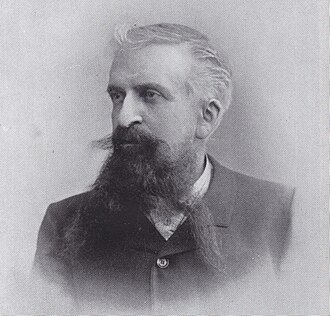
图:Louis Figuier · Public domain · Wikimedia Commons
夏尔·马里·德·拉孔达米纳1701—1774
Charles Marie de La Condamine
French explorer, geographer, and mathematician (1701-1774)
夏尔·马里·德·拉孔达米纳(Charles Marie de La Condamine,1701年1月28日-1774年2月4日)是一位法国探险家、地理学家和数学家。他曾在现今的厄瓜多尔待了10年,测量了赤道纬度的长度,并绘制了第一张亚马逊盆地地区的地图。此外他还是百科全书,或科学、艺术和工艺详解词典的撰稿人之一。1730年12月12日,他当选法国科学院院士。
摘自维基百科「夏尔·马里·德拉孔达米纳」,CC BY-SA 4.0
- 出生
- 1701 年 1 月 28 日,巴黎
- 逝世
- 1774 年 2 月 4 日,巴黎
- 国籍
- 法兰西王国
- 学科
- 物理学、生物学、数学、天文学、博物与综合
- 职业
- 数学家、探险家、天文学家、植物学家
- 母语 / 工作语言
- 法语
- 母校
- Collège Louis-le-Grand (Paris)(1718 年)
- 工作单位
- 第12胸甲骑兵团(1718—1719)、Levant Company(1731—1732)
主要贡献
代表成就
所获奖项(2)
- —英国皇家学会院士
- —Knight of the Royal Military and Hospitaller Order of Our Lady of Mount Carmel and Saint Lazarus of Jerusalem united
学会与院士
百科正文
英文维基百科补充中文条目比较短,下面是英文条目「Charles Marie de La Condamine」的原文
Charles Marie de La Condamine (French: [la kɔ̃damin]; 28 January 1701 – 4 February 1774) was a French explorer, geographer, and mathematician. He spent ten years in territory which is now Ecuador, measuring the length of a degree of latitude at the equator and preparing the first map of the Amazon region based on astro-geodetic observations. Furthermore he was a contributor to the Encyclopédie.
He was a member of the French Royal Academy of Sciences in Paris, the Royal Society of London, and the Prussian Academy of Sciences in Berlin, the Russian Academy of Sciences in Saint Petersburg, the Academy of Sciences of the Institute of Bologna in Bologna, and the academy of Cortona, as well as the Stanislas Academy in Nancy, France.
In 1760, he was elected to the prestigious Académie française, where naturalist, mathematician, and cosmologist Buffon welcomed him.
He also gained prominence as a passionate advocate for smallpox inoculation.
Through his contributions to botany, zoology, and the geography of Ecuador and the Amazon, he is regarded as a forerunner to German polymath Alexander von Humboldt.
Biography
Charles Marie de La Condamine was born in Paris as a son of well-to-do parents, Charles de La Condamine and Louise Marguerite Chourses. He studied at the Collège Louis-le-Grand in Paris, where he was trained in humanities as well as in mathematics. After finishing his studies, he enlisted in the army and fought in the war against Spain (1719). After returning from the war, he became acquainted with scientific circles in Paris. On 12 December 1730 he became a member of the Académie des Sciences and was appointed Assistant Chemist at the Academy.
In 1729 La Condamine and his friend Voltaire exploited a loophole in the French government’s lottery, which brought them large profits.
In May 1731 La Condamine sailed with the Levant Company to Constantinople (now Istanbul), where he stayed five months. After returning to Paris, La Condamine submitted in November 1732 a paper to the Academy entitled Mathematical and Physical Observations made during a Visit of the Levant in 1731 and 1732.
In South America
Three years later he joined the French Geodesic Mission to territory which is now Ecuador, which had the aim of testing a hypothesis of Isaac Newton. Newton had posited that the Earth is not a perfect sphere, but bulges around the equator and is flattened at the poles. Newton's opinion had raised a huge controversy among French scientists. Pierre Louis Maupertuis, Alexis Claude Clairaut, and Pierre Charles Le Monnier traveled to Lapland, where they were to measure the length of several degrees of latitude orthogonal to the Arctic Circle, while Louis Godin, Pierre Bouguer, and La Condamine were sent to South America to perform similar measurements around the equator.
On 16 May 1735, La Condamine sailed from La Rochelle accompanied by Godin, Bouguer and a botanist, Joseph de Jussieu. After stopovers in Martinique, Saint-Domingue, and Cartagena, they sailed southward through Panama, arriving at the Pacific port of Manta on 10 March 1736.
La Condamine's associations with his colleagues were unhappy. The expedition was beset by many difficulties, and finally La Condamine split from the rest and made his way to Quito, Ecuador separately, following the Esmeraldas River, becoming the first European to encounter rubber in the process. La Condamine is credited with introducing samples of rubber to the Académie Royale des Sciences of France in 1736. In 1751, he presented a paper by François Fresneau to the Académie (eventually published in 1755) which described many of the properties of rubber. This has been referred to as the first scientific paper on rubber. He joined the group again on 4 June 1736 in the city of Quito.
The meridian arc whose length La Condamine and his colleagues chose to measure passed through a high valley perpendicular to the equator, stretching from Quito (now the capital of Ecuador) in the north to Cuenca in the south. The scientists spent a month performing triangulation measurements in the Yaruqui plains—from 3 October to 3 November 1736—and then returned to Quito.
After they had come back to Quito, they found that subsidies expected from Paris had not arrived. La Condamine, who had taken precautions and had made a deposit on a bank in Lima, traveled in early 1737 to Lima to collect money.
以上节选摘自英文维基百科「Charles Marie de La Condamine」,按 CC BY-SA 4.0 使用,去掉了参考文献、外部链接等尾部小节,公式改写成了纯文本。篇幅所限,较长的小节只摘了开头一部分,有的小节没有收;全文、配图和出处见原文。
同一学科、同时代的科学家



同一学科的科学家
更多 ›