格物
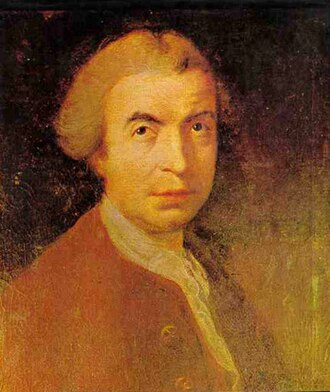
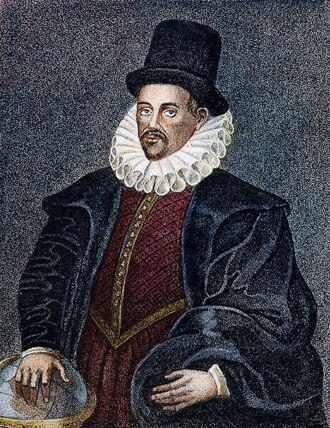
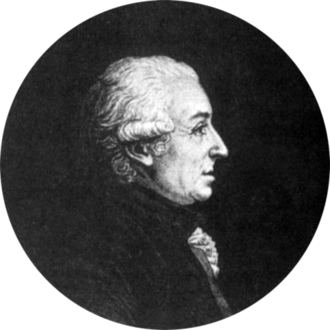
图:Public domain · Wikimedia Commons
- 出生
- 1711 年 5 月 18 日,杜布罗夫尼克
- 逝世
- 1787 年 2 月 13 日,米兰
- 国籍
- 拉古萨共和国
- 学科
- 物理学、数学、天文学、博物与综合
- 职业
- 物理学家、天文学家、数学家、哲学家
- 母语 / 工作语言
- 拉丁语、意大利语、法语、克罗地亚语
- 母校
- Roman College(1732 年)、圣安德肋栅栏堂(1727 年)
- 工作单位
- Roman College(1732—1759)、帕维亚大学(1764—1772)、French Royal Navy(1773—1782)
研究领域
主要贡献
代表成就
以他 / 她命名
所获奖项(1)
- —英国皇家学会院士
学会与院士
百科正文
博斯科维奇出生于杜布罗夫尼克,之后在意大利和法国生活,并出版许多作品。他被维尔纳·海森堡昵称为克罗地亚的莱布尼兹。
博斯科维奇提出原子论的前身,对天文学做出了许多贡献,包括从旋转星球的三个表面特征观测确定赤道、借由三次观测来计算行星轨道。1753年,他发现月球上没有大气。
以上内容摘自维基百科「鲁杰尔·约瑟普·博斯科维奇」,按 CC BY-SA 4.0 使用,去掉了参考文献、外部链接等尾部小节,公式改写成了纯文本。全文、配图和出处见原文。
英文维基百科补充中文条目比较短,下面是英文条目「Roger Joseph Boscovich」的原文
Roger Joseph Boscovich (18 May 1711 – 13 February 1787) was a physicist, astronomer, mathematician, philosopher, diplomat, poet, theologian, Jesuit priest, and a polymath from the Republic of Ragusa. He studied and lived in Italy and France where he also published many of his works.
Boscovich produced a precursor of atomic theory and made many contributions to astronomy, including the first geometric procedure for determining the equator of a rotating planet from three observations of a surface feature and for computing the orbit of a planet from three observations of its position. In 1753 he also discovered the absence of an atmosphere on the Moon.
Biography
Early years
Boscovich was born on 18 May 1711 in Dubrovnik, Republic of Ragusa, to Paola Bettera (1674–1777), daughter of a local nobleman of Italian origin, and Nikola Bošković, a Ragusan merchant. Boscovich's father was an ethnic Croat (some sources say Serb). He was baptised on 26 May 1711 by Marinus Carolis, curatus et sacristia. The name Ruđer/Ruggiero may have been given to him because both his maternal great-grandfather, Agostino Bettera, and his mother's brother were called Ruggiero; his godfather was his uncle, Ruggiero Bettera. He was the seventh child of the family and the second youngest. His father was born in the village of Orahov Do near Ravno, at the time part of the Ottoman Empire (now Bosnia and Herzegovina).
Further works
In addition to the works already mentioned Bošković published course material he had prepared for his pupils in mathematics. He also published accounts of his travels from Constantinople to Poland, in several expanded editions and translated into French.
Bošković applied himself to practical engineering projects, including several discussions of architectural repair or stability, including repairs to St Peter's Dome, the stability of the Duomo of Milan, repairs to the library of Cesarea di Vienna, and a report on the damage to sectors of Rome in June 1749 due to a whirlwind.
Bošković was also consulted on civil works concerning ports and rivers: Ivica Martinovic has shown the extent to which Bošković applied himself to such works, and lists 13 major works:
Religious views
Bošković was a Roman Catholic priest, and in expressing his religious views was straightforward. In his most famous book A Theory of Natural Philosophy (1758) he says: "Regarding the nature of the Divine Creator, my theory is extraordinarily illuminating, and the result from it is a necessity to recognize Him.... Therefore vain dreams of those who believe that the world was created by accident, or that it could be built as a fatal necessity, or that it was there for eternity lining itself along his own necessary laws are completely eliminated."
Bošković also composed poetry with many religious and astronomical allusions. In his Marian devotion, he wrote hexameter verses on the Virgin Mary.
Legacy
In 1873, Nietzsche wrote a fragment called 'Time Atom Theory', which was a reworking of Boscovich's Theoria Philosophiae Naturalis redacta ad unicam legem virium in natura existentium. In general, Boscovich's ideas were a large influence on Nietzsche's ideas of force and the will to power.
In the 1930s, Werner Heisenberg nicknamed Boscovich the Croatian Leibniz. In 1935, a lunar crater - the Boscovich crater - was named after him for his contributions to astronomy. The largest Croatian institute of natural sciences and technology, based in Zagreb, is called "Ruđer Bošković Institute" since 1950. The oldest astronomical society in the Balkans based in Serbia's capital Belgrade is called Astronomical Society Ruđer Bošković since 1953.
Nationality
The modern concept of nationality, based on ethnic concepts such as language, culture, religion, custom, etc., was developed only in the 19th century. For this reason the attribution of a definite "nationality" to personalities of the previous centuries, living in ethnically mixed regions, is often indeterminable; Bošković's legacy is consequently celebrated in Croatia, Italy and Serbia. His ethnicity is also part of the Serb-Croat distinctions in self-identification of the Western South Slavic enlighteners, that was one of the major problems in 20th century Yugoslavia.
A number of sources state that he referred to his Croatian identity. In writings to his sister Anica (Anna), he told her he had not forgotten the Croatian language.
以上节选摘自英文维基百科「Roger Joseph Boscovich」,按 CC BY-SA 4.0 使用,去掉了参考文献、外部链接等尾部小节,公式改写成了纯文本。篇幅所限,较长的小节只摘了开头一部分,有的小节没有收;全文、配图和出处见原文。
同一学科、同时代的科学家




同一学科的科学家
更多 ›