格物

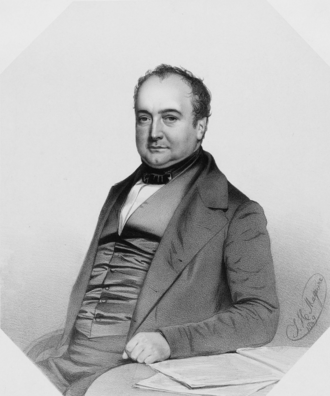
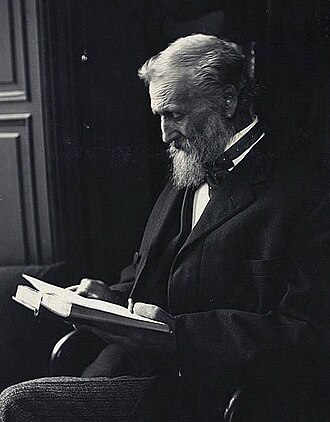
图:w:en:Mathew Brady (1822-1896) or w:en:Levin Corbin Handy (18… · Public domain · Wikimedia Commons
- 出生
- 1831 年 10 月 29 日,洛克波特市
- 逝世
- 1899 年 3 月 18 日,纽黑文
- 国籍
- 美国
- 学科
- 生物学、地球科学、博物与综合
- 职业
- 古生物学家、动物学家、大学教师
- 母语 / 工作语言
- 英语
- 母校
- 耶鲁学院、菲利普斯学院、海德堡大学、耶鲁大学工程与应用科学学院、谢菲尔德科学学校
- 工作单位
- 耶鲁大学
研究领域
主要贡献
代表成就
师承
来自 Wikidata 的「博士导师」「师从」「博士生」「学生」记录,可能不全。
所获奖项(1)
- 1877比格斯比奖章
学会与院士
百科正文
生平
马什出生于纽约州洛克波特。1860年从耶鲁学院毕业,并且前往谢菲尔德科学学校(Sheffield Scientific School)研读地质学与矿物学。之后又到到柏林、海德堡与弗罗茨瓦夫研究古生物学与解剖学。1866年,马什回到美国,成为耶鲁大学的脊椎动物古生物学家。他的叔叔美国慈善家乔治·皮博迪出钱为他在耶鲁大学建立关于自然史的皮博迪自然史博物馆。1871年5月,马什发现了第一具美洲翼龙的化石。同时他也发现了早期马类的遗骸。马什描述了一些白垩纪有齿鸟类(例如鱼鸟与黄昏鸟)、飞行爬虫类,以及侏罗纪恐龙(例如剑龙、腕龙、异特龙与迷惑龙)与白垩纪恐龙(例如三角龙)。
19世纪末,马什与当时的另一位古生物学家爱德华·德林克·科普展开了一场激烈的化石发现竞赛,又称为“化石战争”,他们俩人在这段期间发现了超过130个恐龙物种。
马什于1899年逝世,安葬于纽黑文的园林街墓园(Grove Street Cemetery)
以上内容摘自维基百科「奧斯尼爾·查爾斯·馬許」,按 CC BY-SA 4.0 使用,去掉了参考文献、外部链接等尾部小节,公式改写成了纯文本。全文、配图和出处见原文。
英文维基百科补充中文条目比较短,下面是英文条目「Othniel Charles Marsh」的原文
Othniel Charles Marsh (October 29, 1831 – March 18, 1899) was an American professor of paleontology. A prolific fossil collector, Marsh was one of the preeminent paleontologists of the nineteenth century. Among his legacies are the discovery or description of dozens of new dinosaurs—including Stegosaurus and Triceratops—and theories on the origins of birds. He spent his academic career at Yale College and was president of the National Academy of Sciences.
Born into a modest family, Marsh was able to afford higher education thanks to the generosity of his wealthy uncle George Peabody. After graduating from Yale College in 1860 he traveled the world, studying anatomy, mineralogy and geology. He obtained a teaching position at Yale upon his return. From the 1870s to 1890s, he competed with rival paleontologist Edward Drinker Cope in a period of frenzied Western American expeditions known as the Bone Wars. Marsh's greatest legacy is the collection of Mesozoic reptiles, Cretaceous birds, and Mesozoic and Tertiary mammals that now constitute the backbone of the collections of Yale's Peabody Museum of Natural History and the Smithsonian Institution. Marsh has been called "both a superb paleontologist and the greatest proponent of Darwinism in nineteenth-century America."
Biography
Early life and family
Othniel Charles Marsh was born on October 29, 1831, near Lockport, New York. He was the third of four children born to Mary Gaines Peabody (1807–1834) and Caleb Marsh (1800–1865). The Marsh (nee Marshe) family and Peabody families immigrated to America from England in the 1630s. Mary died shortly after the birth of her fourth child in 1834. Caleb remarried in 1836 and Othniel moved with the family to Bradford, Massachusetts. Soon after, Caleb's business fortunes soured, and Othniel's early years were marked by financial struggles.
Caleb purchased a farm in Lockport when Marsh was twelve. As the eldest son, Othniel was expected to assist his father on the farm, and the two had a contentious relationship. Othniel much preferred excursions in the woods to his chores. Among his childhood influences was Ezekiel Jewett, a former military officer and amateur scientist who fostered Othniel's interest in the sciences.
Personality and views
Grinnell described Marsh's success as resulting in him being "sometimes impatient, intolerant, and even autocratic," which he attributed to his lack of socialization as a boy with peers and the lack of "smoothing off of roughness" from having never married.
Even with friends he remained aloof, as one of Marsh's assistants described him as having "an absence of the complex exchange of confidence which normally exists between intimate friends."
Marsh was difficult to work for, and his staff at the Peabody Museum constantly turned over. His workers would find that Marsh grilled them about their discoveries, then wrote it down himself later and took credit. Marsh's longtime assistant, Oscar Harger, was forbidden to publish his own paleontology papers; Harger and Williston changed the focus of their scientific work entirely to go around Marsh's prohibitions.
McCarren called Marsh the greatest proponent of Darwinism in 19th-century America.
Legacy
According to Peter Dodson, Cope and Marsh "[have] left a legacy, and each was a distinguished researcher. But really it seems impossible to say one name without the other. Cope and Marsh." Marsh's names for three dinosaur groups and nineteen genera have survived. McCarren called Cope the only other American paleontologist who could rival Marsh's legacy.
Cope and Marsh's rivalry led to a tremendous explosion in the number of known dinosaurs, but their efforts to outdo each other also created classification errors and hasty scholarship that future paleontologists had to untangle.
Marsh named the following dinosaur genera:
He named the suborders Ceratopsia (1890), Ceratosauria (1884), Ornithopoda (1881), Stegosauria (1877) and Theropoda (1881).
He also named the families Allosauridae (1878), Anchisauridae (1885), Camptosauridae (1885), Ceratopsidae (1890), Ceratosauridae, Coeluridae, Diplodocidae (1884), Dryptosauridae (1890), Nodosauridae (1890), Ornithomimidae (1890), Plateosauridae (1895) and Stegosauridae (1880).
以上节选摘自英文维基百科「Othniel Charles Marsh」,按 CC BY-SA 4.0 使用,去掉了参考文献、外部链接等尾部小节,公式改写成了纯文本。篇幅所限,较长的小节只摘了开头一部分,有的小节没有收;全文、配图和出处见原文。
同一学科、同时代的科学家



同一学科的科学家
更多 ›